If you moved into a Peninsula home with mature trees you did not plant, timing your first prune is one of the most confusing parts of tree care. Search the topic and you will find a dozen calendars that all say something slightly different, and most of that advice was written for cold Midwest and East Coast climates that behave nothing like ours. Getting the timing right protects the tree and saves you the cost of fixing a bad cut later. Here is how a local crew thinks about it, along with the benefits of regular tree trimming that make the effort worth it.
What Is the Best Time to Prune Trees?
The best time to prune most Bay Area trees is late winter, roughly January through early March, while the tree is dormant and has dropped its leaves. During dormancy the tree loses less sap, seals its wounds quickly once spring growth starts, and faces fewer insects and diseases hunting for a fresh cut. You can also see the branch structure clearly with no leaves in the way, which makes every cut a better decision.
There is one major local exception to this rule, and it is oaks. For oaks, winter is the wrong answer, and we explain why further down. For almost everything else, the dormant-season window is your safest bet.
Dormant vs. Growing-Season Pruning: What Each Cut Does
Dormant pruning and growing-season pruning are two different tools for two different goals. A cut made in winter, while the tree rests, pushes strong, vigorous new growth when spring arrives, so dormant pruning is how you help a tree fill in and grow. A cut made in summer, after the tree has leafed out, slows growth instead, so summer pruning is how you keep a tree smaller or hold back a branch you do not want to encourage.
The health reason to favor dormancy is straightforward. According to the Arbor Day Foundation, fresh cuts made in the warm season are more exposed to insects that carry tree-killing bacteria and fungi, while a dormant tree is already at rest and heals with far less stress. If your goal is a healthier, denser canopy, wait for winter. If your goal is to control size on a tree that is getting too big, a light summer trim does that job without triggering a burst of regrowth. Once you know the season, the cut itself matters just as much, and we cover how to make a proper pruning cut further down.
The Bay Area Exception: Why “Prune in Winter” Is Imported Advice
Most pruning calendars online do not apply cleanly to the Bay Area because they were written for regions where trees freeze solid under snow. Our mild, Mediterranean climate has wet winters and dry summers, and that changes the timing rules in ways generic guides miss. Trees here never shut down as hard as they do back east, so the dormant window is shorter and softer.
The clearest example is native versus non-native species. As the UC Marin Master Gardeners explain, introduced trees and shrubs from Europe and the eastern United States go dormant in winter, but many California natives are dormant in summer instead, since summer is our dry, stressful season. Prune a native the way a national blog tells you to prune a maple, and you can catch it at exactly the wrong moment. This is why so many homeowners feel like they followed the instructions and still ended up with a stressed tree.
Best Time to Prune by Tree Type
Pruning timing changes by species, so match your tree to the right window before you pick up the saw. The table below covers the trees we work on most across Redwood City, Palo Alto, Menlo Park, Woodside, and the rest of the Peninsula.
| Tree Type | Best Time to Prune | Why |
|---|---|---|
| Deciduous shade trees (ash, elm, liquidambar) | Late winter, while dormant | Fast healing, clear branch structure |
| Evergreens (cypress, cedar, most conifers) | Late winter to early spring | Prune before the spring growth flush |
| Redwoods | Late winter to early spring | Dormant window; light shaping only |
| Fruit trees (apple, pear, stone fruit) | Late winter for structure; summer to control size | Winter builds the tree, summer holds it back |
| Citrus (lemon, orange) | Early spring, after the last frost | Avoids cold damage to fresh cuts |
| Spring-flowering trees (magnolia, dogwood, cherry) | Right after they finish blooming | Protects next year’s flower buds |
| Summer-flowering trees (crape myrtle) | Late winter to early spring | Blooms form on new growth |
| Maples and birches (bleeders) | Coldest part of winter, or early summer | Reduces heavy sap flow from the cut |
| Palms | Late spring to early summer | Remove only fully brown, dead fronds |
| Oaks | Dry summer months (see below) | Wet-season cuts spread disease |
Redwoods deserve their own note, since they are the signature tree of this area and they do not like heavy cutting. If you have one, read our guide on how to prune a redwood tree before you remove anything larger than a small limb.
When to Prune Oaks in the Bay Area (and Why Winter Is the Wrong Answer)
Prune Bay Area oaks in the dry summer months, roughly July through September, not in the winter. This is the opposite of the standard “prune when dormant” advice, and following the generic rule can put your oak, and your neighbors’ oaks, at real risk. The reason is disease timing, and it is specific to our climate.
Our biggest oak threat is Sudden Oak Death, caused by the pathogen Phytophthora ramorum, which spreads in cool, wet conditions. That is exactly the weather we have in winter, when generic guides tell you to prune. A fresh pruning wound made during the rainy season is an open door, and contaminated tools or mud can carry the pathogen from an infected tree to a healthy one. The UC Statewide Integrated Pest Management Program is direct about this in its Sudden Oak Death pest notes: sanitize pruning tools before and after working on oaks, and clean mud and debris off equipment before moving to the next tree. Beetles that attack stressed oaks, including the oak bark beetle, are also most active in spring, so fresh spring cuts invite them in.
You may see national articles blaming “oak wilt” for this timing rule. Oak wilt is a serious disease, but it is largely a Midwest and Texas problem and is not the threat we manage here. In the Bay Area the concern is Sudden Oak Death and beetle-driven cankers, which is why our timing advice is built around the dry season, not a calendar copied from another state. If you want the full local picture, read our breakdown of Sudden Oak Death in the Bay Area, and if an oak is already showing bleeding cankers or dieback, get professional oak tree care before you cut anything. Dead or clearly hazardous oak limbs are the exception to the season rule and can come off any time, which brings us to the next point.
Oaks are the trees we get called back to more than any other, and this timing rule is exactly why we schedule that work for the dry summer window. Opening a fresh wound on an oak during the wet season is how Sudden Oak Death moves in, so we hold oak pruning for July through September and sanitize our tools between trees rather than risk carrying the pathogen from one yard to the next.
What You Can Prune Any Time of Year
Dead, dying, diseased, broken, and hazardous branches can be removed at any time of year, no matter the season. Waiting for the “right” month makes no sense when a branch is already a safety problem, and leaving it up only gives insects and rot more time to move into the tree. This is the one rule that overrides every seasonal window above, oaks included.
For hillside homeowners in Woodside, Los Altos Hills, and Portola Valley, this matters most heading into fire season. A dead limb overhanging the roof or a pile of dry, dead wood in the canopy is fuel, and clearing it is part of keeping defensible space around the house. As a firefighter-owned crew, this is the work we take most seriously, and it does not wait for a calendar. If a limb is dead, cracked, hanging, or leaning over something you care about, schedule tree trimming and have it taken down safely rather than timing it to a season.
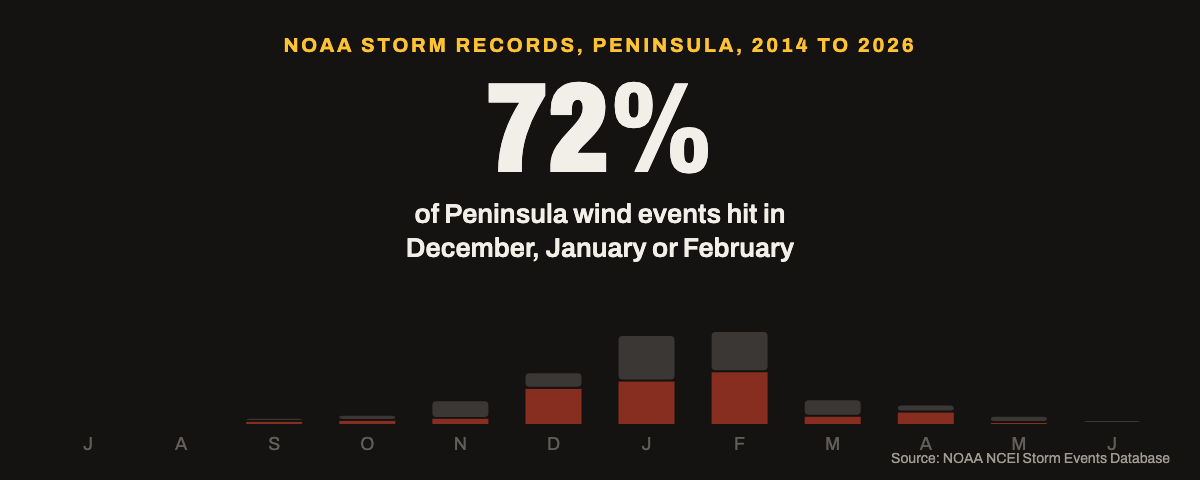
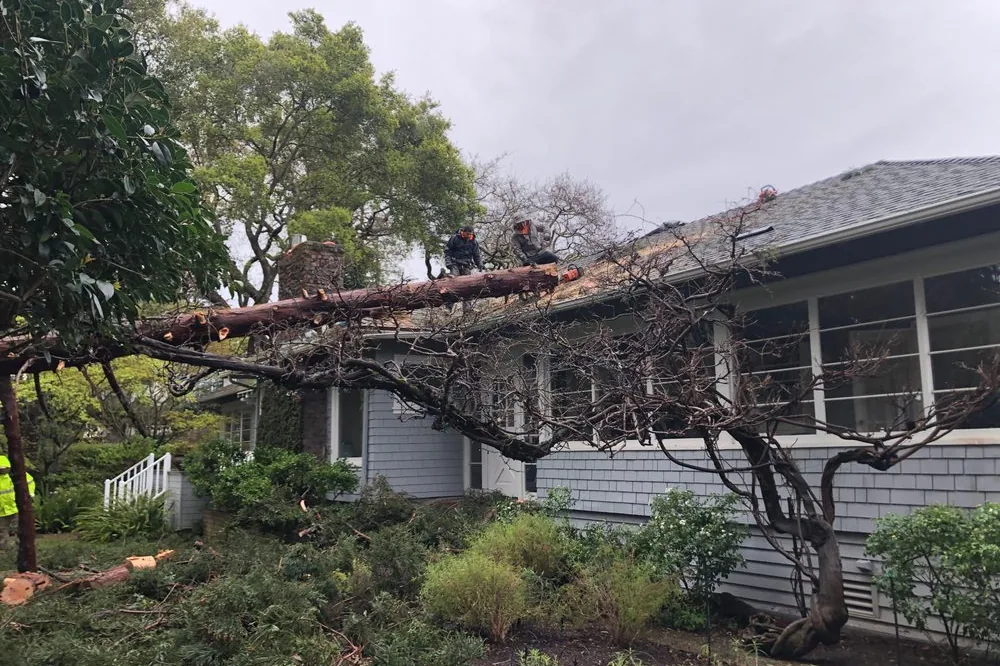
Storm-damage cleanup and defensible-space work in the hills are two of the services this crew is built around, so clearing a dead or hanging limb before fire season is routine for us rather than a special request. As a firefighter-owned company, we size up a dead limb over a roof in Woodside or Portola Valley the same way we would any hazard: deal with the thing most likely to fail first.
The Worst Times to Prune Trees
The worst time to prune most trees is early fall, from about September through leaf drop. Cuts made then push out tender new growth right before the first cold snap, and that soft growth gets damaged, while fall’s damp weather is prime time for fungal spores to enter a fresh wound. You give the tree the risk of a cut with none of the healing benefit.
A few other windows to avoid:
- During active flowering on spring bloomers, which sacrifices the display and next year’s buds
- Peak sap flow for maples and birches, which causes heavy “bleeding” from the cut
- Right before a summer heat wave, when a freshly opened canopy exposes bark to sunscald
- In wet weather on oaks, for the disease reasons covered above
Skip these windows and you avoid the most common ways a well-meant prune goes wrong.
How to Make a Proper Pruning Cut
Picking the right month only helps if the cut itself is one the tree can seal. A proper cut is made just outside the branch collar, the slightly swollen ring of tissue where a branch joins the trunk, and it never slices into that collar or leaves a stub. The collar holds the cells that grow over a wound and wall off decay. Cut through it with a flush cut and the tree cannot seal, so rot moves straight into the trunk. Leave a long stub instead and the dead wood decays back toward the trunk before the tree can close it.
Here is the sequence a good cut follows:
- Find the branch collar and the branch bark ridge, the raised line of bark in the fork where branch meets trunk. Your cut goes just outside both, angled slightly away from the trunk.
- On any limb heavier than your wrist, use the three-cut method so the falling branch cannot tear the bark. Make an undercut a foot or so out from the trunk, then a top cut a little farther out to drop the limb, then a final clean cut at the collar.
- Check the finished wound. It should look nearly round, not oval, and the collar should still be there.
If your own cuts left flat stubs or removed the swollen base of the branch, that is a flush cut, and it is worth having an arborist look before decay sets in. Bark that peeled down the trunk when a heavy limb dropped is the other warning sign, and it is exactly what the three-cut method prevents.
The Four Types of Pruning
Professional pruning comes down to four methods, defined by the International Society of Arboriculture and the ANSI A300 standard. A certified arborist should tell you which one your tree needs and why before making a single cut. The ISA’s guidance on pruning mature trees treats them as the foundation of every legitimate pruning plan.
| Pruning Type | What It Removes | Why You Would Use It |
|---|---|---|
| Crown cleaning | Dead, dying, diseased, and weakly attached branches | The safest, most universal starting point for any tree |
| Crown raising | Lower limbs, to lift the bottom of the canopy | Clearance over sidewalks, driveways, roofs, and sight lines |
| Crown thinning | A modest share of live branches throughout the canopy | Lets light and wind pass through without changing the tree’s shape |
| Crown reduction | Height or spread, cut back to living lateral branches | Shrinks a tree the correct way, keeping its natural form |
Crown thinning is the one homeowners most often get wrong. Done right, it removes a small, even share of branches so the canopy breathes. Done wrong, it turns into “lion-tailing,” where a crew strips the interior and leaves tufts at the branch tips, which makes limbs weaker in wind. A real crown reduction shortens a branch back to a living side branch at least a third the diameter of what you removed, so that side branch takes over as the new leader.
Why You Should Never Top a Tree
Topping means cutting a tree back to stubs or lopping off the top to force it shorter, and it strips 50 to 100% of the leaves the tree lives on. The tree answers with a burst of fast, weak shoots below the cuts that are poorly attached and prone to breaking, and the large stub wounds are too big to seal, so decay moves into the trunk. As Purdue Extension explains, the roots die back too, and a topped tree can be shortened in lifespan or killed outright within a few years.
Topping is often sold as “reduction,” so here is the tell. A reduction cut always goes back to a living side branch that becomes the new growing tip. Topping cuts to a bare stub with nothing left to take over. If a crew proposes to “cut it down by a third,” ask exactly where each cut lands. When a homeowner asks us to top a tree, we walk them through a proper crown reduction instead, because we would rather protect the tree than take a shortcut that shortens its life.
How Much of a Tree Can You Remove at Once?
Never remove more than about 25% of a tree’s live canopy in a single year, and take far less from a mature tree. Every leaf is making food, so stripping too many at once starves the tree and triggers stressed, unhealthy growth. The City of Portland’s urban forestry standards put the ceiling at 20 to 25% of the canopy per pruning cycle, and that is a sensible cap for the Bay Area too.
On an older tree, taking 5 to 10% of the canopy, mostly dead and crossing wood, is often all a mature oak or redwood should lose in one visit. Young trees are the opposite case: the first 10 to 15 years are when small, regular cuts build a strong single leader and well-spaced branches, which prevents the weak forks that fail decades later. A tree that looks barely touched after a pruning job is usually the one that was pruned correctly, and a bid that promises to remove half the canopy to “open it up” is a warning, not a feature.
When to Call a Certified Arborist
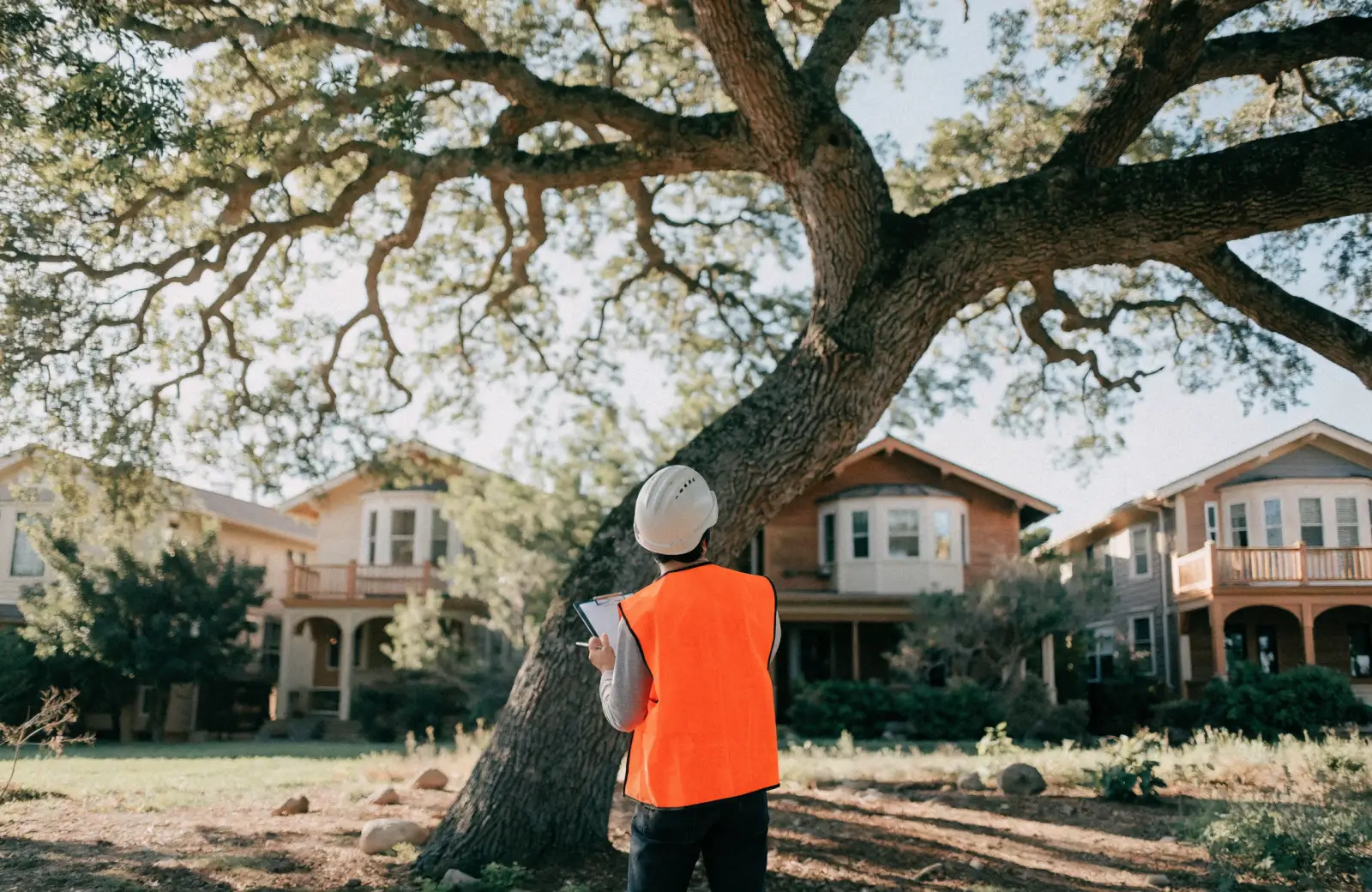
Call a certified arborist when the tree is large, growing near power lines, an oak, or when you simply are not sure about the timing. A trained arborist reads the specific tree and the local conditions instead of a generic calendar, which is the difference between a cut that helps and one that opens the door to disease. The traits worth looking for in whoever you hire are clear: ISA certification, proof of license and insurance, and real familiarity with Bay Area species and their diseases.
Timing is only part of the job. The other part is knowing which branches to remove and how to make the cut so the wound seals cleanly, and that judgment is what protects a tree you plan to keep for decades. A quick professional look before you prune a mature or heritage tree is cheap insurance against an expensive mistake.
You do not need to be an arborist to vet one. Before you hire, ask for these four things:
- Proof that the person planning the work is an ISA-certified arborist, not just an equipment operator.
- A current certificate of insurance, including liability and workers’ compensation.
- A written scope that names the pruning type for each tree and references ANSI A300.
- A plain-language reason for every major cut. A qualified pro can explain the branch collar and the 25% rule on the spot.
Frequently Asked Questions
How often should trees be pruned? Young trees benefit from a light prune every 2 to 3 years to build good structure, and mature trees usually need maintenance pruning every 3 to 5 years.
What are the ideal months for pruning? For most Bay Area trees, January through early March is the sweet spot. Oaks are the exception and should be pruned in the dry summer months instead.
How much does tree pruning cost? Medium tree pruning averages around $550 in California, and arborist rates typically run $50 to $120 per hour depending on the size, location, and difficulty of the tree.
Do I need a permit to prune my trees? Most routine pruning on private property needs no permit, but protected and heritage trees, along with work affecting public areas, may require authorization. When in doubt, check with the city before you cut.
Can pruning actually make my tree smaller? Yes, through crown reduction, but only within limits. A proper reduction shortens branches back to living side branches and stays under the 25% ceiling, so the tree keeps its natural shape. Topping does not make a smaller tree, it makes a damaged one.
Can I prune trees during the rainy season? It is best to wait for drier conditions. Wet weather raises the risk of spreading disease, especially to oaks, and makes the work more hazardous.
Time Your Tree Pruning Right with Firefighter Tree Service
Getting the season right is half the work, and knowing your specific trees is the other half. Our firefighter-owned crew of ISA-certified arborists has cared for more than 500 residential properties across the Peninsula and South Bay, so we know when your oaks, redwoods, and fruit trees actually want to be cut, not just what a national calendar says. When you want it done at the right time and done safely, schedule tree pruning in Redwood City and we will build the timing around your trees.