
If a neighbor’s tree hangs over your California property, you have the right to trim the branches and roots back to the property line yourself, without their permission and without a court order. What most homeowners never hear is the second half of that rule: your right stops at the property line, and it stops again the moment your cuts threaten to kill or destabilize the tree. Get that second half wrong and a weekend cleanup can turn into a claim for double or triple the tree’s value.
We are Firefighter Tree Service in Redwood City, and we get these calls all the time. The oak leaning over the roof. The eucalyptus dropping limbs along the fence line every winter. The neighbor who trimmed first and asked questions later. This guide covers what California law actually allows, who pays when a tree causes damage, and exactly where the familiar “you can always trim to the line” advice quietly stops being true.
One note before we start. This is general information from a tree company, not legal advice. Every property line and every tree is different, and a real dispute with money on the table deserves an attorney. Use this to understand your options, then get the right professional in your corner.
Who Owns the Tree? It Comes Down to the Trunk
In California, a tree belongs to whoever owns the land its trunk grows out of, even if the branches reach 20 feet over your roof and the roots have cracked your driveway. California Civil Code Section 833 makes the trunk’s location the deciding factor: a tree rooted entirely on your neighbor’s side is legally theirs, and one rooted on your side is yours. You can read the exact wording in California Civil Code Section 833.
This one distinction drives everything that follows. It decides who is responsible for the tree’s care, who is liable when it causes damage, and what you are allowed to do about the parts hanging over your fence. If you are the neighbor being told to “deal with your tree,” the first thing to confirm is where the trunk actually sits, because that is the line the law draws ownership on.
Your Right to Trim Is Real, but Not Unlimited
You can legally trim a neighbor’s overhanging branches back to the property line on your own, but you cannot reach across the line, and you cannot cut so much that you harm the tree. This is the self-help right California recognizes, and it is genuinely useful. The trouble starts when homeowners hear the first half and assume the tree is fair game.
What California law lets you do
- Trim branches that overhang your property back to the property line
- Cut roots that have crossed onto your property, at the property line
- Hire a professional to do the trimming for you
- Keep or dispose of the cut material, which becomes yours once it is removed
Where the right stops
- You cannot cross the property line. Reaching over or stepping onto your neighbor’s yard to work on their tree is trespass, even if the tree is the problem.
- You cannot kill or cripple the tree. If your cuts cause the tree to die or become unstable, you can be on the hook for its full value, doubled or tripled. Under California Civil Code Section 3346, damages for injuring or removing someone else’s tree can be doubled, and tripled when the cutting is willful. Code of Civil Procedure Section 733 sets a similar treble-damage penalty. The appraised value of a mature, healthy tree can run from several thousand dollars into the tens of thousands, so the math gets ugly fast.
- You cannot take off so much that the tree becomes a hazard. Stripping one side of a canopy can throw the whole tree off balance and create the exact danger you were trying to prevent.
This is the moment to bring in a professional rather than a ladder and a chainsaw. Certified tree pruning in Redwood City keeps cuts on your side of the line and within limits the tree can survive. If you want to understand the timing and technique side of it, our guide to the best time to prune trees explains why a bad cut at the wrong time does lasting damage.
Can You Cut the Roots, Too?
Yes, you can cut roots that cross onto your property back to the property line, but this is where California law is stricter than most people realize. A landowner’s right to sever encroaching roots is not absolute. In Booska v. Patel, a California appeals court held that a neighbor who cut roots along the line still owed a duty to act reasonably and not cause needless harm to the tree next door. The University of California’s guide to tree disputes in California walks through why that “reasonable manner” standard matters.
In plain terms: cutting roots to stop your foundation or sidewalk from lifting is allowed, but hacking through the root plate in a way that kills or topples the tree is not. If you already hired someone to trench and cut roots along your fence, and the tree later fails, that case is exactly the kind of liability the tree owner could point to. Because roots are also where trees anchor, aggressive root cutting is both a legal risk and a safety one. Our breakdown of roots damaging a foundation or sewer line covers how to relieve the pressure without gambling on the tree’s stability.
If a Neighbor’s Tree Falls on Your House, Who Pays?
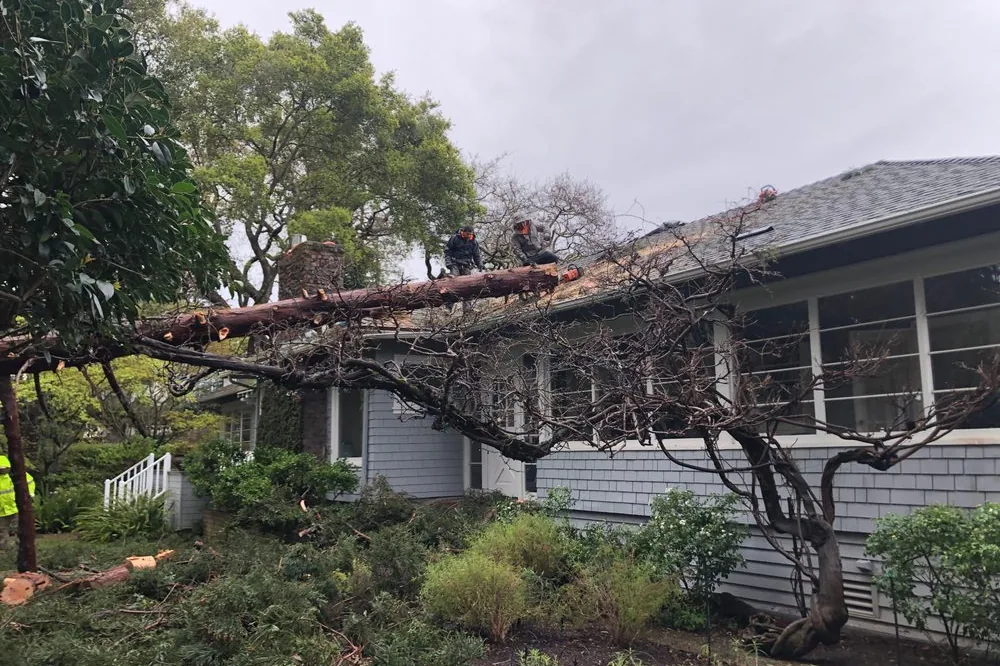
Usually your own homeowner’s insurance pays to repair your house when a neighbor’s tree falls on it, regardless of whose tree it was. California treats a healthy tree that fails in a storm as an act of nature, so there is often no one to blame. Your neighbor becomes financially responsible only if you can show they knew, or reasonably should have known, the tree was hazardous and did nothing about it.
The whole question turns on knowledge. This is why written notice matters so much: it creates a dated record that the owner was warned. In one widely reported Castro Valley case, a homeowner was left facing a roughly $50,000 repair bill after a neighbor’s tree came down, because there was no record she had ever flagged the tree as dangerous. If you have watched a neighbor’s tree lean further over your roof every winter, a photo and a written note today are worth far more than an argument after it falls.
When the tree owner is likely liable
| Situation | Liability |
|---|---|
| Owner knew the tree was diseased or dying and did nothing | Likely liable for resulting damage |
| Owner was notified of a hazard in writing and failed to act | Likely liable |
| Tree was visibly dead or decayed before it fell | Owner may be liable if they knew or should have known |
| Roots damaged your sewer line after you notified the owner | Owner may be liable for repair costs |
When the tree owner is usually not liable
| Situation | Liability |
|---|---|
| A healthy tree drops a limb in an extreme storm | Generally treated as an act of nature |
| Leaves, fruit, or minor debris fall onto your property | Normal, no liability |
| You never notified the owner of any problem | Much harder to establish liability |
If you are not sure whether a tree next door is genuinely dangerous or just messy, learn the signs a tree needs to come down so your written notice describes a real hazard, not a hunch.
Boundary and Line Trees: When You Both Own It
When a trunk straddles the property line, both owners share the tree. California Civil Code Section 834 treats a boundary tree, sometimes called a line tree, as jointly owned, which changes the rules completely. Neither of you can remove it or significantly alter it without the other’s consent.
Key points for a shared tree:
- Both owners share responsibility for maintaining it
- Neither owner can remove it alone. Cutting down a boundary tree without consent can make you liable for its full value
- Both owners can share liability if the tree injures someone else
- Disputes usually need mediation or a court order to settle
If you cannot tell whether the trunk is on the line or just near it, a property survey settles it. That small cost is far cheaper than removing a tree you turn out to have co-owned.
Your Neighbor Cut the Branches and Threw Them Back Over the Fence
Once branches are cut, they belong to whoever’s side they land on to clean up, and no California law forces your neighbor to haul away limbs they trimmed from their own side. It is inconsiderate, and it is one of the most common flashpoints we hear about, but tossing trimmed branches back onto their own property is generally legal. The picture changes if they pile the cuttings onto your side of the line: dumping yard waste on your property can start to look like a nuisance rather than a favor.
The practical move is to sort out disposal before anyone starts cutting. When you hire the trimming, cleanup and hauling are part of the job, which takes this whole argument off the table.
How to Handle It With Your Neighbor Before Calling a Lawyer
Most neighbor tree disputes settle through conversation, not court, so start there before anything escalates. Many owners genuinely do not realize their tree is causing a problem, and a calm approach solves more cases than a legal threat ever will.
- Document the problem. Photograph the overhanging branches, any damage, and the tree’s condition. Note dates, especially after storms.
- Talk to your neighbor. Frame it as a shared problem, not an accusation. Something like: “Some big branches from your oak are hanging over my roof and I’m worried about the next storm. Could we get them trimmed back?”
- Put it in writing. If talking does not work, send a letter or an email with delivery confirmation describing the branches or roots, the risk, and any damage. Keep a copy. This record is what protects you later.
- Offer to share costs. Splitting the trimming bill is not required, but it shows good faith and often resolves things faster and cheaper than a fight.
- Try mediation. San Mateo County and many Bay Area cities offer free or low-cost community mediation for neighbor disputes, which is quicker and far less bruising than court.
When to Bring a Lawyer Into It
Legal action should be your last resort, but sometimes it is the only thing left. Consider consulting an attorney if your neighbor refuses to deal with a clearly hazardous tree after written notice, if a tree has already caused serious damage to your home or sewer line, if a boundary-tree dispute will not resolve, or if your neighbor is threatening to sue you for trimming within your rights.
A real estate attorney or one who handles neighbor disputes can read your specific situation. In San Mateo County, small claims court handles cases up to $12,500, which covers a lot of tree-related property damage without the cost of a full lawsuit.
What Trimming Near a Property Line Actually Costs
Trimming overhanging branches near a property line typically runs from a few hundred dollars for a small job to several thousand for large or hazardous work over a structure. Knowing the range helps you plan and gives you a real number to bring to the cost-sharing conversation with your neighbor.
| Service | Typical Cost Range |
|---|---|
| Basic branch trimming, small to medium tree | $300 to $800 |
| Large tree trimming, canopy over a structure | $800 to $2,000 |
| Hazardous branch removal, crane required | $1,500 to $4,000 or more |
| Root pruning along a property line | $400 to $1,200 |
| Arborist assessment with written report | $250 to $500 |
Whoever hires the service pays for it, so if you trim branches overhanging your property, you typically bear the cost. If the tree owner’s negligence caused damage, you may be able to recover your costs through an insurance claim or a lawsuit.
Why a Written Arborist Report Is Your Best Protection
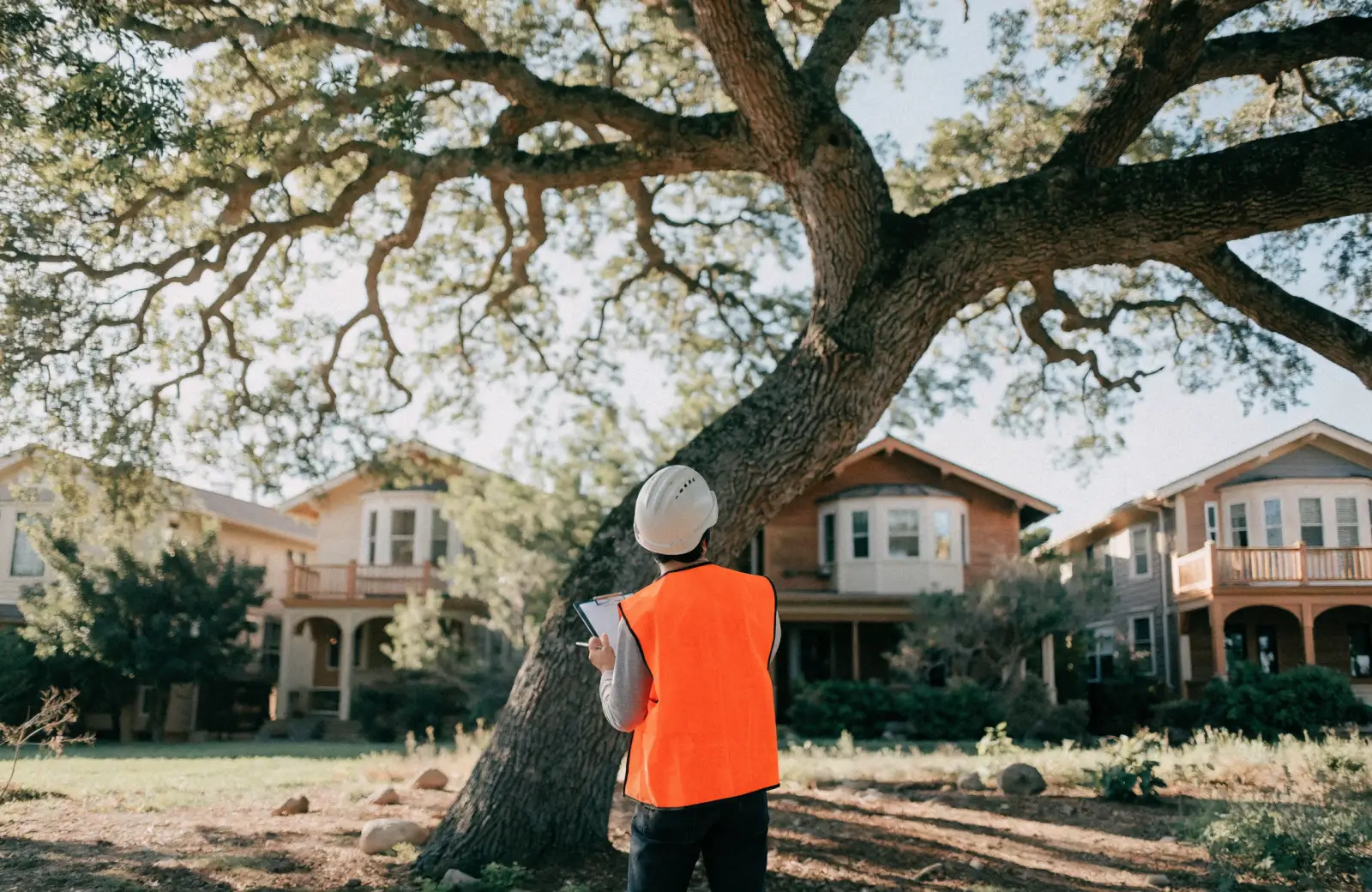
A written report from a certified arborist is the single most useful document you can have in a tree dispute, because it turns your opinion into evidence. Before you cut anything near a property line, or before you send that written notice to a neighbor, an arborist assessment records the tree’s condition on a specific date, states whether it is a genuine hazard, and defines how much can be safely removed.
That report does three jobs at once. It protects you from the killing-the-tree liability under Section 3346 by documenting safe cut limits before work starts. It strengthens your written notice by naming a real, professional-verified hazard instead of a guess. And it flags something most homeowners miss: even on your own property, Redwood City and many Peninsula cities protect certain trees, so a permit may be required before you prune or remove. Our Redwood City tree permit guide covers which trees are protected and when you need approval.
Here is the practical order of operations:
- Book a certified arborist in Redwood City for a written assessment before any cutting.
- Use that report to document the hazard and the safe trimming limits.
- Send your neighbor a written notice with the findings if the tree is theirs.
- Have a professional do the trimming to the property line, cleanup included.
Do this and you walk away with two things that matter: clarity on exactly what you can do this week, and a paper trail that protects your property, your wallet, and your relationship with the person next door for the long run.
Trim It Right With Firefighter Tree Service
Neighbor tree disputes are stressful, but they rarely have to turn hostile. Understanding your rights under California law, communicating clearly, and putting qualified professionals on the actual cutting are what separate a clean resolution from a lawsuit. As a firefighter-owned crew with ISA-certified arborists serving Redwood City and the Peninsula, we handle exactly this: safe, legal trimming to the property line, hazard assessments, and the written documentation you may need for insurance or a dispute.
When you are ready to deal with those overhanging branches the right way, schedule an assessment for professional tree trimming with our team. Call (650) 454-0373 and we will help you sort out what is yours, what is legal, and what is safe, before anyone picks up a saw.