In Redwood City, you can need a permit to prune a tree, not just to cut one down. The City’s Tree Preservation Ordinance protects a large share of the mature trees on private property, and it covers pruning, removal, and even work on branches that reach over a property line. Get it wrong and you can be ordered to replant at your own expense, even when the tree was yours to begin with.
This guide covers the whole permit landscape for 2026: which trees are protected, when you need approval and when you do not, how heritage trees change the math, what the city weighs before it says yes, and what the process actually costs (less than most people expect). If all you need is the removal application itself, our companion walkthrough covers that step by step. This page is the bigger picture, including the pruning rules and the parts most homeowners miss.
What the Redwood City Tree Preservation Ordinance Covers
Redwood City’s Tree Preservation Ordinance, Chapter 35 of the Municipal Code and on the books since 1970, regulates the pruning, removal, and replacement of protected trees on both private property and city land. It applies whether the tree stands in your backyard, in your front setback, or in the strip between the sidewalk and the street.
These rules are not there to make your life hard. Mature trees cool neighborhoods, hold soil on slopes, filter stormwater, and add real value to a property, which is why California cities invest so heavily in the urban canopy. The University of California’s statewide forestry and stewardship program documents how much a healthy tree cover does for a community, and a felled 80-year-old tree is not something a city can replace quickly. That is the logic behind every rule below.
Which Trees Are Protected: The 38-Inch Rule
A tree is protected in Redwood City once its trunk reaches 38 inches in circumference, which works out to roughly 12 inches in diameter, measured between 6 and 36 inches above the ground. Once a tree hits that size, you need a permit to prune it or remove it, no matter the species. The City of Redwood City’s tree permit page is the official source for this threshold.
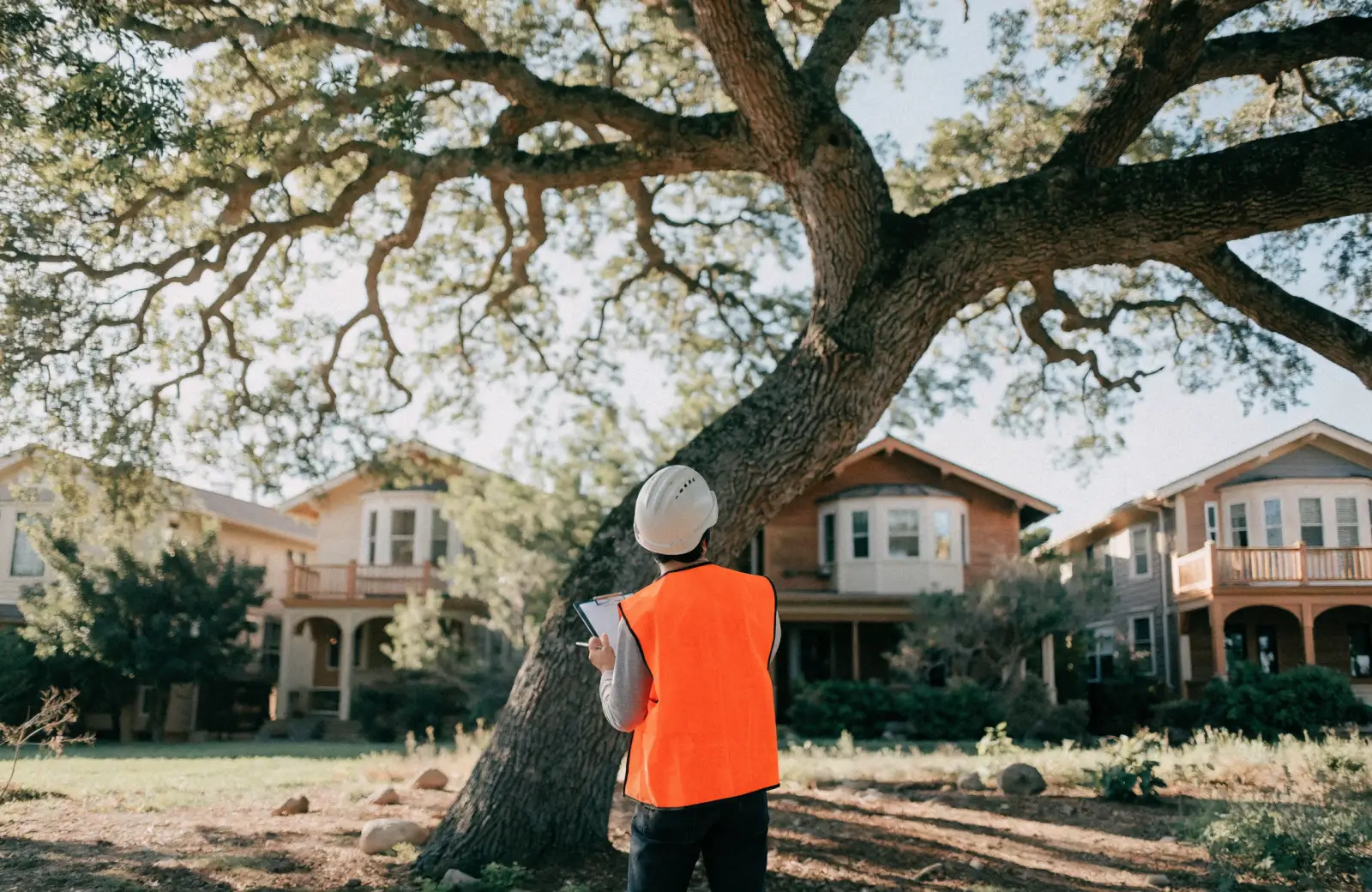
To check your own tree, wrap a tape measure around the trunk low, in that 6-to-36-inch window. That low window matters, because it sits below the “breast height” (4.5 feet) standard some crews assume, and it catches multi-trunk and low-branching trees a higher measurement would let slip through. Do not rely on a guess or on where a fast-talking crew tells you to measure.
Trees in the public right-of-way, the strip near the sidewalk and street, are a separate category. They are city trees even if you have watered and raked them for twenty years, and any work on them, including pruning, goes through the city’s Public Works tree program.
If you just bought a place with a large oak or coast redwood, assume it is protected until you have measured. Most established trees in Redwood City neighborhoods clear the 38-inch line easily.
Heritage and Protected Trees: A Higher Bar
Some trees carry an extra layer of protection as heritage trees, and those are much harder to touch. Under the ordinance, the Park and Recreation Commission can designate a healthy tree as a heritage tree when it has special significance to the community, is visible from a public right-of-way, and meets criteria such as historical significance, being indigenous to the area, or being part of an interdependent group of trees.
Removing or heavily pruning a heritage tree is a steeper climb than a standard protected tree, and homeowners are often surprised by how firmly the city holds the line. It is common across Bay Area cities for a removal request to be denied even when a private arborist has called the tree a risk. If you are dealing with a designated heritage tree, or a redwood or heritage oak that might qualify, go in expecting scrutiny and build your case with documentation rather than assuming a hazard argument alone will carry it.
When You Need a Permit, and When You Do Not
You need a Redwood City permit to prune or remove any protected tree, meaning any tree 38 inches around or larger, plus any heritage tree and any street tree regardless of size. You generally do not need a permit to remove a small tree under that size on private property. A few narrow situations sit in between, and those are where people get tripped up.
You typically still need to involve the city, or at least notify it, for these:
- Dead, dying, or clearly hazardous trees. The city often approves these, but you usually still need a permit or documentation showing the condition. Do not assume “it’s dead” lets you skip the process.
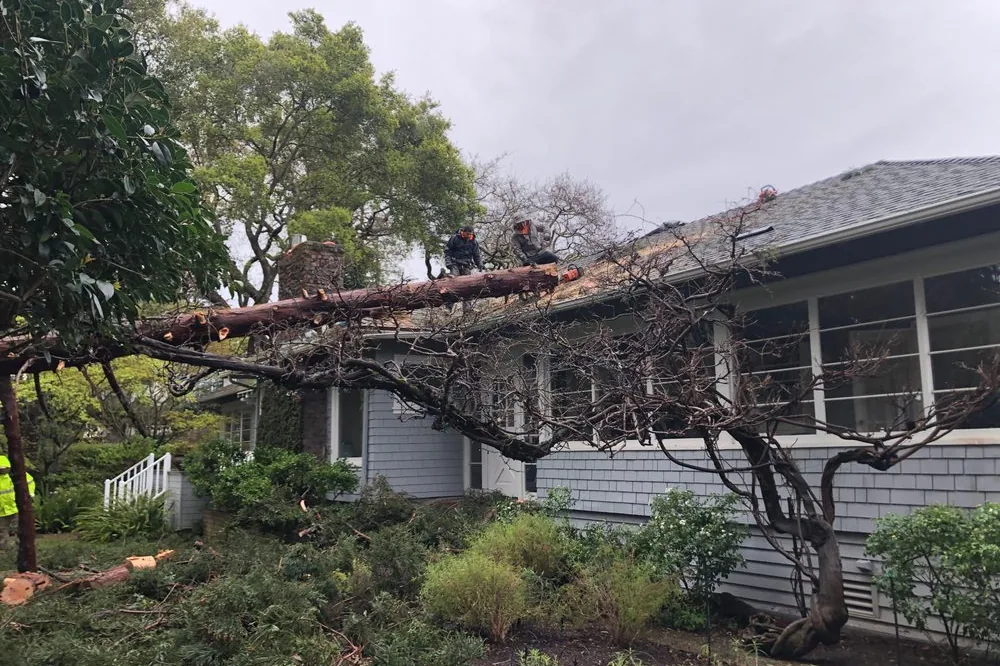
- Emergency hazards. If a tree is an immediate danger, for example split and hanging over the house after a storm, you can act to remove the imminent threat, but you should notify the city promptly afterward.
- Wildfire and defensible space work. Clearing brush and limbing up trees to create defensible space is encouraged, but a protected tree still has protected status, so confirm what counts as routine clearance versus regulated pruning before a crew starts cutting.
When in doubt, a quick call to the city or a certified arborist is cheaper than guessing wrong on a mature tree.
Pruning a Protected Tree Also Needs a Permit
Here is the rule most Redwood City homeowners miss: pruning a protected tree, not only removing it, requires a permit. If your tree is 38 inches around or larger, the city expects a permit before major pruning, and it approves that work only when the plan meets professional standards. This is the single biggest gap between what people assume and how the ordinance actually reads.
“Professional standards” is not vague. The city’s pruning permits track the accepted industry standards, ANSI A-300 and the International Society of Arboriculture’s best practices. In plain terms that means:
- No topping, which the ISA calls one of the most harmful things you can do to a tree.
- No lion-tailing, meaning stripping out the interior growth and leaving foliage only at the branch tips.
- Cuts made at the branch collar, not flush and not leaving stubs.
- Generally no more than about a quarter of the live canopy removed in a single year.
Overhanging branches are their own trap. If your neighbor’s protected tree drops limbs over your yard, you cannot always just cut them back to the property line, because the tree is still protected and heavy cutting can require a permit. California law on overhanging branches and neighbor tree disputes is narrower than most people think. When protected-size pruning is on the table, bring in a crew that plans the work to standard, which is exactly what a compliant tree pruning service in Redwood City is set up to do.
How the City Decides: The Five Things the Ordinance Weighs
When you apply to remove a protected tree, the city inspects the site (the ordinance calls for an investigation within about ten days of a complete application) and weighs five specific factors before it approves or denies. Knowing them tells you in advance whether your case is strong or thin.
- Condition and risk. Is the tree diseased, in danger of falling, too close to a structure, or interfering with utilities?
- Construction and reasonable use. Is removal genuinely necessary to build something or to make reasonable use of the property?
- Effect on the land. How would removal affect erosion, soil retention, and the flow of water on the site?
- Neighborhood impact. How many trees are in the surrounding area, and how would losing this one affect the neighborhood?
- Good forestry. Do sound forestry practices support removal, and can the site keep a healthy tree of this kind?
The takeaway is that a bare “I want it gone” rarely wins, but a documented case around factors one and two usually does. That documentation is where a certified arborist earns their fee: a written report on the tree’s health, structure, and risk is what turns a subjective request into evidence the city can act on.
What a Tree Permit Costs in Redwood City, and How Long It Takes
Redwood City does not charge a fee for tree permits. The city keeps pruning and removal permits free on purpose, to encourage residents to come through the front door rather than cut first and apologize later.
The city’s own Trees and Sidewalks FAQ states there is no fee for a permit to prune or remove a tree at this time. Fee schedules are revisited year to year, so confirm the current cost when you apply, but as of this writing the permit itself is still free.
Turnaround is usually quick for a clean, well-documented application and slower for heritage trees or anything a neighbor contests. The real money in a tree project is almost never the permit. It is the arborist report, which commonly runs $200 to $500, and the tree work itself. If you are trying to budget the whole job, our guide to tree removal cost in the Bay Area breaks the numbers down with an interactive estimator. Worth knowing: unincorporated San Mateo County does charge permit fees for its jurisdiction, so if a neighbor in the county quotes you a fee, that does not mean the City of Redwood City will.
Homeowners Versus Developers: The Same Permit, Different Stakes
The permit rule is the same for everyone, but the obligations land very differently on a homeowner clearing one hazard tree than on an owner or builder clearing trees for a remodel, an ADU, or new construction. Development-driven removals draw more scrutiny and heavier replacement conditions, because factor two above, construction need, gets weighed against the loss of canopy on a larger scale.
A homeowner’s case is usually simple: one tree, a health or safety reason, a replacement planted in the yard. If you are building, the tree permit is part of a bigger stack tied to your building permits, and the city can attach replacement ratios and timing conditions that affect your schedule. The mistake developers make is treating trees as a last-minute item. Fold the tree assessment in early, before your site plan is locked, so a protected tree does not stall the whole project. On multi-tree or construction sites, ongoing tree management services keep removals, replacements, and reporting aligned with what the city approved.
Replacement and Replanting Requirements
Redwood City generally requires you to replace a removed protected tree, most often one new tree for each tree taken out, planted on the same property. The replacement usually has to meet a minimum size, commonly a 15-gallon container, and the city can specify an appropriate species and a period during which you must keep the new tree alive.
If replanting on your property is not practical, the city may allow an in-lieu fee that goes toward its own tree planting instead. And the replacement rule has teeth even when you skip the permit: the ordinance requires anyone who removes or damages a protected tree without approval to restore or replace it, within one year, with a species and size the city approves. That is the bridge to what happens if you cut without a permit at all.
Removing a Tree Without a Permit: What Actually Happens
Cutting a protected tree without a permit is a Municipal Code violation, and the ordinance’s replacement rule is the part that bites: you can be ordered to replant, often at more than one replacement tree per tree removed, at your own expense, within a year. If the cutting was tied to construction, the city can also halt the related work while the violation is resolved.
The enforcement usually starts with a neighbor. Residents, city crews, and utility workers all report cutting that looks unpermitted, and a stump is hard to explain away. The honest math is simple: a free permit and an arborist report cost less than replanting mature trees and fighting a code case, and unlike a permit, a felled 80-year-old oak cannot be undone.
The Redwood City Permit Process, Step by Step
The Redwood City permit process is short once you know the order. Confirm the tree is protected, get an arborist report if the case needs one, submit the application with a replanting plan, and wait for the site inspection and decision.
- Measure and confirm. Check the trunk in the 6-to-36-inch window. At 38 inches around or more, or for any heritage or street tree, you need a permit.
- Get an arborist report if needed. For most protected removals, a written report on the tree’s health, structure, and risk is what carries the application.
- Submit to the city with a replanting plan. Include the tree details, the reason, and how you will replace it.
- Site inspection and decision. The city inspects and weighs the five factors, then approves, approves with conditions, or denies. Denials can be appealed, first to the Park and Recreation Commission and then to the City Council.
That is the overview. For the removal-specific version, including exactly what goes on the application and how the report is compiled, see our detailed guide to tree removal permits in Redwood City.
Frequently Asked Questions
Do I need a permit just to trim my tree?
Yes, if the tree is protected. In Redwood City, pruning a tree that is 38 inches or more in circumference requires a permit, and the pruning has to follow accepted industry standards. Light shaping of a small, sub-threshold tree does not.
Is the tree permit really free?
Redwood City has kept tree permits free to encourage compliance, so the permit itself typically carries no fee. Your costs are the arborist report and the tree work, not the paperwork. Confirm current fees with the city, since schedules can change.
Can the city deny my removal request?
Yes. The city weighs five factors, including neighborhood impact and whether the site can support a healthy tree, and it denies requests that do not clear that bar. Heritage trees are denied more often, even with a hazard argument, which is why documentation matters.
What if my tree is an emergency hazard?
If a tree is an immediate danger, you can remove the imminent threat and then notify the city promptly. Do not treat a slow-declining tree as an emergency, since that is exactly the kind of removal the permit process is meant to review.
Does my HOA add requirements on top of the city’s?
Often, yes. Many Redwood City homeowners associations have their own tree rules that run separately from the city permit. You may need both HOA approval and a city permit before any work begins.
Talk to a Redwood City Arborist Before You Cut
The fastest way to lose money on a tree in Redwood City is to guess about the rules and cut first. Firefighter Tree Service is a firefighter-owned, ISA-certified crew that works inside this ordinance every week, from measuring the trunk and preparing the arborist report to filing the application and handling the replanting the city requires. We will tell you honestly whether your tree needs a permit, whether removal is likely to be approved, and what the smarter move is if it is not. If the answer is removal, our page on Redwood City tree removal covers pricing and what happens on the day.
Before a chainsaw touches your tree, talk to a certified arborist in Redwood City and get the permit question settled the right way. Call us at (650) 454-0373 for a straight answer and a free assessment.