What Defensible Space Actually Does When a Fire Comes
Defensible space is the treated buffer between your home and the wild vegetation around it, and its whole job is to take away the fuel and the pathways a wildfire needs to reach your walls. Most homes in the Bay Area hills do not ignite from a wall of flame rolling in. They ignite from wind-driven embers that land in dry leaves, catch a low branch, and climb from the ground into the canopy and onto the roof.
If you live in the Redwood City hills, Emerald Hills, Woodside, or anywhere along the Peninsula where houses back up to open space, you are in what fire crews call the wildland-urban interface. That is the zone where defensible space does the most work. A well-cleared property gives embers nowhere to catch and gives firefighters room to actually defend the structure instead of writing it off.
Building that buffer usually takes more than a rake and a weekend. It means brush and lot clearing, selective tree removal, and pruning that follows the vegetation back from the house in stages. Done right, defensible space is often the single biggest factor in whether a home survives.
The 100-Foot Rule Is California Law, Not a Suggestion
California law requires 100 feet of defensible space around homes in fire-prone areas, and it is enforceable. Under Public Resources Code Section 4291, owners of buildings in State Responsibility Areas and Very High Fire Hazard Severity Zones must maintain defensible space out to 100 feet from each structure, or to the property line if it is closer.
The same law spells out tree-specific duties. You have to remove any part of a tree that reaches within 10 feet of a chimney or stovepipe outlet, keep trees and shrubs next to or overhanging the house free of dead and dying wood, and keep the roof clear of leaves and needles. Fire inspectors do check, and in many high-risk areas a failed inspection can carry warnings, reinspection fees, or a referral.
For a lot of homeowners, that is the frustrating part. You know the 100-foot number, but you do not know whether your particular trees are compliant, over the line, or fine as they are. That is a judgment call that depends on species, spacing, slope, and how close the canopy sits to the house. It is exactly the call a professional assessment settles in one visit.
California’s Three Defensible Space Zones, by Distance
California splits that 100 feet into three zones, each with a different goal and a different level of tree work. The closer the zone is to your house, the stricter it gets.
Zone 0: The Ember-Resistant Zone (0 to 5 Feet)
Zone 0 is the five feet closest to your home, and the goal is to give embers absolutely nothing to ignite. No wood mulch, no firewood, no dead leaves, and no flammable plants pressed against the walls. Replace bark mulch with gravel or decomposed granite, and pull combustible material off the foundation.
Trees are not automatically banned from this zone, but their branches cannot touch or overhang the structure. Keep healthy limbs at least 5 feet back from roofs and exterior walls, and remove anything dead. A single branch resting against a wall is a direct path for flame.
Zone 1: Lean, Clean, and Green (5 to 30 Feet)
Zone 1 is your primary buffer, and the goal is to keep flames low and starve them of continuous fuel. Cut grass to 4 inches or shorter, clear all dead and dying plants, and rake up leaf and needle litter from the ground, roof, and gutters.
For trees, this is where spacing and limbing matter most. Keep tree crowns at least 10 feet apart, measured canopy edge to canopy edge, and prune the lowest limbs up to at least 6 feet off the ground. Remove any branch that reaches within 10 feet of the roof, and move firewood to the far edge of the zone or beyond.
Zone 2: Reduced Fuel (30 to 100 Feet)
Zone 2 is the outer band, and the goal is to slow a fire down and drop its intensity before it ever reaches Zone 1. You are not clearing everything here. You are breaking up the fuel so fire cannot run unchecked from plant to plant or race uphill.
Create horizontal spacing between shrubs and tree groups, thin dense brush, and remove dead material. Keep limbs pruned up off the ground. On slopes, spacing has to increase, because fire climbs a hillside far faster than it moves across flat ground.
| Zone | Distance | Primary Goal | Key Tree Requirements |
|---|---|---|---|
| Zone 0 | 0 to 5 ft | Ember protection | No branches touching or overhanging the structure |
| Zone 1 | 5 to 30 ft | Keep flames low | Crowns 10 ft apart, limbs pruned to 6 ft, nothing within 10 ft of roof |
| Zone 2 | 30 to 100 ft | Slow the spread | Limbs pruned up, wider spacing on slopes, broken-up brush |
Fire Ladders and Limbing Up: Where Most Trees Fail
The most common defensible space mistake is leaving a fire ladder in place. A fire ladder is any run of fuel that lets a ground fire climb into the tree canopy: tall grass under a shrub, a shrub growing under low tree limbs, or a low branch hanging a couple feet off the dirt. Break the ladder, and a fire that reaches your yard tends to stay on the ground where crews can fight it. Leave it, and the same fire climbs into the crowns and starts throwing embers over your roof.
The fix is limbing up, which arborists call crown raising. The International Society of Arboriculture defines crown raising as removing a tree’s lower branches to create clearance underneath. For defensible space, that means pruning the lowest limbs to at least 6 feet off the ground so nothing short can carry fire up into the canopy.
There is a limit, and this is where do-it-yourself work gets a tree in trouble. Strip too much live crown at once and you stress the tree, invite decay, and can even make it more hazardous. A good rule is to remove no more than about a quarter of the living canopy in a single season. Getting the height clearance you need without over-cutting is a balance, and it is the core of professional tree trimming for fire safety. If you want to understand the technique itself, our complete guide to proper pruning methods walks through how the cuts are made.
Which Trees to Remove, Thin, or Keep
Some trees earn their place in defensible space, and some are liabilities you should plan to remove. Species matters, but here is the part most guides skip: where a tree sits and how it is maintained matters even more. UC Agriculture and Natural Resources puts it bluntly in its fire-smart landscaping guidance: all plants burn, and design and maintenance do more to protect a home than species choice alone.
That said, a few species are genuinely high-risk near a Peninsula home:
- Eucalyptus sheds long strips of bark that fly as firebrands, and its oils are highly volatile. Near a house, it is one of the most dangerous trees you can have.
- Monterey pine drops heavy, resinous needle litter and carries flammable sap.
- Acacia, Italian cypress, and juniper all ignite fast and hold dead material inside dense growth.
Better-behaved choices for a fire-prone lot include coast live oak with its thick, leathery leaves, California buckeye that drops its foliage before peak fire season, western redbud, and toyon. Even these need spacing and clean-up to stay assets rather than fuel.
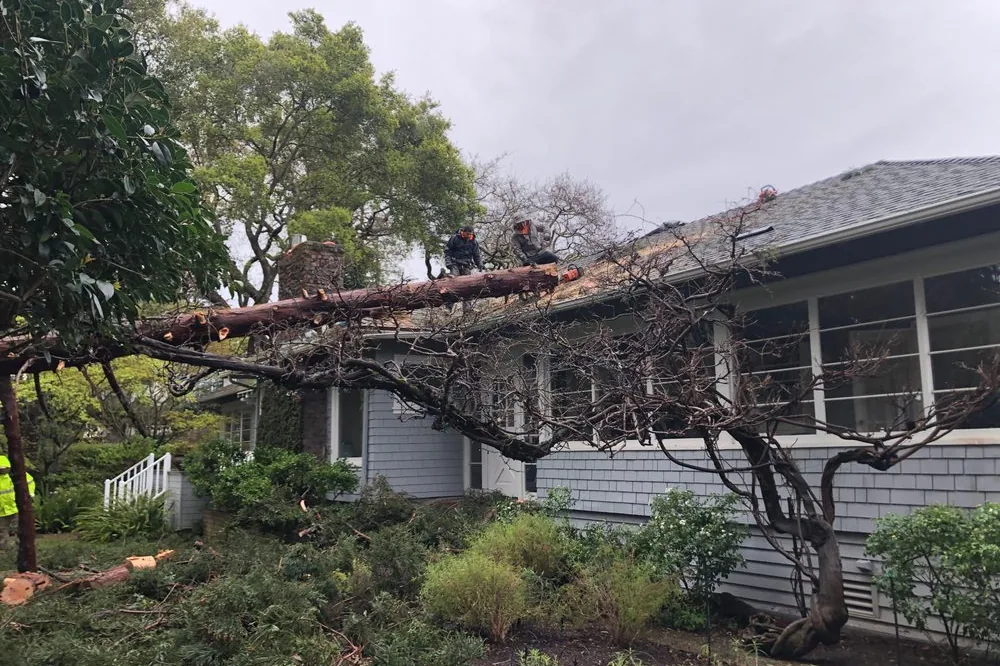
If you have a mature eucalyptus or a leaning pine near the house, the honest move is an evaluation before a removal decision, not after. Watch for dead limbs, cracks, and heavy lean, all signs that a tree is a hazard on its own terms. Our guide to the signs a tree needs removal helps you spot them, and when a tree has to come down, professional tree removal near the home keeps the drop away from your roof and your neighbor’s. One note for Redwood City owners: some native and heritage trees are protected, so removal may need a city permit even for fire safety. Factor that into your timeline.
What Zone 0 Means for Your Trees Right Now
Zone 0 is the part of California’s defensible space rules that is still being written. Assembly Bill 3074 created the ember-resistant zone in state law back in 2020, and Governor Newsom’s Executive Order N-18-25 pushed the Board of Forestry and Fire Protection to finish the rules that spell out what it requires. As of late September 2026, those rules are not in effect. The Board adopted an emergency version in August 2026, then withdrew it from the state Office of Administrative Law on September 8, 2026 (OAL record, file 2026-0828-03E). There is no Zone 0 compliance date to plan around yet.
Here is what that means in practice. The version the Board adopted in August would have covered homes in State Responsibility Areas and homes in locally designated Very High Fire Hazard Severity Zones, with existing homes given several years to comply. Redwood City’s 2025 fire hazard map has no Very High parcels inside city limits, so if you live in the hills around the city, check your own address rather than assuming either way. If you have been reading that Zone 0 is already enforced, that is not right today. The idea behind it is still sound.
For trees, clearing the first five feet around the house makes sense whatever the final rule says, because that is where embers do their damage: no overhanging limbs, no branches against walls, and nothing dead in the canopy above it. If a tree cannot meet that without being butchered, it may be a removal-and-replant candidate somewhere farther out. Getting it done before a rule or an insurer asks is far easier than reacting to an inspection later.
Insurance, Home Sales, and Why Compliance Pays Off Now
Defensible space has become an insurance and real estate issue, not just a fire-season chore. Carriers across California increasingly require documented defensible space to write or renew a homeowner’s policy, and some now ask for a third-party wildfire-preparedness certificate before they will keep covering a hillside home. If you have received a non-renewal notice, tree and brush clearing is often part of getting insurable again.
Selling a home in a fire zone carries its own rules. Under Assembly Bill 38, sellers of properties in high and very high fire hazard severity zones must disclose defensible space compliance, and in many jurisdictions provide documentation that the property meets the state’s clearance standards. A property that fails can mean a delayed close or a price cut at the worst possible moment.
For homeowners weighing whether the work is worth it, that is the answer. The immediate payoff is an insurable, sellable, inspection-ready property. The longer payoff is a home that has a real chance of standing when the next fire moves through the Peninsula hills. Both come from the same tree work, done before you are under a deadline.
How a Professional Crew Clears Defensible Space
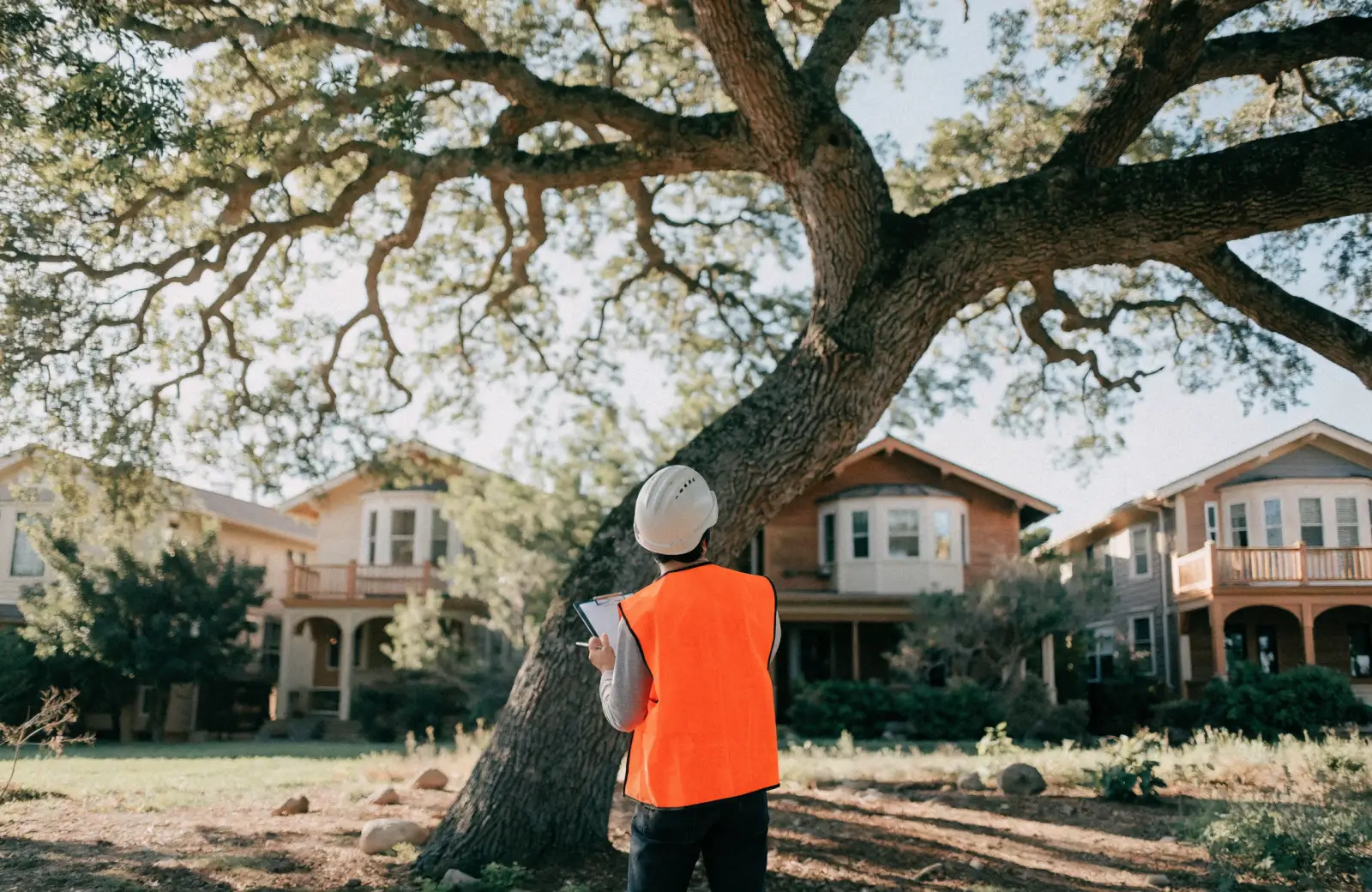
A professional crew turns the 100-foot requirement into a prioritized plan and then does the heavy, dangerous work safely. Defensible space is not a one-time project either. It is a cycle, because vegetation grows back and each fire season resets the clock. Good crews handle it in three stages:
- Assessment. Walk the property, map every tree within 100 feet of a structure, flag fire-prone species and hazard trees, measure crown spacing, and hand you a written, prioritized plan.
- The work. Crown raising to hit 6-foot clearance, crown thinning to open spacing between trees, hazard and fire-prone tree removal, brush and understory clearing, and cutting back any limb over the roof or near the chimney.
- Ongoing maintenance. Annual or twice-yearly trimming and cleanup, with extra attention to debris before fall wind events. Regular upkeep is where the payoff lives, and it is exactly why the benefits of routine tree trimming compound year over year.
Because the vegetation never stops growing, most Peninsula homeowners are better served by an ongoing management plan than by scrambling for a one-time clearing every time an inspection looms.
Defensible-space and access-clearance work in the Peninsula hills is core to what we do. As a firefighter-owned crew, we read a property the way fire reads it and prioritize the clearing that actually changes how a fire would move through your landscape, not just the boxes on an inspection form.
Preparing Your Property This Fire Season
If your Redwood City or Peninsula property sits in a fire hazard zone, a few concrete steps get you ahead of both the fire risk and the paperwork:
- Confirm your fire hazard severity zone. Look up your address so you know which requirements actually apply to you.
- Walk your 100 feet with the zone rules above and mark every fire ladder, dead tree, and branch touching the house.
- Start with the first five feet. The five feet closest to the house is where embers do the most damage, and it is the zone the state’s Zone 0 rules are still being written for.
- Book a professional assessment. A trained eye catches hazards you will miss and handles the climbing and heavy cuts safely.
Do that this season, and you walk away with a clear plan, an insurable property, and a home that is genuinely harder for a fire to take.
Get Fire-Safe With Firefighter Tree Service
When the work is about fire, it helps to hire a crew that has stood in front of one. Firefighter Tree Service is firefighter-owned, and we read a property the way fire reads a property: where it starts, where it climbs, and where it jumps to the house. That perspective shapes every recommendation we make, from which trees to limb to which ones have to go.
We provide defensible space assessments, tree clearing, crown raising, hazard tree removal, and year-round upkeep for homeowners across Redwood City, Woodside, and the Bay Area Peninsula. When you are ready to get your property compliant and fire-ready, set up a defensible space and tree management plan with our team, or call us at (650) 454-0373 to schedule your assessment before the next deadline or the next red-flag day.