Tree trimming, done for the right reasons, keeps your trees structurally sound, lowers the odds of a branch landing on your roof, and clears the fuel that helps wildfire spread. Done for the wrong reasons, or done badly, it can leave a tree weaker than before anyone touched it. That gap between good trimming and bad trimming is the whole story, and it matters more here than almost anywhere else, because Bay Area trees deal with drought, coastal wind, and a fire season that starts earlier every year.
We are a firefighter-owned crew based in Redwood City, and we read a tree the way we read any hazard: what is likely to fail, what is fuel, and what is worth protecting. This guide walks through what regular tree trimming actually does for your trees, your property, and your safety. It is also honest about the benefits that get oversold, because a trim you do not need is money you should keep.
What Tree Trimming Actually Does for a Tree
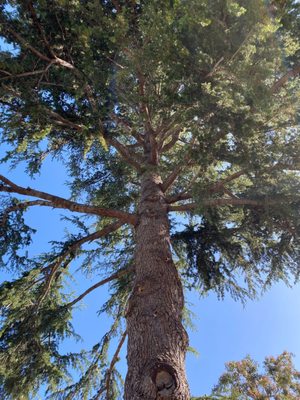
Proper tree trimming improves a tree’s health by removing dead, diseased, and crossing branches so the tree can pour its energy into strong, living growth. It also opens the canopy to more light and air, which makes it harder for fungus and pests to settle in. What it does not do is make a tree healthier just because more got cut off.
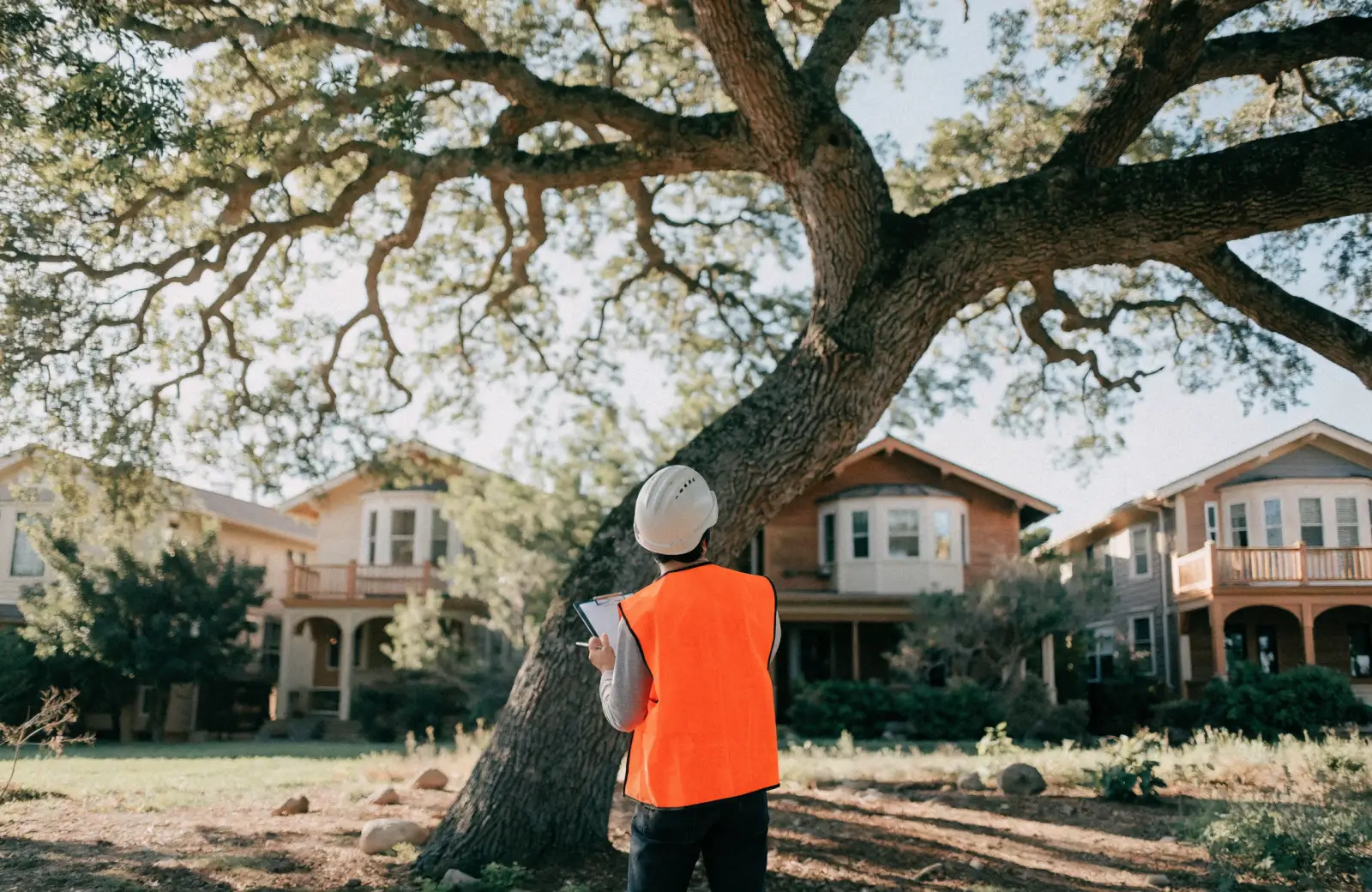
The International Society of Arboriculture is clear on this point: the real reasons to prune are removing deadwood, improving structure, and increasing light and air penetration, not shaping a tree for its own sake. You can read the ISA’s own breakdown of proper pruning practices for the technical side. A young tree pruned for good structure in its first years grows into a stronger adult that holds up in wind. An older tree with its deadwood cleared is safer and gives decay fewer places to start. The cuts are targeted. A good arborist removes specific branches for specific reasons and leaves the rest alone, so you end up with a tree that is more stable and less likely to surprise you.
Fewer Branches Coming Down in Wind and Storms
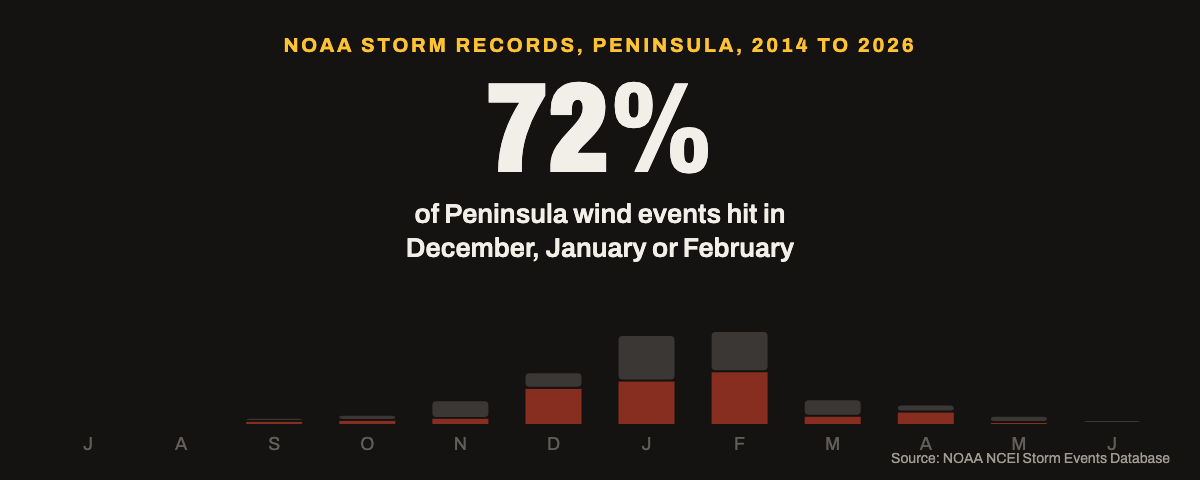
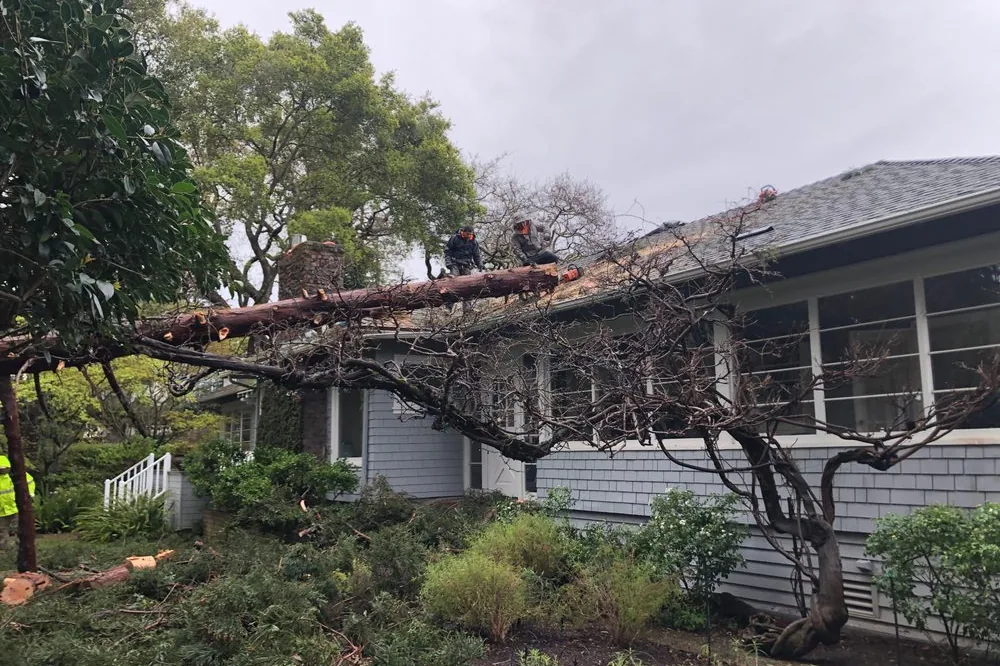
Trimming lowers the risk of falling branches by taking out the deadwood and the weak, overextended limbs that fail first when the weather turns. On the Peninsula, where afternoon wind off the coast is a near-daily event and winter storms roll in wet and heavy, this is the benefit most homeowners actually feel. The dead limb is almost always the one that comes down.
If you have ever heard that crack at two in the morning and gone out with a flashlight, you already know the cost of waiting. Removing a hazard limb before a storm is far cheaper than clearing it off your car afterward, and safer for anyone walking underneath. Thinning an overgrown canopy also lets wind pass through instead of shoving against a solid wall of leaves, which is how whole trees end up uprooted in a single gust.
Storm-damage cleanup is one of the services owner Dennis Santora built this crew around, and every winter we get called out to clear limbs that a scheduled trim a few months earlier would have caught first. The pattern almost never changes: the branch that comes down in a gale is the dead or overextended one nobody dealt with while the weather was calm.
Wildfire Defensible Space
Trimming trees is one of the most direct ways to create defensible space, the buffer of thinned and cleared vegetation that slows a wildfire before it reaches your home. California law requires 100 feet of defensible space around most homes in fire-prone areas, and tree branches are a large part of what has to be managed. The requirement is written into state Public Resources Code section 4291, so for many Peninsula and hillside owners this is not optional.
This is where a firefighter’s eye earns its keep. We look at where fire would climb: low branches that act as a ladder from grass into the canopy, limbs touching the house or roof, and dry deadwood that catches embers on the wind. The state gets specific close to the structure. The first 5 feet should be an ember-resistant zone, the 5 to 30 foot band needs the most aggressive fuel reduction, and any branch within 10 feet of a chimney has to go. On larger or overgrown lots, trimming alone will not get you there, and it pairs with full lot clearing services to cut the ground and ladder fuels too. If you want the zones explained property by property, our guide to defensible space tree clearing in California lays out exactly what to remove and where.
The payoff is a home that meets the state requirement, stands a real chance if fire moves through the area, and gives you an easier conversation with your insurer.
Wildland defensible-space clearing is core to what we do. It is one of the services owner Dennis Santora built the company around, and being a firefighter-owned crew, we clear ladder fuels and roof-line limbs on Peninsula and hillside lots the way we would want them cleared before a fire ever reached the property line.
Curb Appeal and a Real Bump in Property Value
Well-trimmed trees make a property look cared for, and that shows up in the sale price. The Arbor Day Foundation points to research where homes with healthy street trees sold for roughly $7,130 more and about 1.7 days faster than comparable homes without them. A mature, balanced oak or maple is one of the first things a buyer notices, and a lopsided or half-dead one is too.
If you are getting a property ready to sell, or you just want the yard to stop looking neglected, trimming clears deadwood before it becomes debris, opens up sightlines, and keeps the tree in proportion. What the work costs is small next to what a hazardous, unmanaged tree can knock off an appraisal, and you can see typical local ranges in our Bay Area tree trimming cost guide. The near-term result is a yard that looks intentional. The longer-term result is a tree that adds to your home’s value instead of quietly subtracting from it.
More and Better Fruit and Flowers
For fruit and flowering trees, trimming directly increases and improves the harvest by steering the tree’s energy into productive wood and letting light reach the fruit. Backyard citrus, apples, plums, and stone fruit all respond to it. This is the one case where cutting is meant to change how the tree grows, not just tidy it up.
Opening the center of the tree lets sunlight ripen fruit evenly and keeps the humid, disease-friendly pockets from forming. Removing older, spent wood pushes the tree to grow the young wood that actually sets fruit. Timing carries a lot of weight here, and it is different for every species, which is why we treat when-to-cut as its own subject rather than crowd it into a benefits list. Get the timing right and next season’s crop comes in heavier and cleaner.
When Trimming Does More Harm Than Good
Trimming is not automatically good for a tree, and the wrong cuts can shorten its life. The clearest example is topping, cutting a tree back to stubs, which the ISA calls the most harmful pruning practice there is. It forces out weak, fast regrowth, invites decay into the wounds, and creates the exact falling-limb hazard it was supposed to prevent. If a company offers to top your tree, that is your cue to call someone else.
Over-thinning is the quieter mistake. Strip too much live canopy and you stress the tree, especially one already rationing water in a dry year, and you trigger a mess of weak sucker growth. Cutting at the wrong time of year opens fresh wounds when disease pressure is highest. Good trimming follows the tree’s biology, which is the whole reason proper pruning methods matter more than how much gets removed. And sometimes trimming is the wrong tool entirely. A tree that is more than half dead, leaning after its roots have failed, or hollow at the base is usually past the point where pruning helps, and our guide to tree removal versus tree trimming walks through how to make that call. Knowing when to stop cutting saves you from paying for work that makes your tree worse.
We run this as an arborist service, not just a company that shows up to cut, so part of the job is telling you when a trim is not worth doing. If a tree is too far gone for pruning to help, or the cut you are asking for would only stress it, we will say so rather than book the work. Customers regularly tell us that straight answer is the reason they call us back.
Bay Area Trees Play by Different Rules
Bay Area trees face a specific mix of drought, coastal salt, strong wind, and local tree-protection rules, and all four change how and when you should trim. Advice that works in a wetter climate can backfire here, so it is worth knowing the local wrinkles before anyone starts cutting.
- Drought stress: Heavy pruning in a dry year stresses a tree that is already conserving water. Species like Monterey pine and acacia are especially sensitive, so light, deadwood-only cuts are the safer move during a dry stretch.
- Coastal salt and wind: Salt air scorches foliage and constant wind snaps weak limbs, so many Peninsula trees need more frequent but lighter maintenance than trees a few miles inland.
- Protected species and permits: A lot of Bay Area cities protect native oaks, redwoods, and other heritage trees, and heavily cutting or removing one can require a city permit. New homeowners get caught by this often, so check before you cut.
FAQ
Does tree trimming actually make a tree healthier? Only when it is done for the right reasons. Removing dead, diseased, or crossing branches and opening the canopy to light and air genuinely helps a tree. Cutting live wood just to reshape it, or removing too much at once, does the opposite. The benefit comes from the specific branches you take, not the total amount.
How often should Bay Area trees be trimmed? Most established trees do well on a two to three year cycle, though fast growers, fruit trees, and anything near a structure or power line often need attention more often. Season matters as much as frequency, and the right window depends on the species, so it is worth checking the best time to prune your trees before you schedule the work.
Can I trim my own trees, or should I hire a pro? Light work on small ornamental trees you can reach from the ground is reasonable for most homeowners. Anything involving a ladder, a chainsaw overhead, large limbs, or a tree near a power line is where people get hurt, and it is worth handing off. Work near utility lines in particular should only be done by trained crews.
Trim With a Firefighter-Owned Crew in Redwood City
Firefighter Tree Service is an ISA-certified, firefighter-owned crew that has cared for more than 500 properties across the Peninsula and South Bay. We trim for the reasons that hold up here: structure, storm safety, and defensible space, and we will tell you when a tree does not need the work at all. Every job is insured and backed by our three-day service guarantee. When you want a straight assessment, schedule tree pruning in Redwood City or call us at 650-454-0373.