Tree trimming and tree removal solve two different problems. Trimming keeps a healthy tree healthy by cutting away branches that are dead, crossing, or in the way. Removal takes the whole tree down when it is dead, dangerously unstable, or too far gone to save. The right choice comes down to one question: can the tree be made safe and kept, or has it become a hazard you cannot prune your way out of?
If you are standing in your yard looking up at a big tree and wondering whether it needs a good trim or has to come down, you are not alone. It is one of the most common calls we get on the Peninsula, and it is a decision worth getting right, because you can only remove a tree once. This guide walks through how a certified arborist actually makes the call, what each option costs, and the situations where trimming saves both the tree and your money.
Trim First, Remove Only When You Have To
For the large majority of trees, trimming is the right first move, and removal is the exception you turn to only when a tree is dead, structurally failing, or a proven hazard. Arborists lead with preservation for a simple reason: a healthy tree is worth more standing than gone, and most branch-level problems can be corrected with the right cuts. Removal is permanent, so it belongs at the bottom of the list, not the top.
Think of it as two very different jobs. Trimming is maintenance you repeat every few years to keep a sound tree safe and shaped. Removal is a one-time, final decision you make when the tree itself, not just its branches, has become the problem. The rest of this guide helps you tell those two situations apart.
What Tree Trimming Does, and When It’s the Right Call
Tree trimming is the selective removal of specific branches to keep a tree healthy, safe, and well shaped, and it is the right call whenever the tree itself is sound. If the trunk is solid and the roots are stable, almost any branch-level issue can be fixed by trimming rather than removal.
Trimming is usually the answer when you see:
- Dead, damaged, or diseased branches scattered through an otherwise healthy crown
- Limbs growing toward the roof, siding, windows, or power lines
- Branches that rub or cross and weaken each other
- An overgrown or lopsided crown blocking light and air
- Low branches in the way of people, cars, or a walkway
Done on a regular schedule, trimming extends a tree’s life, improves its structure, and catches small problems before they become expensive ones. The benefits of regular tree trimming go well beyond looks: better airflow lowers disease risk, and removing weak limbs before a storm keeps them off your roof. For a homeowner who just wants the tree pulled back from the roofline before winter, this is almost always a professional tree trimming job, not a removal.
What Tree Removal Does, and When It’s the Only Option
Tree removal takes down the entire tree, and it becomes the only responsible option when a tree is dead, dying, structurally unsound, or growing somewhere it simply cannot stay safely. No amount of trimming fixes a rotted trunk or a failed root system, so when the core of the tree is compromised, removal is what protects your home and the people around it.
Removal is warranted when you notice:
- No green under the bark when you scratch a branch, or bare limbs when nearby trees are in full leaf
- Bark peeling away in large sheets and wide vertical cracks in the trunk
- Mushrooms, conks, or shelf-like fungi at the base or on the trunk, a common sign of internal rot
- A trunk that is hollow or soft over a large area
- A sharp new lean after a storm, or roots visibly lifting out of the ground
- Severe disease or a pest infestation that has moved past the point of treatment
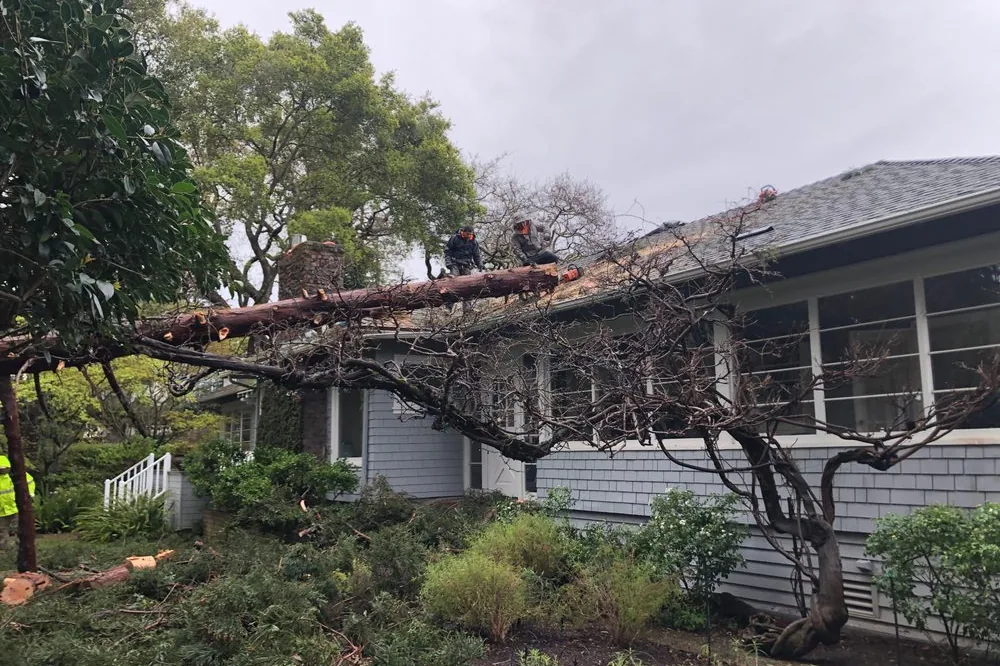
These are the signs a tree needs removal, and they tend to show up together on a tree in real decline. When a dead or failing tree threatens a house, a car, or a power line, it also becomes an emergency, which is why our crew keeps a 24-hour response line open for tree removal after storms.
The Rule Every Arborist Lives By: You Can Only Remove a Tree Once
There is a saying in the trade: you can only remove a tree once. It is the single idea that shapes how a good arborist approaches every borderline call. A removal is final, but a well-timed prune can buy a tree years, and with it the shade, privacy, and property value that a mature tree brings. Another version pros repeat is that a removal pays one bill, but a healthy tree builds value season after season.
This matters because the pressure usually runs the other way. A struggling tree looks scary, a removal feels like a clean fix, and cutting it down ends the worry today. But once it is gone, the decades it took to grow are gone with it. Before you commit to something you cannot undo, it is worth asking whether the tree is truly beyond saving or just in need of attention it has not had in a while.
This is the difference between an arborist tree service and a company that only takes trees down. Homeowners call us back again and again to care for their oaks, including a large Coast Live Oak we were brought in to reshape after it had grown too close to a house, the kind of mature tree another crew might have simply removed. When the trunk and roots are still sound, the right structural pruning keeps a tree standing that a faster quote would have ended.
The 50% Rule: How Arborists Actually Make the Call
Arborists use measurable thresholds, not guesswork, and the clearest one is the 50% rule: when more than half of a tree is damaged, dead, or diseased, it usually needs to come out. Below that line, most trees can be saved with proper trimming and time to recover. The same logic applies to specific parts of the tree, and it is the framework university extension programs publish for deciding when to remove a tree.
Here is how the numbers break down when we inspect a tree:
| Usually Salvageable (Trim) | Removal Recommended |
|---|---|
| Less than 50% of the tree is damaged | More than 50% of the tree is damaged |
| Severe damage covers less than 25% of the trunk circumference | More than 25% of the trunk circumference is severely damaged |
| Less than one-third of the trunk is hollow or rotten | One-third or more of the trunk is hollow or rotten |
| Less than 25% of the large branches are damaged | More than 25% of the large branches are damaged |
| The tree has a slight lean | The tree leans more than 15% from vertical |
| Less than 50% of the root system is damaged | More than 50% of the root system is damaged |
No single line on this chart decides it alone. An arborist weighs them together, along with the tree’s species, age, and where it stands relative to your home. A tree that fails one threshold but passes the rest is often a trimming candidate. A tree that fails several is telling you it is time.
The Cost and Property-Value Trade-Off Nobody Mentions
Cost usually pushes people toward removal, but the full math often favors trimming. Tree removal is one of the most expensive services on a property, and it does something trimming never does: it permanently erases the value a mature tree adds to your home. Trimming is a fraction of that cost and something you repeat as ordinary upkeep.
A mature, healthy tree is not just scenery. It adds curb appeal, cools your home in summer, and can raise a property’s value in the way buyers on the Peninsula clearly reward. Take it down and you pay a large one-time bill and lose that value at the same time. Keep it healthy with routine trimming and you protect both. That is why the cheaper-looking option is not always the cheaper decision. Before you choose, it helps to compare what tree removal costs against tree trimming costs in the Bay Area for a tree your size, so you are weighing the real numbers and not a guess.
To put rough numbers on it, our tree removals now start at about $1,000 per tree, with the final figure driven by the tree’s size, its access, and whether the crew has to protect anything nearby. Trimming does not price the same way, because it depends on how large the tree is and how much of the canopy needs work, so the honest answer is that it varies with size and scope. The cost guides linked above walk through what drives each number for a tree your size.
Fire Safety Changes the Math in California
In California’s fire-prone areas, a dead or dying tree near your home moves up the priority list fast, because it becomes fuel. Defensible space guidelines ask homeowners to clear dead vegetation and create spacing around structures, which can tip a borderline tree toward removal. The good news is that strategic trimming often satisfies those same rules without losing a healthy tree.
The University of California’s defensible space guidance focuses on removing dead plant material and breaking up the pathways fire uses to reach a home. A healthy tree that is limbed up, thinned, and cleared of deadwood can often stay, while a dead one close to the house should come down. As a firefighter-owned crew serving the Peninsula and South Bay, from Woodside and Portola Valley to the wooded edges of Redwood City, this is the lens we bring to every property in a higher-risk zone: keep the trees that protect and shade the home, remove the ones that have turned into a hazard.
How to Avoid Being Talked Into a Removal You Don’t Need
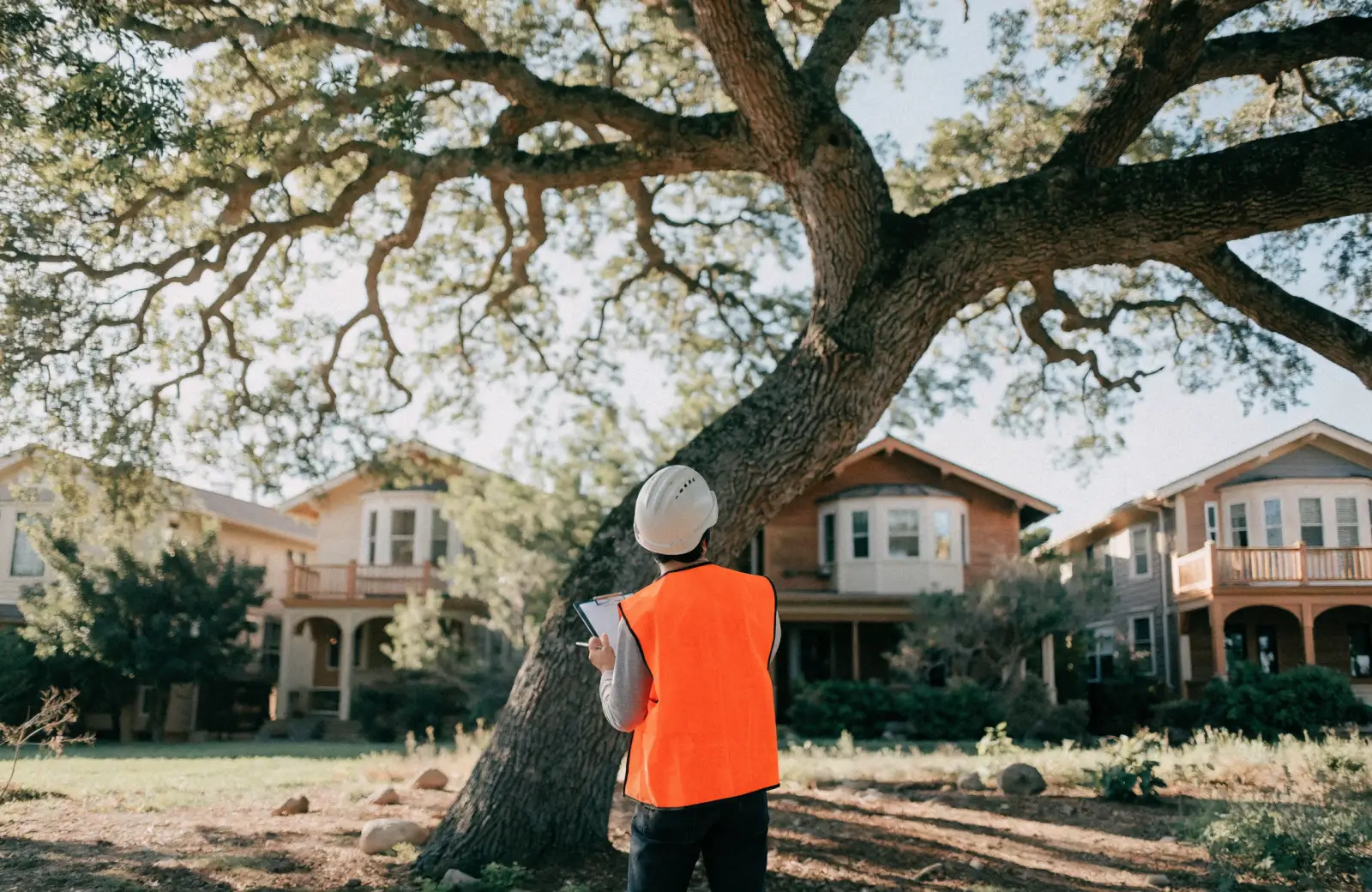
The best way to avoid an unnecessary removal is to get an assessment from a certified arborist whose recommendation is not tied to selling you the biggest possible job. A trustworthy arborist will tell you when a tree can be saved, even when a removal would be the larger invoice. An ISA-certified arborist is trained to diagnose a tree’s real condition, not just quote a price to take it down.
Watch for these signs that a removal is being oversold:
- A quote to remove the tree without anyone inspecting the trunk and root collar up close
- Pressure to decide on the spot, or a “today only” price
- No certified arborist on staff and no written scope of work
- A recommendation to remove a tree that still passes most of the 50% thresholds above
When the stakes are high and the answer is not obvious, get a second opinion. Before you hire anyone, ask a few direct questions:
- Are you licensed, insured, and is there a certified arborist on the crew?
- Have you looked at the trunk, the base, and the roots, not just the canopy?
- Can you put the recommendation and the reasoning in writing?
- If this were your tree, would you trim it or remove it, and why?
In practice, we get these calls regularly: a homeowner sits with a removal quote from another company and wants a second opinion before anything comes down. We inspect the trunk, the base, and the roots up close, and when the tree is genuinely sound we say so and recommend keeping and pruning it. When the removal really is necessary, we confirm that too. Either way, the recommendation is tied to the tree’s condition, not to the size of the invoice.
Frequently Asked Questions
Is it cheaper to trim or remove a tree? Trimming is almost always cheaper than removal, and it preserves the value the tree adds to your property. Removal is a larger one-time cost and it is permanent, so the lower-priced option over the life of the tree is usually regular trimming.
Can a dead tree be saved by trimming? No. Trimming removes branches, but it cannot revive a tree that is already dead or whose trunk and roots have failed. Once you confirm there is no green tissue under the bark and the core is compromised, removal is the safe choice.
What is the best time of year for tree trimming or removal? Late winter or early spring is generally the best window for both, because trees are dormant and wounds heal faster heading into the growing season. A hazardous or dead tree, though, should be removed as soon as it is spotted, regardless of season.
Do I need a permit to remove a tree in the Bay Area? Often, yes. Many Peninsula cities, including Redwood City, protect heritage and larger-diameter trees and require a permit before removal. Always check your city’s tree ordinance, or ask your arborist to confirm, before any tree comes down.
How do I know if my tree is a hazard? Look for a sharp lean, large trunk cracks, mushrooms or fungi at the base, hollow or soft wood, and dead limbs over a structure. If you see several of these together, have a certified arborist inspect it promptly.
Talk to Firefighter Tree Service Before You Cut
When you are not sure whether to trim or remove, the smartest first step is an honest assessment from someone with no reason to oversell it. Firefighter Tree Service is a firefighter-owned, ISA-certified crew that has cared for more than 500 residential properties across the Peninsula and South Bay, and we bring the same safety-first discipline to your yard that we bring to the firehouse. We will tell you straight whether your tree can be saved or needs to come down, and back the work with our 3-day service guarantee. Get a free, no-pressure evaluation and recommendation on tree trimming and removal for your property, or call us directly at 650-454-0373.