Choosing a tree service in the Bay Area comes down to one habit most homeowners skip: verifying what a company claims instead of taking it on faith. Nearly every crew will tell you they are certified, licensed, and insured. This guide shows you how to confirm all three yourself, read the bids you get back, and walk away from the ones that should worry you, whether you are clearing a storm-damaged oak in Woodside or finally trimming the redwood that has outgrown your Redwood City backyard.
Why the Right Tree Service Protects Your Wallet, Not Just Your Trees
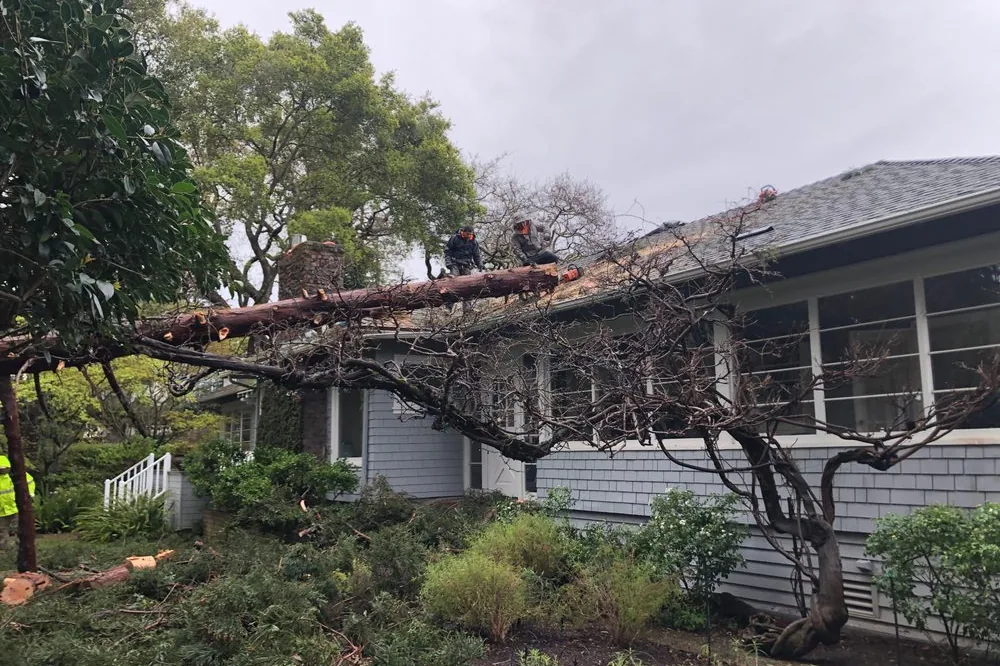
Hiring the wrong tree service can cost you far more than a bad haircut for your trees: it can leave you legally and financially exposed. When an uninsured worker gets hurt on your property, or a mishandled limb crushes a fence or a neighbor’s roof, the liability can land on you, the homeowner, rather than the crew that made the mistake.
That is the part first-time buyers rarely see coming. The tree looks like a simple job, so the lowest quote wins, and the real stakes stay invisible until something goes wrong. There are four dangers worth slowing down for:
- Safety hazards from improper technique and the wrong equipment
- Property damage from incorrect felling or rigging
- Legal liability when an uninsured worker is injured in your yard and your homeowners policy will not cover it
- Poor outcomes like over-pruning, topping, and disease exposure that shorten the life of a healthy tree
Spend ten minutes vetting up front and you avoid the expensive version of this problem later. The rest of this guide is how to spend those ten minutes well.
Start With an ISA Certified Arborist, and Verify It Yourself
The single most useful credential to look for is ISA certification: proof that at least one person on the job has passed the International Society of Arboriculture exam and keeps up continuing education. Do not just take the badge on the truck at face value. You can confirm any arborist’s credential in about a minute using the ISA’s public tool to verify an arborist certification.
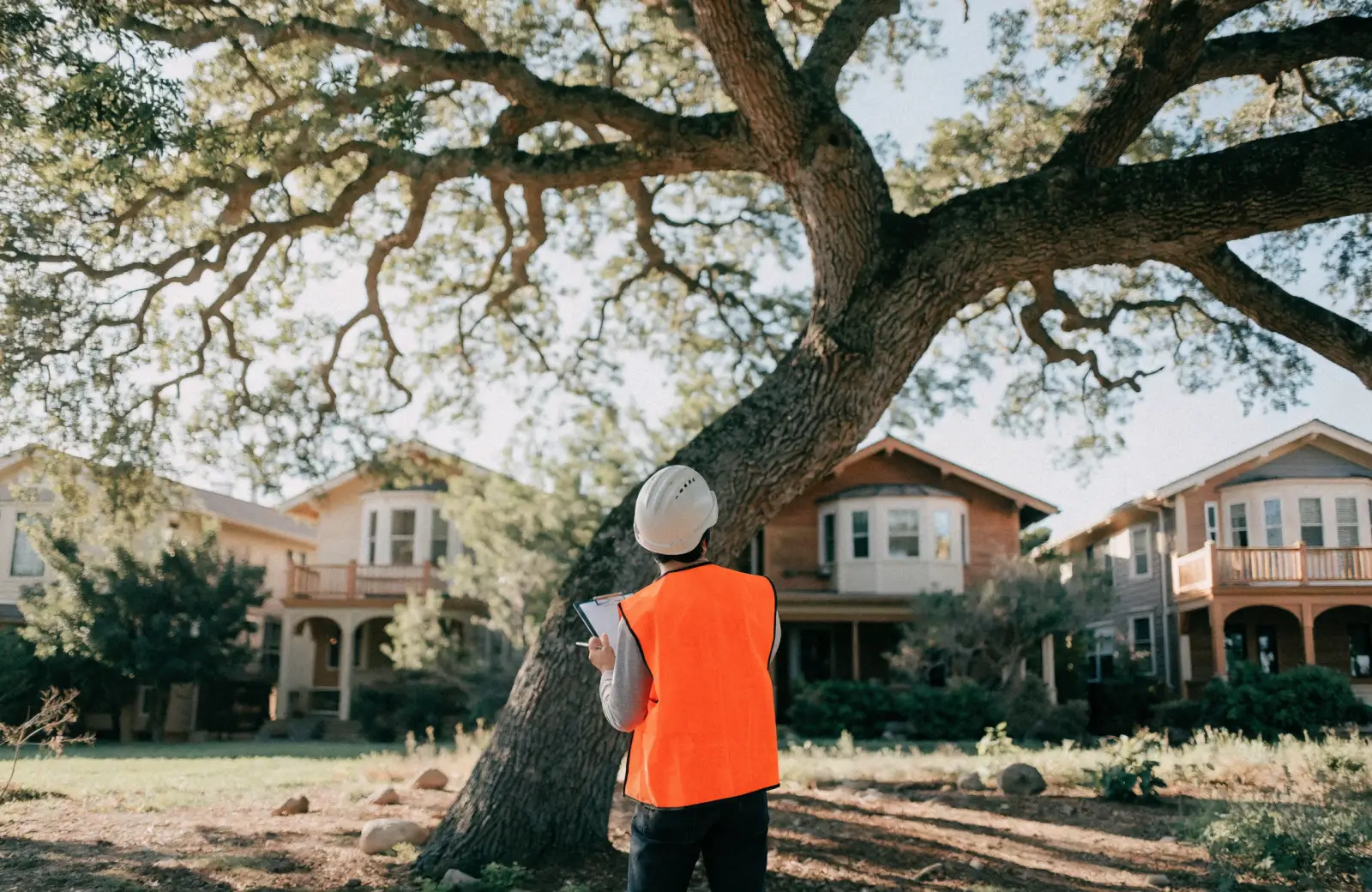
Certification matters because tree work is judgment work. Where to cut, how much to remove, and whether a leaning tree is likely to fail are not things you learn from watching a video. If your tree is large, close to the house, or already leaning, ask whether anyone on staff holds the TRAQ (Tree Risk Assessment Qualified) credential, which signals training specifically in judging how likely a tree is to come down.
Certification is also where price and safety meet. A crew that trained properly and carries the right coverage will not be the cheapest quote, and that is usually a good sign. When you are ready to bring in a professional, look for a certified arborist rather than a general handyman with a chainsaw.
What “Licensed and Insured” Really Means in California
In California, “licensed and insured” has a specific, checkable meaning, and you should verify both halves before any work starts. Most tree removal and larger pruning jobs require a licensed contractor, commonly under the C-61/D-49 tree service classification, and you can look up any license and its complaint history for free on the California Contractors State License Board website.
Insured means two separate policies, not one, and this is the part people forget. General liability covers damage to your property. Workers’ compensation covers the crew if someone is injured in your yard. If a company carries no workers’ comp and a climber falls, you can be the one facing the medical claim. Ask for a certificate for each policy, and for anything larger than a small trim, call the insurer listed to confirm the coverage is active on the day of the work.
Here is the reassuring part: both checks are free and fast. A legitimate company expects these questions and answers them without hesitation. The one that stalls, changes the subject, or says “we’re covered, don’t worry about it” has just told you something useful.
How to Read the Bids You Get Back
Get at least three written, itemized bids, and read them for scope before you read them for price. The reason quotes for the “same” job can range from a few hundred dollars to several thousand is that they are almost never the same job: one includes stump grinding, hauling, and full cleanup, while another leaves the stump in the ground and the debris in your driveway.
Start by settling what you actually need. If you are not sure whether the tree should come out entirely or just be cut back, our guide to tree removal versus tree trimming will help you decide, so every company is quoting the exact same work. A clear scope is what makes three bids comparable in the first place.
A solid itemized bid spells out the takedown or pruning approach, stump handling, debris haul-away, cleanup, any permit work, and who carries liability for the job. Once the scope matches, then compare price. The cheapest bid is rarely the cheapest job, because the lowball usually skips insurance, cleanup, or both. To see what fair pricing looks like for your situation, check our tree removal cost guide before you judge any quote as high or low.
Here is a simple way to run it:
- Decide the real scope first: full removal or a trim.
- Get three written, itemized bids for that exact scope.
- Compare them line by line, not by the bottom number.
- Drop any company that will not put the scope and cleanup in writing.
References, Reviews, and the Questions That Reveal a Pro
Check reviews across more than one platform, then call two recent references and ask about cleanup, timeline, and any surprises on the final bill. Reviews show you the pattern; references tell you what it is actually like to have this crew in your yard. Look at the recent reviews and read how the company responds to the negative ones, since that is often more telling than the five-star ones.
The bigger mistake is not asking the right questions before the work starts. Homeowners who have been burned once almost always say the same thing: they did not know what to ask. Use this short script, and pay attention to the answers that should worry you:
- “Will a certified arborist be on site during the work?” For anything complex, “our foreman handles it” is a weak answer.
- “Can I see current liability and workers’ comp certificates?” Hesitation here is a red flag on its own.
- “Is cleanup and haul-away included, in writing?” Vague answers become surprise line items later.
- “Will you pull any permit the city requires?” A pro already knows the local rules.
- “How do you decide where to cut?” A good answer talks about tree structure and standards, not “we’ll just top it to make it safe.”
Ask these five and you will separate the professionals from the trucks with a ladder within one phone call.
Red Flags That Should End the Conversation
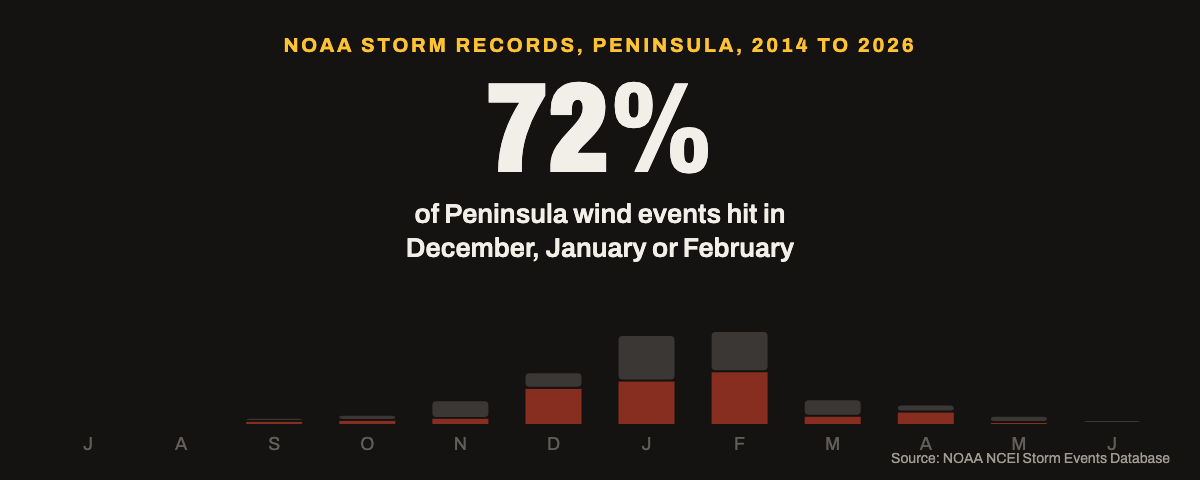
Some signals are serious enough to stop the conversation right there: a crew that knocked on your door after a storm, demands full payment up front, works only in cash, or cannot give you a business address and license number. These are the patterns behind most tree service scams, and no price is low enough to make them worth the risk.
Watch for these in particular:
- Door-to-door solicitors, especially in the days after a windstorm
- Full payment or a large cash deposit demanded before any work is done
- No verifiable license, no physical address, and no insurance certificates
- A quote far below every other bid you received
- High-pressure insistence that you decide today
Storms are exactly when these crews come out, because homeowners are stressed and want the problem gone. If a limb just came down and you need help fast, call an established local company for emergency tree removal instead of hiring whoever happens to be driving down your street.
What a Qualified Arborist Will Not Do
A qualified arborist will refuse to top your tree, no matter how much you ask. Topping, which means cutting a tree back to stubs, is a discredited practice that University of California experts describe as harmful: it forces weak regrowth, invites decay, and leaves you with a more dangerous tree than you started with.
A trained crew also will not climb a healthy tree on steel spikes just to prune it, because spikes wound the trunk and open the door to disease. And they will not “lion’s-tail” a canopy by stripping out all the inner growth, which weakens limbs over time.
Instead of topping, a qualified crew reduces the tree the right way, shortening overlong limbs back to healthy lateral branches that can take over as the new growth, so the canopy keeps its natural shape and stays structurally sound. That is slower, more skilled work than cutting everything back to stubs, which is exactly why a good arborist will turn down a topping request and walk you through the correct cut instead of taking the easy money.
So if a company pitches topping as a safety fix or shrugs off spikes on a live tree, that answer tells you what you need to know. The right crew protects the long-term health of the tree, not just the look of it this week.
Bay Area Specifics: Permits, Native Trees, and Fire Zones
Bay Area tree work comes with local rules a good service should already know. Many Peninsula and South Bay cities protect heritage and native trees, so removing or heavily pruning a coast live oak or a large tree on your lot can require a city permit before the first cut. Our Redwood City tree permit guide walks through how that process works, and a company that offers to handle the permit for you is showing you they operate above board.
Local experience matters for the trees themselves too. Redwoods, coast live oaks, and California buckeyes each respond differently to pruning, and a crew that works on them every week will make better calls than one that does not. If your property sits in a fire-prone zone near Woodside, Los Gatos, or the hills, ask whether the crew clears to defensible-space standards, since that work has to be done a specific way to actually reduce risk.
The payoff of getting all of this right is not just a safer job today. It is a healthier tree, a cleaner property, and a company you can call again the next time a storm rolls through, without starting the whole vetting process over.
Frequently Asked Questions
How do I verify a tree service’s certification and license? Use the ISA Find an Arborist directory to confirm certification, and the California Contractors State License Board site to confirm the contractor’s license and any complaint history. Both are free and take only a couple of minutes.
What questions should I ask before hiring? Ask whether a certified arborist will be on site, whether the company carries both liability and workers’ compensation insurance, whether cleanup and haul-away are included in writing, and whether they will pull any required permit. Hesitation on any of these is a reason to keep looking.
Why are tree service quotes so different? Because the quotes are rarely for the same scope. One bid may include stump grinding, hauling, and cleanup while another stops at the felling. Compare itemized bids line by line, and see our tree trimming cost guide for what fair pricing looks like on pruning work.
Hiring an Arborist in Redwood City? Bring This Checklist to Firefighter Tree Service
Hold any company to the standards in this guide. Here is what Firefighter Tree Service brings: ISA-certified arborists, a fully insured, firefighter-owned crew, and more than 500 Bay Area properties served across the Peninsula and South Bay. When you are ready to put a real name to the checklist, reach out to our certified arborists in Redwood City for a written, itemized estimate you can actually compare, or call 650-454-0373.