Most homeowners pay between $600 and $2,000 to remove a tree, and the national average sits close to $1,000. A small ornamental in an open yard might run $300. A 90-foot tree leaning over a roof, with a crane parked in the street, can pass $5,000. That spread is real, and it is exactly why generic price charts leave people more confused than when they started.
Our crew prices tree removals every week, so this guide explains cost the way estimators actually build it: crew time, equipment, disposal, and risk. Once you see the math behind a quote, you can tell a fair bid from a padded one.
Want a number for your exact tree? Try our interactive tree removal cost calculator: pick your tree’s height, type, and access for an instant estimate.
What Tree Removal Costs in 2026
Tree removal costs $600 to $2,000 for most homeowners, with an average around $1,000 per tree. The low end covers small trees with easy access. The high end covers large, dead, or hard-to-reach trees that keep a full crew busy for most of a day.
| Job type | Typical cost |
|---|---|
| Small tree, open yard | $300 to $800 |
| Average residential removal | $800 to $1,500 |
| Large or hard-to-access tree | $1,500 to $4,500 |
| Crane-assisted or hazardous removal | $4,000 to $10,000+ |
Here is what most cost guides will not tell you: those averages blend $300 saplings with $8,000 crane jobs, so the “average” says almost nothing about your tree. If you just bought your first home and this is your first tree quote, the sticker shock is normal. You are not being overcharged by default. You are paying for a small industrial operation to happen safely in your yard.
How Tree Crews Actually Price a Removal
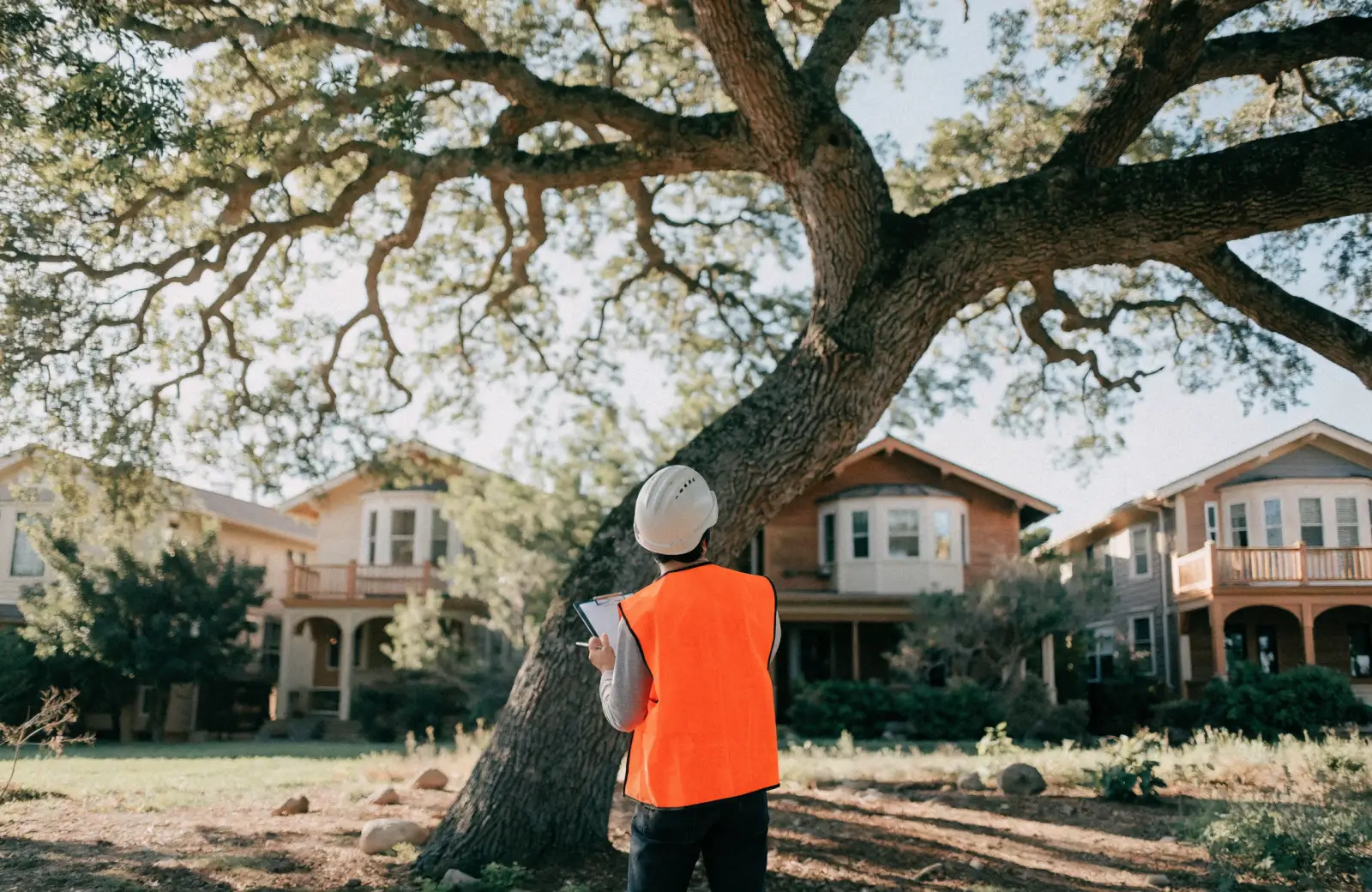
A tree removal quote is built from four inputs: crew time, equipment, disposal, and risk. There is no national price sheet. When an estimator walks your property, they are counting crew hours and hazards, not just measuring height.
The day-rate math explains a lot. An experienced climber typically earns $400 to $700 per day, and each ground crew member $250 to $400. A crane, when the job needs one, often starts around $5,000 for the day, and most operators have no half-day rate. Dump fees, fuel, chipper maintenance, and insurance ride on top of every single job. Liability coverage and workers’ compensation are among a legitimate company’s biggest costs, and the Tree Care Industry Association points to specialized equipment, insurance, and dozens of required training hours per employee as the reasons professional tree work is priced the way it is.
So when a removal needs three people for a full day, plus a chipper, a truck, and a dump run, a $2,000 quote is not padding. It is payroll.
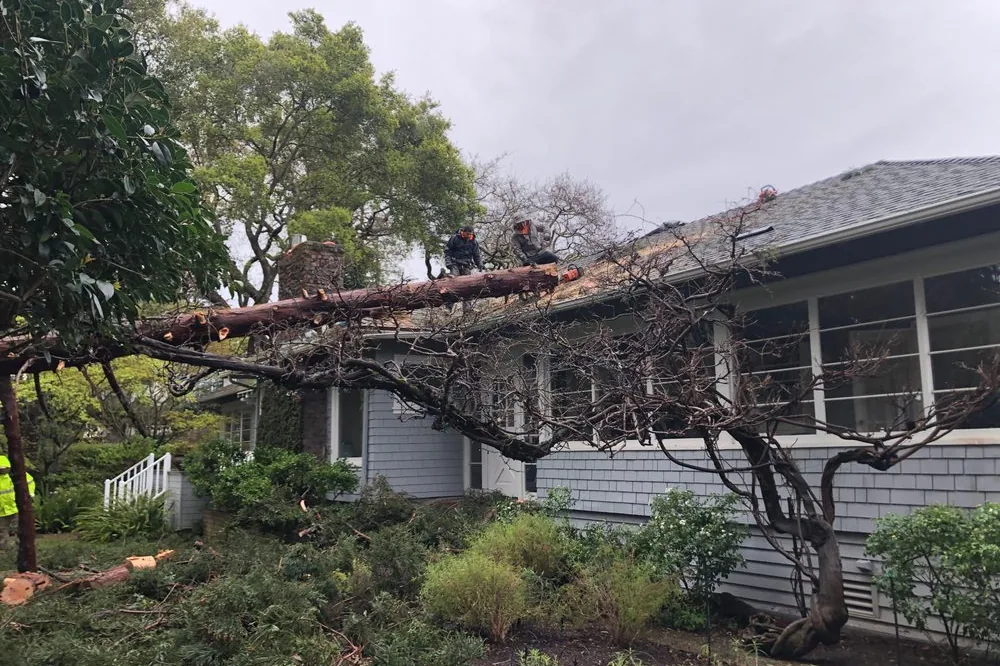
Before we quote a tree, we run the same size-up we learned on fire scenes: what can fail, what it hits when it fails, and where the crew goes if something moves the wrong way. A tree you can drop whole into open grass is cheap. A tree that has to come down in small pieces, each one roped and lowered over a sunroom, is not. The price difference between those two jobs is not greed. It is hours of controlled, rope-by-rope work.
In our own work around Redwood City, a mature oak removal usually starts at about $1,000 per tree and climbs from there, with the final number driven by size, access, and whether the crew needs to protect nearby structures. Customers often tell us the quote came in well under what another company bid.
Tree Removal Cost by Size
Small trees under 30 feet usually cost $300 to $800 to remove, medium trees of 30 to 60 feet run $800 to $1,700, and large trees over 60 feet start around $1,500 and climb fast with poor access. Trunk diameter matters as much as height, because thicker wood means more cuts, heavier pieces, and more hauling.
Size is only the starting point, though, so we keep this short. If your tree sits at either end of the scale, we have full breakdowns of small tree removal costs and large tree removal costs with the pricing detail specific to each.
The Factors That Move Your Price Most
Access, tree condition, and what sits underneath the tree move your price more than height does. Two 50-foot trees can be quoted $1,000 apart for reasons you can see from the curb once you know what to look for.
- Access. If a bucket truck or crane can reach the tree, work goes fast. If everything has to be climbed and carried through a 36-inch side gate, add hours of labor. Tight access can add $500 or more.
- Condition. Dead and dying trees cost more to remove, not less. You will read the opposite on some cost sites, and it is wrong. Dead wood is brittle and unpredictable, and often cannot hold a climber safely, which forces slower rigging or crane work. If your tree died two years ago and you have been putting the call off, know that the price has likely been going up while you waited.
- Species. Dense hardwoods like oak cut and haul slower than soft, light woods. Mature oaks commonly run $900 to $2,000 or more.
- Power lines. Anything near service lines needs extra clearance work and sometimes utility coordination. Expect a higher bid, and be glad for it.
- Cleanup and haul-away. A “cheap” quote sometimes leaves the tree in your yard in rounds. Hauling, chipping, and raking the site clean is real labor, and it is a common hidden difference between bids.
- Permits. Many cities require a permit before removing protected or heritage trees, and permit handling can add time and fees to a job.
Why Quotes for the Same Tree Vary by Thousands
Quotes vary because companies are not bidding the same job, even when they are looking at the same tree. One includes stump grinding and haul-away, another leaves both out. One plans a crane day, another plans two days of climbing. One carries full insurance, another carries none. Homeowners post about this constantly: the same removal quoted at $4,500 by one insured company and $9,000 by another, or a bid sheet that runs from $1,800 to $4,200 for one tree.
If you are staring at three quotes that do not match, do this before picking the cheapest number:
- Ask each company to itemize the bid: removal, stump grinding, haul-away, and cleanup as separate lines.
- Confirm what happens to the wood and debris. “Removal” without haul-away is a different job.
- Ask how they plan to take the tree down: crane, bucket, or climb. Equipment explains most big price gaps.
- Verify insurance before comparing prices at all. An uninsured bid is not a lower price for the same job. It is a different job with your house as collateral.
Do those four things and the quotes usually stop looking random. You will see which bids are for the full job and which ones are cheap because something is missing.
Add-On Costs to Expect
The tree coming down is rarely the whole bill. Budget for the follow-on work before you sign, so nothing on the invoice surprises you.
| Add-on | Typical cost |
|---|---|
| Stump grinding | $100 to $500 |
| Debris hauling (if not included) | $100 to $300 |
| Wood chipping | $75 to $150 per hour |
| Log splitting for firewood | $75 to $100 |
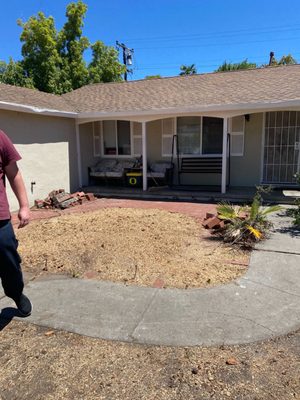
The stump is the one people forget. Grinding is almost always cheaper when it is done on the same visit as the removal, since the crew and machine are already on site. If the stump is still sitting there from an old removal, our stump removal page covers how that job is priced on its own.
Emergency and Storm Damage Pricing
Emergency tree removal typically costs 2 to 3 times normal rates, because a crew is dropping other work to handle a tree that is on your car, your roof, or about to be. After a major storm, demand spikes and even good companies run waitlists.
One rule protects you here: get the price in writing before work starts, even in an emergency. Homeowners have reported five-figure invoices handed over after storm work nobody priced up front. A legitimate crew can give you a number, in writing, in minutes. We do not charge an emergency surcharge, and we break down the premiums other companies charge, insurance interplay, and how to avoid storm-chaser pricing in our full guide to emergency tree removal costs.
Should You Trim Instead of Remove?
If the tree is healthy and the problem is clearance, light, or overhanging branches, trimming solves it for a fraction of removal cost. Removal is for trees that are dead, structurally failing, or in the wrong place entirely. Plenty of trees get removed that only needed a good prune, and that is money nobody gets back.
Trimming has its own price logic, covered in our guide to tree trimming costs. When you are not sure which side of the line your tree is on, that is exactly the question to put to a certified arborist before paying for the bigger job.
Can You Remove a Tree Yourself?
DIY removal only makes sense for a small tree, well under 20 feet, with a clear fall zone and nothing near it: no structures, no fences, no lines. Equipment rental for even that small job runs $100 to $800, which is most of what a pro would charge to do it with insurance behind them.
For anything bigger, the math and the risk both fall apart. OSHA classifies tree care work among the most hazardous jobs it covers, with falls, falling limbs, and electrical contact as the recurring killers, and those hazards do not care whether the saw is rented. Our crew’s rule comes straight from the fireground: no one works under a load that has not been controlled. A homeowner on a ladder with a chainsaw has no control over the load. If a tree is within reach of a power line, the decision is already made. That is never a DIY job.
How to Vet a Tree Service Before You Sign
Verify insurance, credentials, and a written itemized quote before you compare prices. The cheapest bid on your sheet is usually cheap for a reason, and if an uninsured worker gets hurt on your property, the cost can land on you.
Ask for three things:
- A current certificate of liability insurance and workers’ compensation, sent directly to you.
- Proof of credentials. You can verify an ISA-certified arborist through the International Society of Arboriculture, which holds credential holders to a code of ethics and industry standards. Working with an ISA-certified arborist also means someone qualified is deciding whether the tree even needs to come down.
- The itemized written quote from the section above.
Ten minutes of checking beats months of dealing with a botched removal, a crushed fence, or a liability claim.
Tree Removal Cost FAQs
How much does stump removal cost? Stump grinding runs $100 to $500 per stump, depending on diameter and root spread. It is cheapest bundled with the removal.
How much does it cost to remove a fallen tree? Usually $150 to $600, since nobody has to climb or rig it. If it fell on a structure, expect more, because crews must lift it off in controlled sections.
How much does palm tree removal cost? Most palm removals run $200 to $900 based on height. Palms are deceptively heavy for their size, which is what drives the price.
Does homeowners insurance cover tree removal? Generally only when the tree falls on a covered structure like your house, garage, or fence. Removing a standing tree, even a dead one, is considered maintenance and comes out of pocket. That is one more reason not to let a dead tree stand and get more expensive.
What does tree removal cost per foot? Rough shorthand is $10 to $25 per foot of height, but no serious crew prices purely by the foot. Access, condition, and equipment set the real number.
Is it cheaper to remove multiple trees at once? Yes. Mobilization, crew travel, and equipment setup get shared across trees, so the per-tree price drops. If several trees need work, quote them together.
Get a Straight Answer From Firefighter Tree Service
You now know how removal pricing actually works, which means you will recognize an honest quote when you see one. Firefighter Tree Service is a firefighter-owned crew with ISA-certified arborists, insured, with more than 500 residential properties served across Redwood City and the SF Peninsula, and a 3-day service guarantee so your quote does not turn into a month of waiting. When you are ready for an itemized number on your tree, request a quote through our tree removal service page or call 650-454-0373.