What a Large Tree Removal Really Costs
Removing a large tree, meaning one 60 feet or taller, costs $1,000 to $2,000 in most Bay Area yards when the crew can work freely around the trunk. Add a crane, a house under the canopy, a tight backyard, or a city permit, and the same tree can run $3,000 to $8,000 or more. Both numbers are honest. The gap between them is what this guide explains, because that gap is exactly what confuses people when three bids for the same tree come back thousands of dollars apart.
Our crews take down large trees across the Peninsula and South Bay every week, and we have served more than 500 residential properties. What follows is how large tree pricing actually works here, not a national average copied from a directory site.
Want a number for your exact tree? Try our interactive tree removal cost calculator and pick your tree’s height, type, and access for an instant estimate.
To set expectations against our own book: standard Firefighter Tree Service removals now start at about $1,000 per tree. Large trees at 60 feet or taller, and any job that needs a crane, tight-access rigging, or a city permit, run higher than that. The bigger numbers in the table and ranges below reflect general Bay Area market pricing for those complex removals, not a fixed Firefighter Tree Service quote. For a real figure on your tree, we walk the site and put it in writing.
Large Tree Removal Cost by Size
Tree height sets the starting price, and complexity sets the final one. Here is where large tree removal costs typically land in our service area:
| Tree Size | Height Range | Typical Cost |
|---|---|---|
| Small | Up to 30 ft | $600 to $900 |
| Medium | 30 to 60 ft | $800 to $1,200 |
| Large | 60 to 100 ft | $1,000 to $2,000 |
| Extra large | 100+ ft | $1,800 to $5,000+ |
A 100-foot tree is not rare here. Eucalyptus, Monterey pine, and coast redwood all pass that mark routinely on the Peninsula, and mature oaks get there in spread if not in height. Once a tree crosses roughly 80 feet, the job stops being a bigger version of a small removal and becomes a different kind of project: more rigging, more crew, and usually machinery.
If your tree is under 30 feet, the math is simpler and cheaper. Our small tree removal cost guide covers that range.
Why Two Bids for the Same Tree Can Be Thousands Apart
Two bids for the same large tree can differ by thousands of dollars because each company is pricing four different things: hours in the tree, equipment on site, risk absorbed, and debris tonnage. A $2,500 bid and a $7,000 bid are often describing two different jobs. One assumes the tree can be dropped in sections into open space. The other assumes every limb gets roped down over your roof.
If you’re a first-time homeowner staring at three bids that don’t agree, this is the part nobody explains. Homeowners on Reddit trade stories about identical-height trees quoted at $800 and $4,500, and the thread always ends the same way: confusion. The spread almost never means someone is ripping you off. It usually means the companies disagree about the plan, or one of them is quietly leaving something out.
Here is our stance after years of doing this work: when one bid comes in at half of everyone else’s, something got deleted. Usually it’s one of four things: the insurance, the debris hauling, the permit, or the rigging plan. Every one of those omissions becomes your problem later, not theirs.
Crane and Rigging Costs: The Line Item Nobody Explains
A crane typically adds $500 to $2,500 to a large tree removal in the Bay Area, covering the machine, a certified operator, and getting it to your street. Most cost guides mention cranes in one sentence and move on. That is a disservice, because on big trees the crane decision drives the whole bid.
Here is the counterintuitive part: on the right job, a crane makes the removal cheaper, not more expensive. A 90-foot pine that would take a climbing crew three days to rope down in pieces can come down in one day of crane picks. Fewer crew days can offset the entire machine cost, and the tree spends far less time swinging over your house.
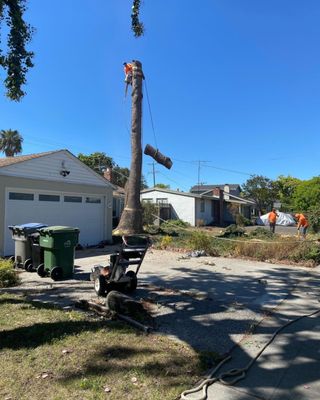
When a crane cannot reach the tree, everything changes. The crew climbs, and each limb is cut, tied, and lowered by rope in a controlled drop. This is the slowest, most skill-dependent work in the trade, and it is where large tree bids climb fast. If a bidder quotes you a big number for a backyard tree, ask whether it’s crane work or rigging work. The answer tells you where the money is going.
Access Can Double the Price of the Same Tree
A large tree in an open front yard and the same tree in a fenced backyard are two different removals, and the price can double between them. Equipment that drives to the trunk saves hours. Equipment that stops at the fence means wood gets carried out by hand, one round at a time.
The Peninsula makes this worse than most regions. Lots are tight, houses sit close together, and the biggest trees often stand in back corners planted 60 years ago. Slopes add rigging. Pools, gardens, and fences add protection work. Power lines add utility coordination before anyone makes a cut. None of this is padding. It is time, and time is what you are buying.
Heritage and Protected Tree Rules Can Cost More Than the Removal
Many Peninsula cities require a permit before you remove a large tree, even on your own property, and skipping that step can cost far more than the removal itself. In Palo Alto, native oaks are protected starting at just 11.5 inches of trunk diameter and coast redwoods at 18 inches, and Canopy’s summary of the Palo Alto tree ordinance notes penalties up to $10,000 per tree for illegal removal. Nearly every large oak in that city is protected by default.
Every city writes its own rules, and they differ block by block across the Peninsula. Redwood City has its own thresholds and process, which we break down in our Redwood City tree permit guide. Most cities also require a certified arborist’s report with the application, and approval usually depends on the tree being dead, hazardous, or a genuine nuisance. Healthy protected trees rarely get approved for removal, so a permit can take weeks and is never a rubber stamp.
If you’ve owned your home for decades and the oak out back has finally outgrown its spot, budget time for this step before you budget money. And if a crew offers to “just take it down” without asking what city you’re in, walk away. The fine lands on the property owner, not the crew that drove off.
Emergency Removals Play by Different Pricing Rules
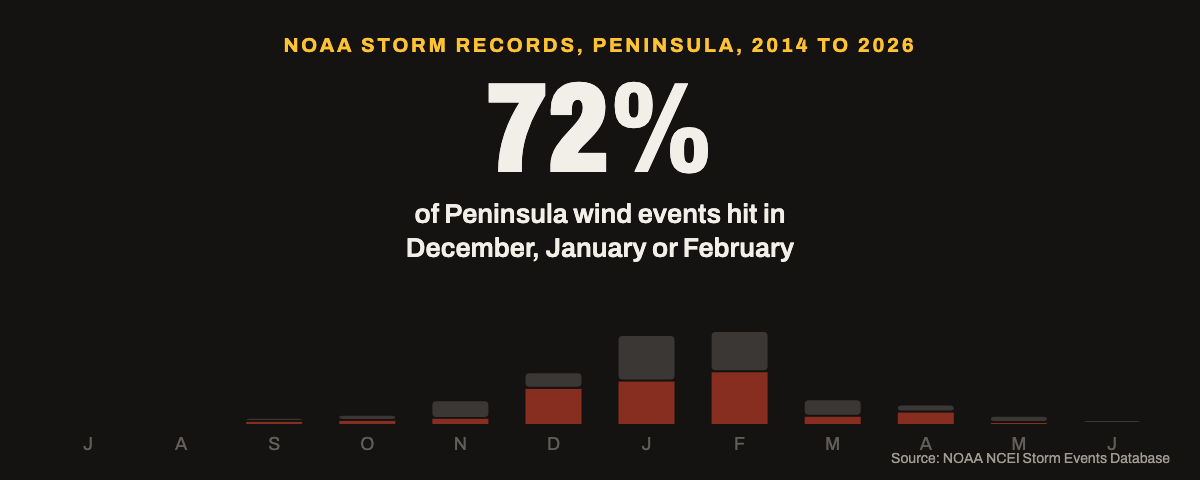
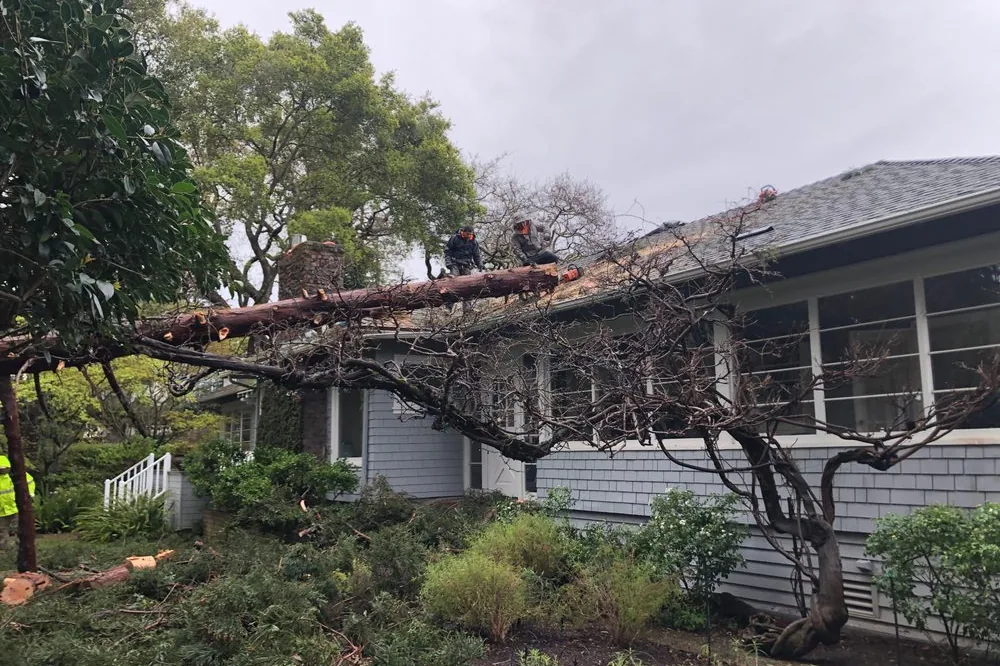
Emergency large tree removal typically costs two to three times the price of the same job scheduled in advance. When a tree is on your roof or blocking your driveway, you are paying for immediate response, after-hours crews, and cranes booked on no notice, all during storm weeks when every tree service in the county is buried in calls.
We keep a 24-hour emergency response crew for exactly these situations. If you’re reading this with a tree already down, our guide to emergency tree removal costs covers what to expect and what your insurance may pay for.
The Real Risk Behind a Cheap Bid on a Big Tree
The cheapest bid on a large tree is usually cheap because it skips insurance, and that gamble transfers to you. Tree work is one of the most dangerous jobs in the country. OSHA’s tree care industry page centers on the three things that kill workers in this trade: falls, falling objects, and electrocution. Insuring crews against those risks is expensive, and it’s built into every legitimate bid. A crew charging half the market rate has almost always left it out.
Think about what is actually overhead on a 70-foot removal. A single leader on a mature oak can weigh more than a ton, and it comes down within feet of your roofline. If an uninsured worker is hurt on your property, or an uninsured crew drops that leader through your kitchen, the claim can land on your homeowner’s policy.
This company was founded by firefighters, and we run removals the way we ran incident scenes: briefing before the work, defined drop zones, one person directing the lift, no freelancing. That discipline is not a marketing line. It is the difference between a controlled removal and a very bad afternoon.
How to Compare Large Tree Removal Bids
Comparing large tree bids takes one afternoon of verification, and it tells you more than any price average online. Most people compare bottom-line numbers. Compare scope instead:
- Get three written bids that state the plan. Crane or rigging, what’s included (hauling, stump, cleanup), and how long the job takes.
- Verify insurance directly. Ask each company for a certificate of insurance sent from their insurer, covering tree work specifically, and check credentials through the ISA’s Find an Arborist directory.
- Ask who pulls the permit. Get the answer in writing. “You don’t need one” is only acceptable with your city’s rules attached.
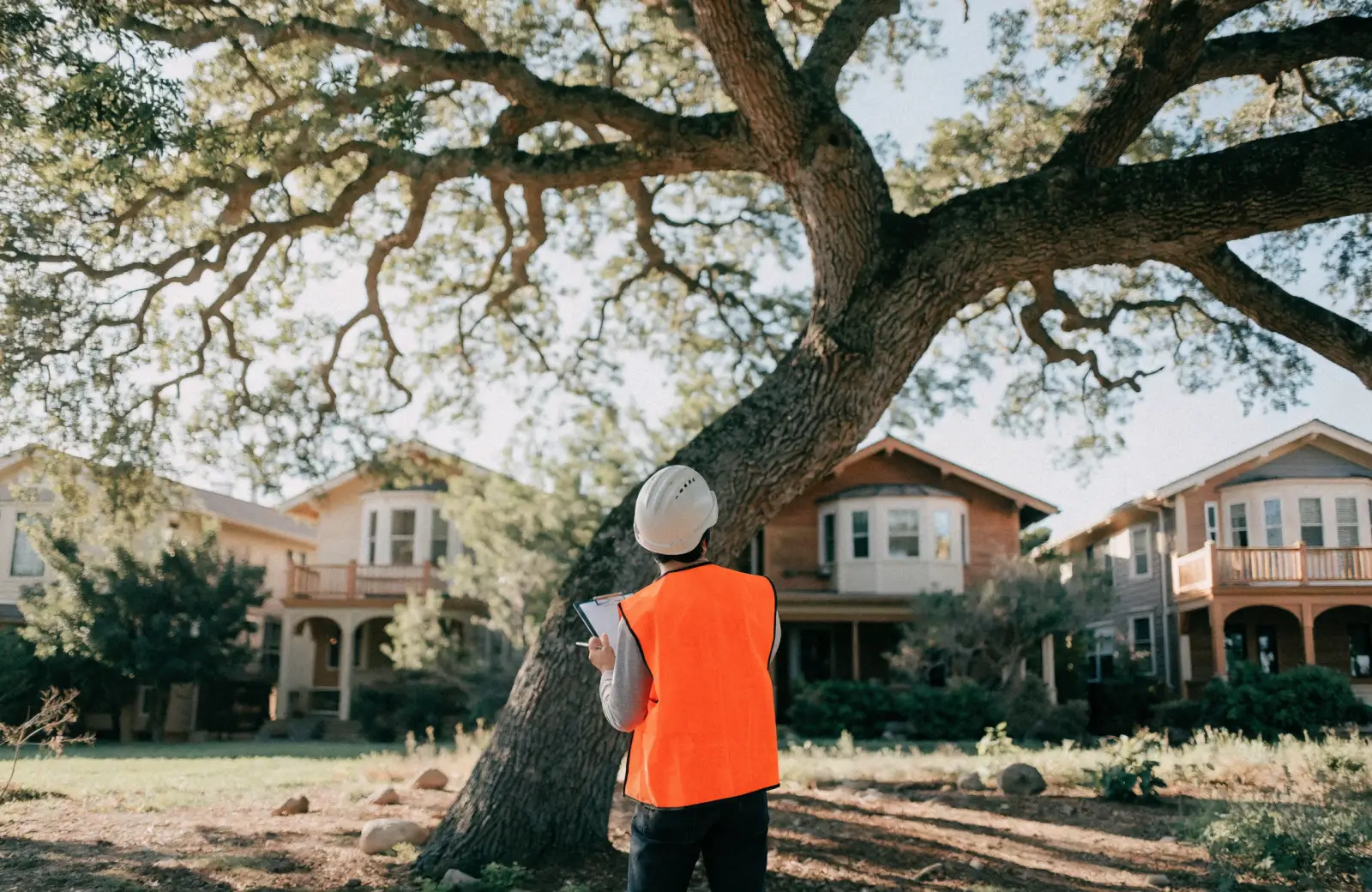
- Have a certified arborist assess the tree before you sign anything, especially if one bidder says removal is urgent and another says it can wait.
Do this, and by the end of the afternoon you will know which bids are real, which one deleted a line item, and which number to actually budget.
Lowering the Cost Without Lowering the Bar
Scheduling flexibility saves more money on large tree removal than any negotiation tactic. Dormant-season work in late fall and winter often runs 20 to 30 percent below spring and summer rates, because demand drops and crews want the work. A scheduled removal will always beat an emergency one, so acting on a declining tree early is itself a cost strategy.
Three more levers that don’t touch safety:
- Bundle the work. Removing several trees in one mobilization costs less per tree, and pairing removal with stump removal in the same visit beats bringing a grinder back later.
- Keep the wood. If you have a fireplace, having rounds left on site cuts hauling weight and cost.
- Take the mulch. Chipped brush left as mulch saves disposal fees and your landscaping budget at the same time.
What you should never trim from the bid: insurance, the permit, or the rigging plan. Those are the bar.
Straight Answers on Large Trees from Firefighter Tree Service
A large tree is the biggest single object on your property, and removing it should not feel like a guessing game. Firefighter Tree Service is firefighter-owned, staffed by ISA-certified arborists, insured, and backed by a 3-day service guarantee across the Peninsula and South Bay. We will walk the tree with you, explain exactly what drives your number, and put the whole plan in writing. When you’re ready for a real quote instead of an internet average, schedule a large tree removal assessment or call us at 650-454-0373.