
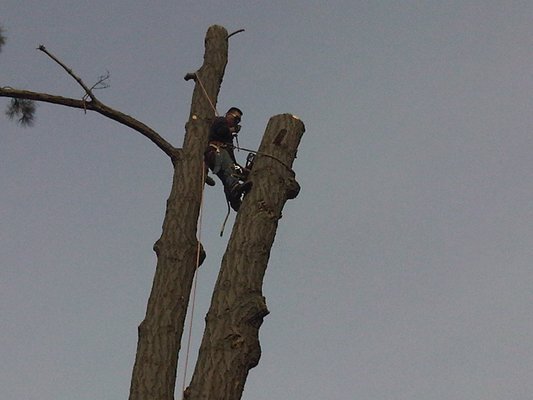
Hazardous tree removal in Redwood City
Dead, leaning or split tree? We look at what is wrong with it and what it would hit, then tell you whether it can wait. Removals start at $1,000 per tree, and we do not add an emergency or after-hours surcharge.
Free Estimate
Request a Service
Describe your project and we'll get back to you within 24 hours.
How we decide whether a tree is hazardous
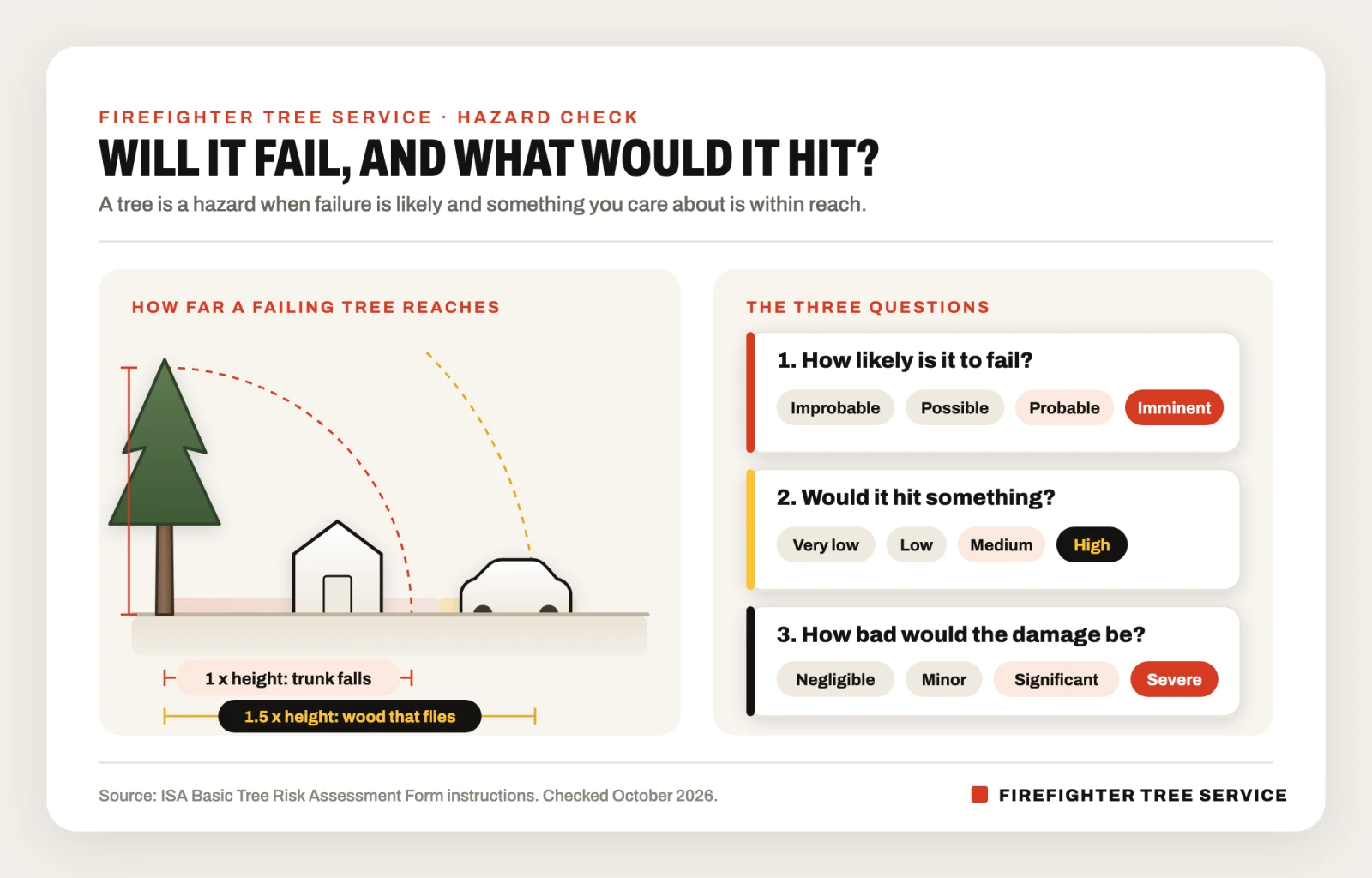
A tree is hazardous when two things are true at once: something about it makes failure likely, and something you care about sits within reach if it fails. A dead oak in an open field is not urgent. The same tree leaning over a bedroom is a different problem. We look at both halves on site before recommending anything.
Arborists break the question into the same three parts the International Society of Arboriculture uses on its Basic Tree Risk Assessment Form: how likely the tree or a limb is to fail (improbable, possible, probable or imminent), how likely it is to hit something if it does, and how bad that hit would be. A falling trunk can reach anything closer than the tree is tall, and brittle wood that breaks off and flies can reach out to one and a half times its height.
These are the defects we look for, and what each one tells us:
| What we see | What it tells us |
|---|---|
| Large dead limbs over a roof, deck or driveway | Dead wood breaks on a calm day as well as in wind. How big the limb is and what sits under it set the risk. |
| A lean that has changed, with cracked or lifting soil on the other side | The root plate is moving. An old lean the tree has grown into, with straight new growth at the top, is usually a different story. |
| A crack or split in the trunk, or where two big stems meet | Two stems of similar size pushing apart is a common place for a tree to fail. |
| Mushrooms or conks at the base, soft or missing bark | Decay inside the trunk or roots. How much sound wood is left decides whether the tree can stay. |
| Roots cut on one side by a trench, driveway or fence | The tree has lost some of its anchor on that side, and it may not show until a wet, windy night. |
| A thin, dying crown | Often a sign of trouble in the roots or trunk, and it means more dead wood up top every year. |
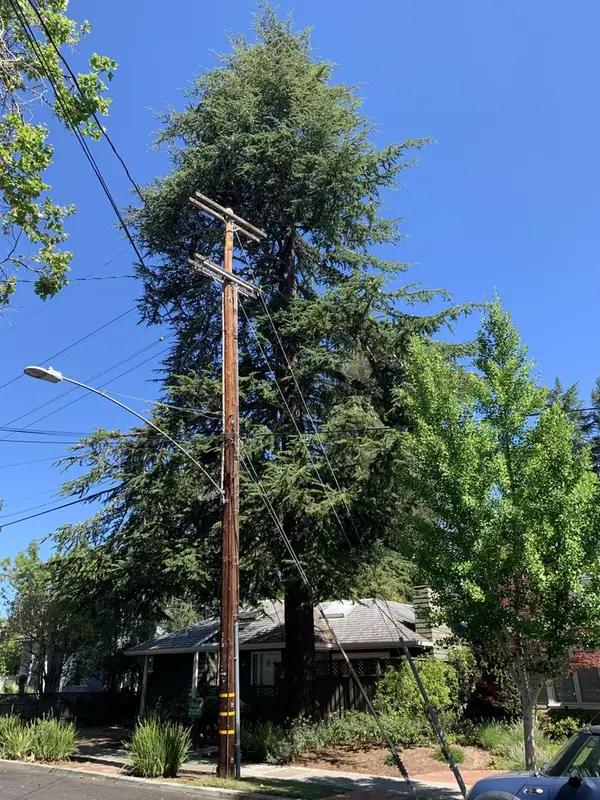
Picture two dead Monterey pines on the same Emerald Hills street. One stands at the back of a deep lot with nothing but ivy within its height. The other is 40 feet from a bedroom wall. The defect is the same, but the hazard is not: the first can go on the schedule for a dry week, and the second should come down before the first big storm of the winter.
For a longer list of warning signs and what each one looks like, read our guide to the signs a tree needs to be removed.
What can wait and what can't
Call right away if a tree or a big limb is already on a house, a car or a road, if a tree is leaning on a building, or if any part of it touches a power line. Book an assessment within a few days for a new lean, a fresh crack, or a broken limb hanging over something you care about. A dead tree with nothing in reach, or mushrooms at the base with no lean and no cracking, can wait for a scheduled visit, as long as that means weeks and not another winter.
| What you are looking at | What to do |
|---|---|
| Tree or limb on the house, a car or the road; tree leaning on a building | Keep everyone out from under it and call (650) 454-0373 now |
| Any part of the tree touching a power line | Stay back, call 911 and PG&E first. Nobody cuts near a live line, our crew included. |
| New lean, lifting soil, a fresh crack, a hanging broken limb over a target | Keep people and cars out of reach and book an assessment this week |
| Dead tree or dead limbs with nothing within reach | Book a scheduled visit; plan the removal before the rainy season if you can |
| Mushrooms at the base, no lean, no cracks | Book a scheduled visit so we can check how much sound wood is left |
Say a storm passes overnight, and in the morning you see a fresh crack where the two trunks of a backyard tree split, right over the kids' trampoline. Nothing has fallen, so it is not a 911 call, but it cannot sit until spring either. Move the trampoline, keep the kids out from under the tree, and get it looked at that week.
If you rent the house, send your landlord photos of the defect in writing the day you notice it, because the owner has to book the work. If you are looking after a parent's house, the same applies: take the photos and send them before you book anything.
When it can't wait
When a hazardous tree can't wait, call (650) 454-0373. We make the scene safe first and finish the removal once it is safe to work, and an emergency removal costs the same as a scheduled one. Sometimes the right job tonight is cutting a limb free and making sure nothing else is coming down, with the rest done in daylight.
Our 24-hour emergency tree removal page walks through what happens after you call, including what to photograph for insurance before anything is cut. One customer described a neighbor's tree that could not wait:
"One of our neighbor's large trees was partially uprooted during bad weather and in danger of falling on our house... Dennis (the owner) came to give us an estimate the same day, which was amazing because bad weather had caused downed trees everywhere! ... Given the danger, they fit us in on very short notice a few days later. Dennis even came by the house a couple of times in between to check on the tree."
Caio S., Yelp review of Firefighter Tree Service
What hazardous tree removal costs
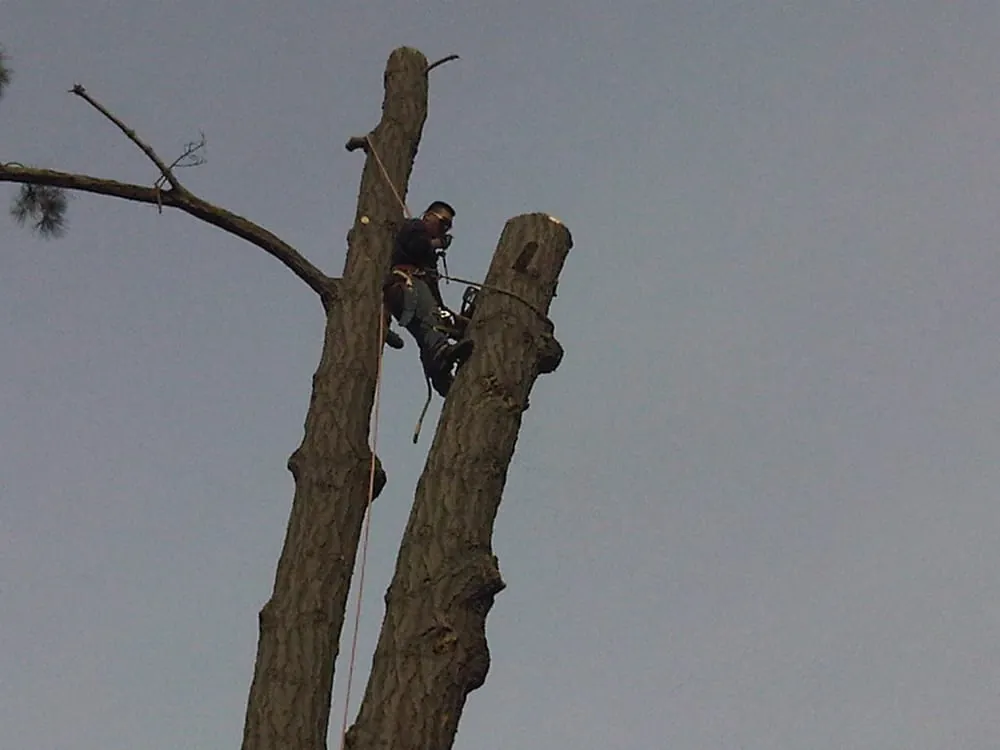
Hazardous tree removal with Firefighter Tree Service starts at $1,000 per tree, priced in writing after a free look at the tree. We do not add an emergency or after-hours surcharge, so a tree we take down after a storm costs what it would have cost on a weekday.
Hazard work can run above that starting price, for reasons you can usually see from the ground:
- A rotten trunk cannot always be climbed safely, so the job may need more rigging or a lift.
- A tree over a roof, a pool or a fence is lowered piece by piece on ropes instead of dropped.
- A backyard tree behind a side gate means the wood is carried out by hand.
- Stump grinding is quoted as its own line.
Our tree removal cost guide breaks down what crews on the Peninsula charge and why, if you are comparing quotes.
Customers 65 and over get $50 off any tree job, which helps if you are sorting out a dead tree at a parent's house.
If the tree is healthy and you simply want it gone, that is a planned job rather than a hazard; our page on planned tree removal in Redwood City covers prices, permits and what happens on removal day.
Permits for a hazardous tree in Redwood City
Inside Redwood City limits, removing a tree whose trunk measures more than 38 inches around, measured 6 to 36 inches above the ground, needs a city permit, and that includes trees that are dead or hazardous. The permit is free. According to the City of Redwood City's tree permit page, removing a protected tree without one is a $500 fine per tree plus a replacement tree equal to the appraised value of the one taken out.
The hazard works in your favor on the application. Photos of the defect and a plain description of what the tree would hit if it failed are the strongest reasons you can give. Parts of the hills west of town, including Emerald Lake Hills, are unincorporated San Mateo County, which has its own permit, its own size rule and its own fees.
Say a split valley oak in a Redwood Oaks backyard measures 60 inches around at knee height. That is well over 38, so it needs a permit even though the split is the whole reason it is coming out, and the photos of the split go in with the application.
If a tree has to come down tonight, deal with the danger first. Photograph the tree and the damage before anything is cut, keep the photos, and call the city once the danger is past to ask how they want the removal documented. Our Redwood City tree permit guide covers how to measure, heritage trees and replanting in more detail.
Testimonials
What Our Clients Say
Hazardous tree questions we get
Two things together: a defect that makes failure likely, and a target within reach that is worth protecting. Large dead limbs, a lean that has changed with cracked or lifting soil on the opposite side of the trunk, a split at the trunk or a major fork, mushrooms or conks at the base, or roots cut on one side by a trench, a driveway or a fence line. Any of those within reach of a house, a power line, a sidewalk or a parking spot is worth an assessment rather than more watching. A dead tree with nothing in reach is a lower priority, though dead wood only gets weaker.
Usually yes. Inside Redwood City limits, a tree whose trunk measures more than 38 inches around, measured between 6 and 36 inches above the ground, needs a city permit to remove, and being dead or hazardous does not exempt it. The permit is free. The hazard helps your application: photos of the defect and a plain description of what the tree would hit are the strongest reasons you can give. Parts of the hills, including Emerald Lake Hills, are unincorporated San Mateo County and follow county rules instead.
According to the City of Redwood City, removing a protected tree without a permit is a $500 fine per tree, plus a replacement tree equal to the appraised value of the one taken out. On a mature tree that appraisal is not small, which is why a free permit is the cheaper path even for a tree that is clearly failing.
Removals start at $1,000 per tree, and large or complex trees run higher. What sets the price is access and what sits underneath. A tree with open ground below comes down in sections that drop. The same tree over a roof, a pool or a neighbor's yard has to be rigged and lowered piece by piece. Decay matters too, because a rotten trunk cannot always be climbed and may need more rigging or a lift. We do not charge more for emergency or after-hours work. Stump grinding is quoted separately.
Usually not for the removal itself. Most policies respond after a tree has fallen and damaged something they cover, and few pay to take down a standing tree however dangerous it looks, because insurers treat that as maintenance. There is a second reason to act: once you know a tree is a hazard, a tree that fails afterwards and damages a neighbor's property can be a harder conversation with your insurer than one that fell in a storm with no warning. Ask your own carrier how they treat a known hazard before deciding to wait.
Sometimes. If the problem is one dead or end-heavy limb over the roof, taking that limb off can bring the risk down for less than a removal and keep a tree that took decades to grow. If the trunk is split, the roots are lifting, or decay has taken too much of the trunk, pruning will not fix it and removal is the honest answer. We tell you which one your tree needs at the estimate visit.
Talk to your neighbor first, then put your concern in writing with photos and keep a copy. We can only work on a tree with its owner's permission, so the owner has to book the removal. If the tree is already coming down onto your house, keep people away and call; the insurance side of a neighbor's tree falling on your property is covered on our 24-hour emergency tree removal page.
Our Process
How It Works
Three straightforward steps from first call to finished project.
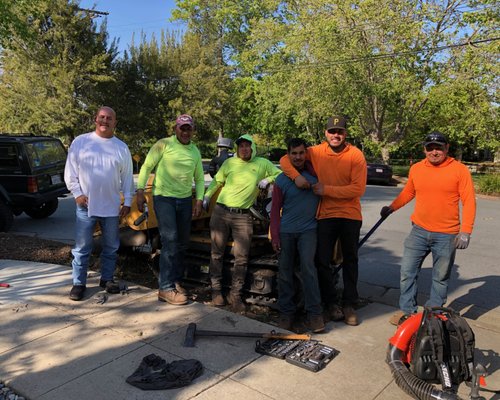
Free Consultation
A certified arborist visits your property, assesses the trees, and discusses your goals. We identify any risks, health issues, or city permit requirements.
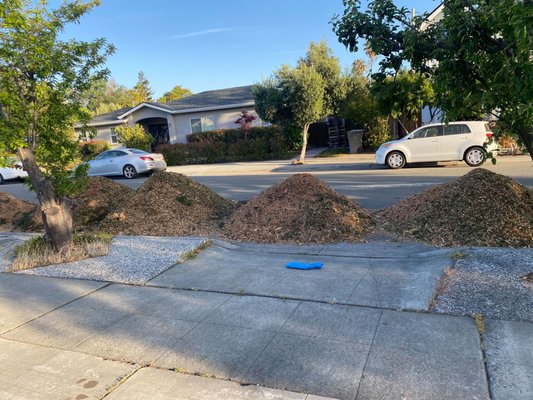
Detailed Estimate
You receive a clear, itemized quote with no hidden fees. We explain the scope of work, timeline, and handle any permit paperwork for you.
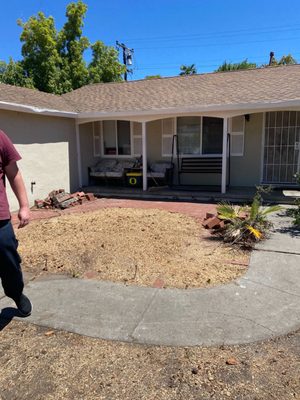
Expert Service & Cleanup
Our crew arrives on time, completes the work safely, and leaves your property spotless. We haul everything away - you won't know we were there.
Book a hazard check with Firefighter Tree Service
One visit tells you whether the tree is a hazard, what can wait, and what it costs if it has to come down. Firefighter Tree Service is firefighter-owned, we are insured, and we have worked on more than 500 Bay Area properties. We reply to estimate requests within 24 hours. Call (650) 454-0373 or request a free estimate for your tree.
Coverage
Service Areas
Serving Redwood City and 13+ Bay Area communities.
Get Started Today
Ready to Get Started?
Whether it's an emergency removal or routine tree care, Firefighter Tree Service is ready. Call us now or request a free consultation from our certified arborists.
Firefighter-owned · ISA Certified Arborists · Insured