Some trees have to come down. Plenty of stressed, scarred, or leaning trees are fine to keep for years. The hard part is not spotting a problem. It is knowing whether that problem means call a crew today, book an inspection this month, or just keep an eye on it.
On a fire scene, the first thing we do is a size-up: name the hazard, judge how fast it is changing, and figure out who is in the path if it fails. That same discipline sorts out almost every homeowner standing in the yard staring up at a tree, unsure whether to worry. This guide walks the real warning signs in that order, so you leave knowing not just what you are looking at, but how worried to be.
Which Warning Signs Are Emergencies and Which Can Wait
A tree needs urgent attention when it shows a new or sudden lean with soil lifting at the base, a large vertical crack in the trunk, or big dead limbs hanging over a place people go. Most other signs, like slow canopy thinning, old healed wounds, or a lean the tree has held for years, mean get it assessed, not panic. Putting each sign in the right bucket is the whole job.
Here is how the common signs sort out:
| Warning sign | How urgent | What it usually means |
|---|---|---|
| New or sudden lean with soil heaving at the base | Emergency | The root plate is failing and the tree can go over |
| Large vertical crack or split in the trunk | Emergency | The trunk may not hold its own weight |
| Big dead limbs over a driveway, deck, or play area | Emergency | These can drop with no warning |
| Mushrooms or hard shelf fungus at the base | Assess soon | Active decay in the roots or lower trunk |
| Thinning canopy or dead spots in the crown | Assess soon | The tree is declining and needs a trained eye |
| A lean the tree has held for years, no soil movement | Watch | Often a stable, corrected lean |
| One small dead branch or an old healed wound | Watch | Normal. Prune it, do not remove the tree |
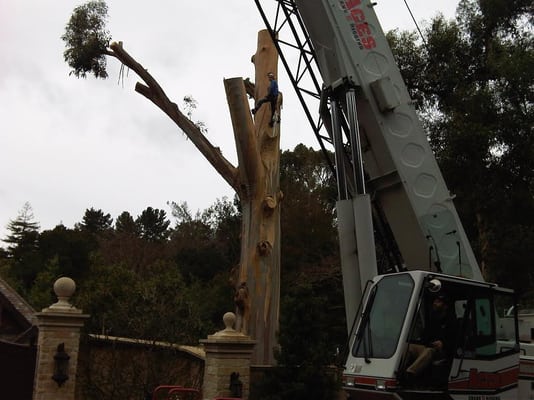
If a sign lands in the emergency column, that is what fast, professional tree removal exists for. If you are not sure how fast a hazard is moving or whether it can wait until morning, our guide on when to call an emergency arborist walks through the calls that should not wait. The rest of this article explains how to read each sign so you can place it yourself.
A New or Sudden Lean
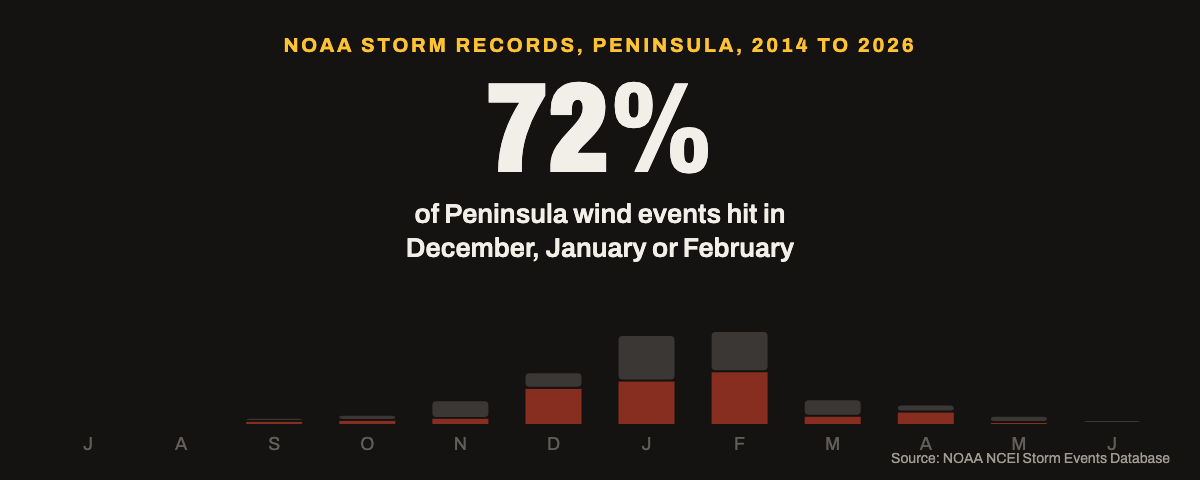
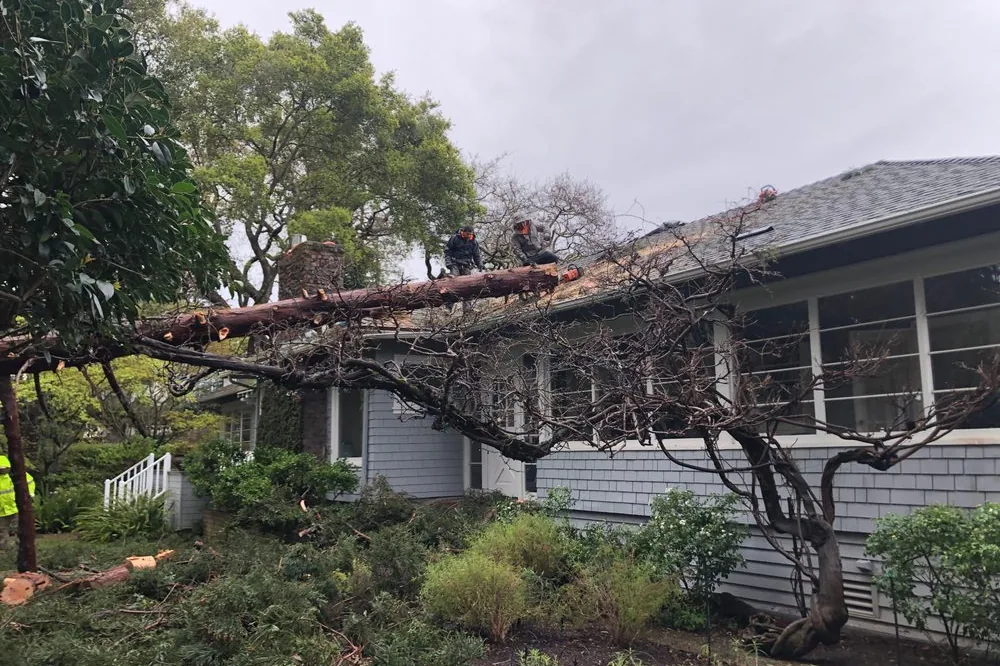
A tree that suddenly starts leaning is one of the clearest signs it needs to come down, especially if the soil on one side is cracked or lifting. A fresh lean means the roots on the low side are losing their grip, and once a root plate starts to fail, the next wet storm can finish the job. This is the sign that gets houses and cars crushed on the Peninsula every winter. Our pre-storm tree checklist shows how to walk your yard for this and the other warning signs before winter.
The nuance most lists skip is that not every lean is dangerous. Many trees grew at an angle their whole lives to reach light around a building or a bigger neighbor, and that steady, long-held lean is usually stable. What matters is change. If you notice a lean that was not there last year, or you see mounded, heaving soil on the side opposite the lean, treat it as urgent. For a leaning tree over a home or power line in Redwood City, San Carlos, or the surrounding Peninsula, emergency tree removal in Redwood City is the safe response, not a wait-and-see.
Cracks, Splits, and Weak Branch Unions
A deep vertical crack or a split trunk is a structural emergency, because a tree that has cracked has already begun to fail. Cracks run deeper than the bark and tell you the wood underneath is separating, often around old wounds, forks, or storm damage. A trunk that splits cannot be glued back together, and the larger the tree, the more weight is sitting on that weak point.
Pay special attention to where two stems or big branches meet. A tight V-shaped or Y-shaped union traps bark inside the joint and never fully knits together, so it snaps in wind far more easily than a strong, U-shaped connection. If you see a crack running down from one of these forks, the tree is telling you exactly where it plans to break. Smaller, older, healed-over wounds are a different story and rarely mean removal on their own.
Mushrooms, Conks, and Fungus at the Base
Mushrooms or hard, shelf-like conks growing at the base of a trunk are a serious warning sign, because they usually mean the wood inside is already rotting. Decay fungi hollow a tree from the inside while the outside can still look green and healthy, which is what makes them so easy to miss. By the time fruiting bodies appear at the base or along the roots, the rot is often well advanced.
The reason this matters so much is strength. According to the University of California’s guidance on wood decay in landscape trees, a 10 percent loss of wood weight can cause a 70 to 90 percent loss in wood strength. A little hidden rot removes a lot of the tree’s ability to stand up to wind. If you find conks at the base of a mature tree near your house, do not ignore them because the canopy still looks full. That is exactly the kind of tree that fails in a storm.
Deadwood, Bare Branches, and Canopy Dieback
Large dead branches and dead sections in the crown are a strong sign a tree is in decline and may need removal, and they are dangerous long before the whole tree is dead. The US Forest Service lists conks, missing bark, dead limbs, and woodpecker holes among the clearest signs of a hazardous tree, because dead wood is brittle and drops without warning. Firefighters call heavy overhead limbs widow-makers for a reason.
A useful rule of thumb: when more than about half the canopy is dead or bare, the tree is usually past saving. Scattered dead twigs after a hard year are normal and just need pruning. Whole dead limbs over a roof, walkway, or play area are not, and a fully dead tree near your home is both a falling hazard and dry fuel. In our fire-prone hills, clearing dead and dying trees is part of good defensible space around a property, not just cleanup.
Root Damage, Soil Heaving, and Recent Digging
Damage to a tree’s roots is one of the most overlooked reasons a tree becomes unsafe, because the problem is mostly out of sight. Roots anchor the tree and move water and nutrients, so when they rot, get cut, or get buried, the whole tree suffers. Warning signs include mushrooms along the root flare, soil that is cracking or mounding near the base, and roots that are visibly lifting out of the ground.
The most common cause we see is construction. Trenching for a driveway, pipe, or fence within a few feet of a mature trunk can sever major roots, and the tree can look fine for a year or two before it declines or topples. Piling soil or gravel over the roots suffocates them the same way. If you have had digging or grading near a big tree recently and now see thinning leaves or a shifting base, get it looked at before the next storm rather than after.
A Hollow or Rotted Trunk
A hollow trunk does not automatically mean a tree must be removed, but it does mean it needs a professional judgment call. Trees can live for years with some hollowing, because they add new wood on the outside as the center decays. The question is how much solid wood is left to hold the tree up.
A widely used arborist guideline is the one-third rule: when the hollow or rotted area takes up more than about a third of the trunk’s diameter, the remaining shell is usually too weak to trust, especially near a target like a house. You can get a rough read by tapping the trunk with a mallet and listening for a hollow sound, but you cannot see how far rot extends from the outside. This is one of those signs that looks minor and can be severe, which is why it belongs in the “get it assessed” bucket rather than the “ignore it” one.
Before You Cut It Down, Get an Independent Assessment
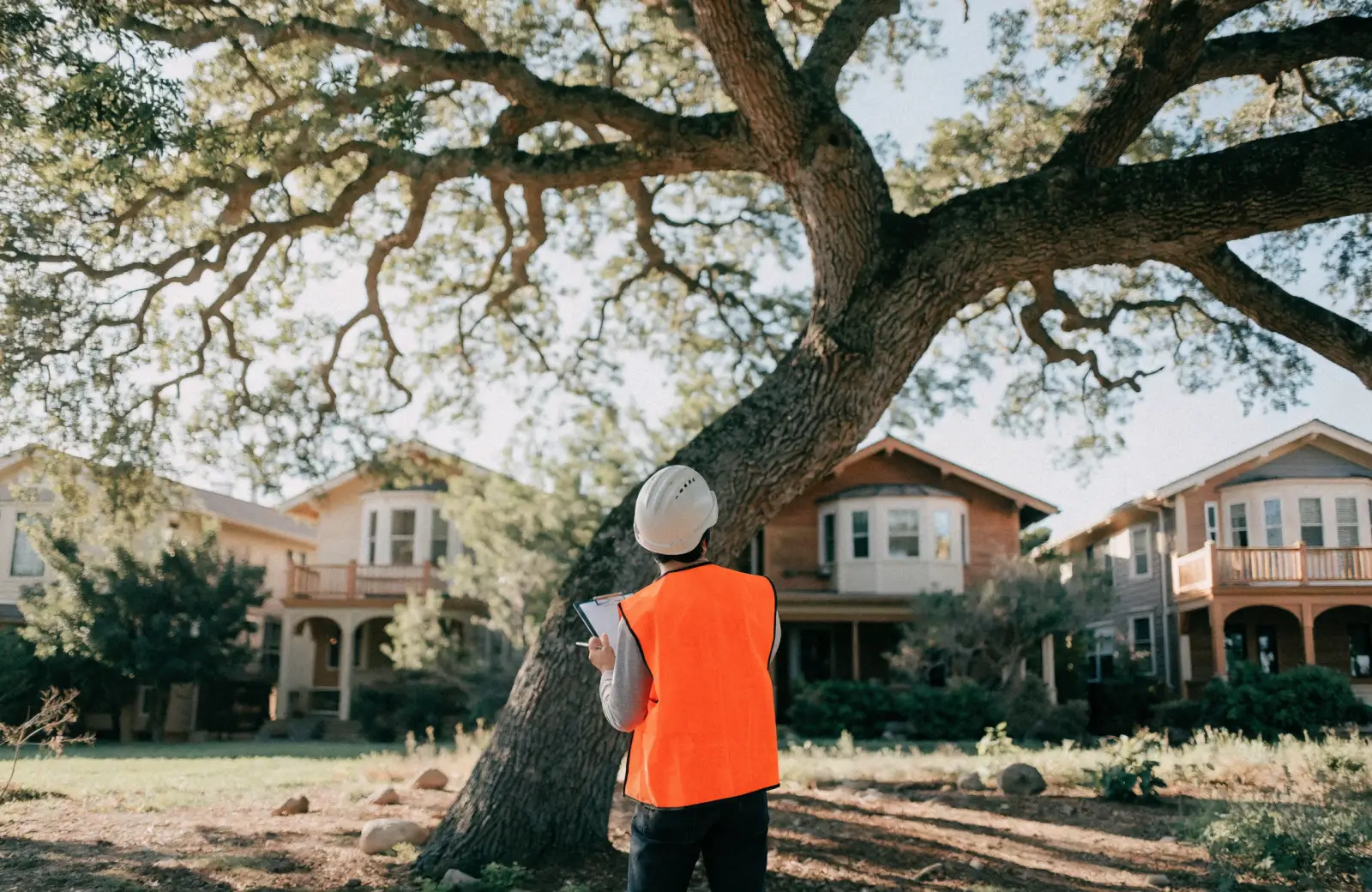
Before removing a mature tree, get an assessment from a certified arborist who is not the person selling you the removal. Removal is permanent, a healthy tree adds real value and shade you cannot buy back, and plenty of trees that look doomed can be saved with pruning or care. On tree forums, the most common advice to a worried owner is the same every time: have an ISA-certified arborist look at it in person before you cut.
That advice is worth taking seriously because photos and quick curbside looks miss a lot. The International Society of Arboriculture’s guidance on recognizing tree risk is built around a trained inspection of the whole tree, its defects, and what sits in the fall zone, not a single alarming symptom. A good assessment tells you which bucket your tree is really in. Here is how to approach the decision:
- Book a risk assessment with an ISA-certified arborist, ideally one with a TRAQ credential.
- Ask them to name the specific defect and what would happen if the tree failed.
- Ask whether pruning, cabling, or treatment could keep it, not just whether it can be cut.
- If two opinions disagree, get a third before you remove a tree you cannot replace.
If the honest answer is that the tree can stay with the right care, our guide to tree removal versus tree trimming helps you weigh the two paths. Removing a tree that only needed a trim is a mistake you cannot undo.
What Tree Removal Costs in the Bay Area
Tree removal on the Peninsula generally runs from a few hundred dollars for a small tree to several thousand for a large one near a structure, driven mostly by size, access, and hazard. Cost matters, but it should come after the safety question, not before it, because a genuinely dangerous tree is far cheaper to remove than to leave standing. Once you know the tree needs to go, price it with real numbers instead of guessing.
For a size-based estimate, our guide on how much it costs to remove a tree in the Bay Area includes a calculator you can use before you call anyone. Knowing the rough range up front takes the pressure out of the decision and helps you spot a quote that is out of line.
Have Firefighter Tree Service Size Up Your Tree
Reading these signs yourself gets you most of the way, but a leaning, cracked, or rotting tree near your home is worth a trained set of eyes before the next storm. Firefighter Tree Service is a firefighter-owned, ISA-certified crew that has served more than 500 Peninsula properties, and we bring the same size-up discipline to your yard that we bring to an emergency scene: name the hazard, judge the risk, and give you a straight answer on whether it stays or goes. When you want a real assessment, talk to a certified arborist in Redwood City or call us at 650-454-0373 for a free evaluation.