The best trees to plant in Redwood City are the ones matched to our exact growing conditions: a mild coastal climate (Sunset climate zones 16 and 17), heavy clay soil, cool summer fog, and warm, dry afternoons. Five species handle all of that with very little fuss: Coast Live Oak, Chinese Pistache, Strawberry Tree, Crape Myrtle, and fruitless Olive. This is a local list, not a national one, so every pick below comes with its mature size, real water needs, and the siting cautions our arborists give homeowners before a shovel ever hits the ground.
Maybe you just bought a place and inherited a bare yard. Maybe you are replacing a tree you had to remove, or you finally want to stop watering a thirsty lawn and put in something that lasts for decades. Either way, matching the tree to the site is what separates a tree that thrives from one you pay to remove in fifteen years.
How to Match a Tree to Your Redwood City Yard
Matching a tree to a Redwood City yard comes down to five things: your climate zone, your soil, your lot size, how much sun the spot gets, and whether the tree will stand in your yard or in the city strip by the street. Redwood City sits in Sunset climate zones 16 and 17, roughly USDA zones 9b to 10a, which means mild, nearly frost-free winters and a long dry summer cooled by coastal fog. Most yards here also sit on heavy clay that drains slowly, so trees that hate wet feet will struggle unless you plant them well.
As summers trend hotter and drier, university foresters now recommend leaning toward climate-adapted, drought-tolerant species, because heat and drought stress make trees more vulnerable to pests and disease. Here is the order our crew works through before recommending anything:
- Confirm your space. Measure the width and height the spot can hold at full maturity, not at planting size.
- Check drainage. Dig a test hole, fill it with water, and see if it drains within a day. Slow drainage means you need a clay-tolerant tree and a wide, shallow planting hole.
- Match the species to that space and soil from the list below.
- Confirm street-tree and permit rules before you plant.
A certified arborist in Redwood City can read your soil, sun, and space in a single visit. And if your main goal is low-water canopy shade specifically, our guide to drought-tolerant shade trees for Bay Area yards goes deeper on that one job.
The 5 Best Trees for Redwood City
1. Coast Live Oak (Quercus agrifolia)
Coast Live Oak is the strongest all-around native tree for Redwood City, reaching 25 to 70 feet tall with a broad, spreading evergreen canopy and needing almost no water once established. It is native to the California coast, so it evolved for exactly this climate and handles our clay soils and dry summers naturally.
Why it thrives: Deep roots reach summer groundwater, the evergreen canopy gives year-round shade, and it supports more local wildlife than any other tree on this list.
Considerations: It is a slow to moderate grower, so buy the biggest healthy specimen your budget allows. Once the trunk reaches 38 inches around, the tree is protected under the city ordinance. Prune only in the dry season (July to October) to lower the risk of sudden oak death, which spreads through wet-weather cuts. Ongoing oak tree care keeps a mature oak structurally sound and safe.
2. Chinese Pistache (Pistacia chinensis)
Chinese Pistache is the best all-around street and yard tree for Redwood City, growing to about 30 to 40 feet tall and wide with brilliant orange-to-red fall color and very few problems. It is deciduous, drought-tolerant once established, and one of the few trees that reliably colors up in a mild-winter climate.
Why it thrives: It shrugs off compacted clay and urban conditions, drops little litter, and grows at a moderate, manageable pace with roots that behave well near sidewalks. Those traits also make it a strong street-tree candidate for narrow planting strips.
Considerations: Buy a named male cultivar such as ‘Keith Davey’ for a consistent shape and no messy fruit. Young trees need staking and a little early shaping to build one strong trunk.
3. Strawberry Tree (Arbutus ‘Marina’)
The Strawberry Tree is the best evergreen for smaller Redwood City lots, typically 20 to 40 feet tall and wide, with peeling cinnamon-colored bark, white flowers, and red fruit often on the tree at the same time. It is drought-tolerant and loves coastal conditions, which is why local gardeners recommend it again and again for Peninsula yards.
Why it thrives: Being evergreen, it screens and adds interest all year, and it handles wind and fog without complaint. The fruit does not stain hardscapes the way many berry trees do.
Considerations: It wants decent drainage, so widen the planting area in heavy clay. You can grow it single-trunk for a tidy tree or multi-trunk for a fuller screen. If you want a faster, denser wall of green, compare it against our list of fast-growing trees for privacy first.
4. Crape Myrtle (Lagerstroemia)
Crape Myrtle is the best summer-flowering tree for Redwood City, blooming from July through September in white, pink, red, or purple on a compact 15-to-25-foot frame. It loves our warm, dry afternoons and is drought-tolerant once its roots settle in.
Why it thrives: Few trees give this much color for this little water, and its small size fits front yards and courtyards where a big shade tree would crowd the space.
Considerations: Our morning fog invites powdery mildew, so choose a mildew-resistant cultivar such as ‘Natchez’, ‘Muskogee’, ‘Tuscarora’, or ‘Zuni’, and give it full sun with good airflow. Prune lightly in late winter and never top it. Topping, sometimes called “crepe murder,” ruins both the natural form and the next season of blooms.
5. Olive (Olea europaea)
The Olive is the best low-water Mediterranean tree for Redwood City, an evergreen that reaches 20 to 30 feet tall and 15 to 25 feet wide, lives for generations, and asks for almost no summer irrigation once rooted in. Our dry-summer climate is close to its native range, so it thrives in spots where thirstier trees fail.
Why it thrives: The silvery canopy stays handsome year-round, drought tolerance is exceptional, and it adapts to clay as long as the site drains.
Considerations: Plant a fruitless cultivar such as ‘Swan Hill’ or ‘Wilsonii’ to skip the stained patios, slippery dropped fruit, and heavy spring pollen that fruiting olives are known for. Give it full sun and a well-drained spot.
Two Iconic Trees to Plant With Caution
Two trees people always ask about, Coast Redwood and Japanese Maple, can grow beautifully in Redwood City, but only in the right spot. Both are easy to plant in the wrong place, and both are common regrets on small lots.
Coast Redwood (Sequoia sempervirens) is native to the coastal fog belt and iconic here, but it can top 60 to 100 feet with wide surface roots and it grows fast. That means it belongs on a large property well away from the house, foundation, and sewer lines, not in a compact backyard. It also drinks more than its reputation suggests during inland heat waves and grows best planted in groups. If you already have one, learn how to prune a redwood tree correctly before it outgrows the space.
Japanese Maple (Acer palmatum) is gorgeous but not a climate workhorse here. It is an understory tree that needs afternoon shade, wind protection, and regular water. In full sun or dry wind, its leaves scorch. Treat it as a patio or shade-garden accent, not a stand-alone shade or street tree.
Street Trees and Permits: What Redwood City Requires Before You Plant
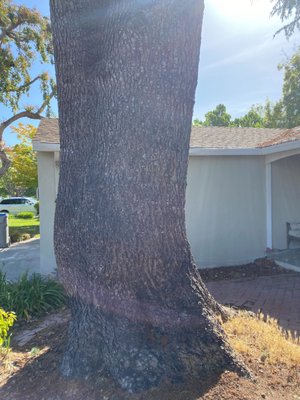
Before you plant in Redwood City, know that the strip between the sidewalk and the street is a city street-tree area with its own rules, and many mature private trees are protected too. A tree becomes protected once its trunk reaches 38 inches around, which is about 12 inches across, and from that point you can need a permit to prune or remove it.
For street trees, the city also sets which species you may plant and how far apart they go, generally keeping new trees a set distance (often around 15 feet) from driveways, corners, and other trees. Confirm the rules before you dig. Our Redwood City tree permit guide walks through which trees are protected, when you need approval, and how the city’s free permit process actually works.
Planting and Aftercare: The First Three Years Decide Everything
The right species still fails if it is planted too deep or allowed to dry out in its first few summers. Plant so the root flare, where the trunk widens into the roots, sits at or just above grade, dig the hole two to three times as wide as the rootball but no deeper, and water deeply and less often so roots grow down instead of sideways. Getting the depth and establishment watering right is the single biggest factor in whether a young tree survives.
In heavy clay, do not dig a deep hole that holds water like a bucket, and do not overload the backfill with amendments. Roughen the sides of the hole and backfill with the native soil so roots push outward into the surrounding ground. Water new trees regularly for the first two to three years, then taper off as they establish. An annual tree health inspection catches root, pest, and structure problems while they are still small and cheap to fix.
Get the first three years right and any of these trees will repay you for decades with shade, lower summer cooling bills, and real property value.
If there is one tree we are called back to care for more than any other in Redwood City, it is the Coast Live Oak. It is the native that truly belongs here, and a well-sited oak rewards that attention for generations, which is a big part of why it leads this list. Match any of these five to the right spot and you are planting something that works with our climate instead of fighting it.
Planting a New Tree in Redwood City? Talk to Firefighter Tree Service
Choosing the right tree is the easy part. Planting it so it lives for fifty years is where a local crew earns its keep. Firefighter Tree Service is a firefighter-owned, ISA-certified team that has planted and cared for trees across more than 500 Peninsula properties, and we know exactly which species hold up in Redwood City’s clay, fog, and dry summers. When you are ready to put the right tree in the right place, get our professional tree planting and transplanting services on the calendar. Call us at (650) 454-0373 for a free consultation.