A leftover tree stump has four real removal methods: grinding it below the ground, digging it out by hand, speeding up natural rot with nitrogen, or burning it where that is legal. Grinding is the fastest and most reliable choice for almost every yard, and the other three are worth understanding so you can tell which one actually fits your stump. This guide compares all four the way a working arborist would, including the shortcuts that do not perform the way the internet promises, so you can decide whether this is a weekend project or a call to a pro.
Why a Leftover Stump Is Worth Removing
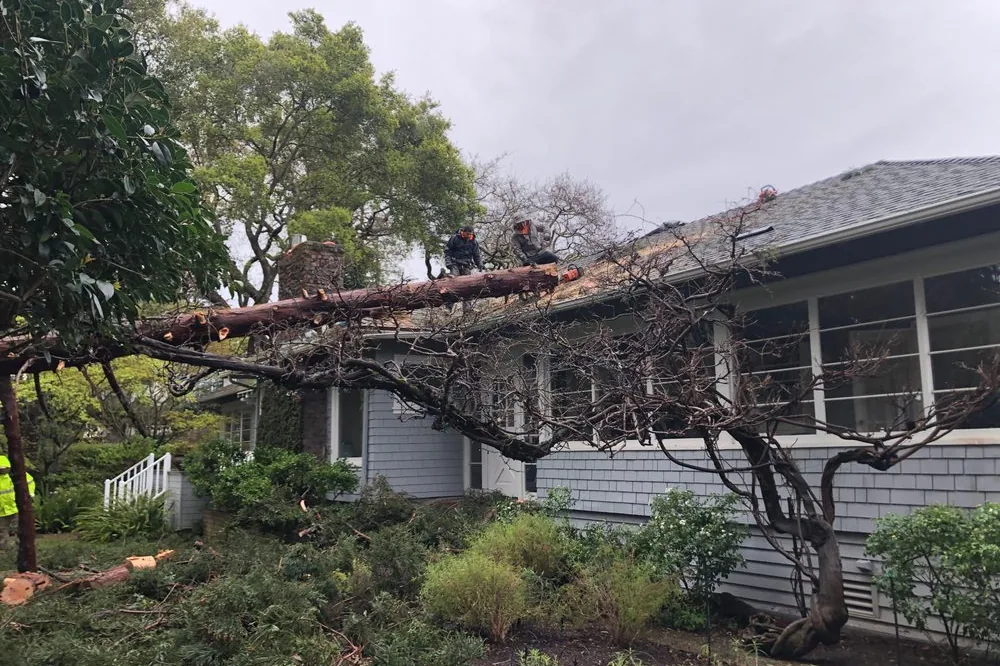
A tree stump is worth removing because it keeps costing you space, invites pests, and can keep sending up new shoots long after the tree is gone. The root system under a fresh stump is often still alive, and on species like elm, poplar, and some oaks it will push suckers up through your lawn for a year or more. If you just had a tree taken down, the stump is the unfinished half of that job.
Here is what a stump quietly does while it sits there:
- Sends up regrowth. Live roots leech water and nutrients from nearby plants and sprout new shoots you have to keep cutting.
- Attracts pests and rot. Decaying wood draws carpenter ants, termites, and fungi that can move toward healthy trees or your home.
- Wastes usable space. It gets in the way of mowing, a new bed, a patio, or a replacement tree.
- Drags down curb appeal. A stump-free yard simply reads as finished.
If the whole tree is still standing and you are only now planning the work, it is worth pairing the tree removal and the stump in one visit rather than paying for two mobilizations.
The Four Ways to Remove a Stump
There are four legitimate ways to remove a tree stump, and they trade effort for time and money in very different ways. Grinding buys speed with a machine, hand-digging buys savings with your own labor, rot accelerants buy patience, and burning is mostly off the table in our area. The table below is the honest version of what each one asks of you.
| Method | Effort for you | Time | Rough cost | Best for |
|---|---|---|---|---|
| Stump grinding (pro) | Low | 30 to 90 minutes | About $2 to $5 per inch of diameter | Almost any yard stump |
| Digging out by hand | High | Several hours to a full weekend | Your labor plus tool rental | Small softwood stumps under about a foot wide |
| Chemical rot accelerant | Low but very slow | Several months to a few years | The price of nitrogen fertilizer | Out-of-the-way stumps you can wait on |
| Burning | Not applicable | Not applicable in most of the Bay Area | Not applicable | Rural land where a permit allows it |
For a fuller picture of pricing across the whole job, this guide to what tree and stump work costs in the Bay Area walks through the numbers. Keep in mind that stump grinding is usually priced separately from taking the tree down, so a removal quote does not always include the stump.
Stump Grinding: Why It’s Usually the Right Call
Stump grinding is the fastest, safest, and most reliable way to remove a tree stump, which is why most arborists reach for it first. A grinder is a machine with a rotating cutting wheel that chews the stump into chips, taking it down 8 to 12 inches below grade in most cases. Iowa State University’s horticulture extension is blunt about it: the quickest, easiest, and safest way to remove a stump is to hire an arborist to grind it out.
A typical yard stump takes 30 to 90 minutes to grind, versus the several hours a full dig-out demands. Grinding does leave most of the root mass in the ground to decompose slowly on its own, so it is not a full extraction, but for the vast majority of homeowners that trade is exactly right. You get the stump gone today, the grinder handles hardwoods that would defeat a hand tool, and you can plant grass or a bed over the spot once the chips are cleared.
The main limits are access and proximity. A standard grinder needs a path to reach the stump, and grinding tight against a foundation, fence, or utility line calls for a smaller machine and a careful operator. Stump grinding is core work for our crew, and once a tight-access stump like that is ground down we clean up the chips and haul the debris the same day, so you get the spot back finished rather than half-done. If you want the stump handled without owning or renting equipment, that is what a professional stump removal crew is for.
Digging a Stump Out by Hand
Digging a stump out by hand is realistic for small softwood stumps under about a foot across, and genuinely hard on anything bigger. This is the method for the homeowner who wants to avoid renting a machine and has one modest stump to deal with. If you are staring at a wide oak or maple stump, skip ahead, because hand-digging a large hardwood is a fight most people lose.
The technique the arborist crowd recommends is straightforward, if sweaty:
- Leave yourself a handle. Keep 1 to 2 feet of trunk above ground so you have leverage to rock the stump later.
- Dig a trench around the base. Clear the soil to expose the major roots. A mattock or Pulaski works better than a shovel here.
- Cut each root twice. Sever the root at the stump and again farther out, so you can pull the middle section clear. Loppers, a pruning saw, or a reciprocating saw with a long pruning blade all do the job.
- Rock and lever it out. Once the big roots are cut, work the stump back and forth, cut any last anchors, and pry it free with the mattock head or a digging bar.
Expect several hours for a small stump and most of a weekend for a stubborn one. Backfill the hole with clean topsoil so it does not settle into a dip.
The Chemical Rot Method and the Epsom Salt Myth
The chemical method speeds up the stump’s natural decay, but it works slowly and only a few products actually help. The honest version: drilling deep holes in the stump and packing them with a high-nitrogen source feeds the fungi that break wood down, and that can shorten a multi-year rot to something closer to a year. The University of Illinois Extension notes that adding nitrogen to accelerate stump decay can meaningfully speed the process, while the commercial potassium and sodium nitrate “stump removers” are actually hard on the living decay organisms you are trying to encourage. Those nitrate products are really designed to dry a stump out for burning, not to rot it faster.
Here is the part most articles get wrong: Epsom salt will not rot your stump. Cooperative Extension specialists have not found research supporting it, and one extension service states plainly that Epsom salt will not hasten decay. Magnesium sulfate is a plant fertilizer, not a wood solvent. At most, a heavy application may dry out and kill live cells right at the surface, which can slow sprouting, but the stump itself will still be sitting there next season. If someone tells you to pour Epsom salt in a few holes and wait, they are describing a slow way to be disappointed.
The rot method makes sense for one situation only: a stump in an out-of-the-way corner that you are genuinely willing to ignore for a year. If you want the spot back sooner, it is the wrong tool.
Can You Legally Burn a Stump in the Bay Area?
In most of the Bay Area, no, you cannot legally burn a tree stump in your yard. Residential open burning of wood and yard waste is prohibited across the region, and the burn types that are still allowed are narrow agricultural and land-management fires that need advance approval. The Bay Area Air Quality Management District spells out that most open burning is illegal in the Bay Area, with backyard yard-waste fires not on the permitted list.
For a homeowner in Redwood City or anywhere on the Peninsula, that makes burning a non-option, whatever an out-of-state DIY video shows. Beyond the legality, a smoldering stump is a genuine fire risk that can travel through roots underground, which is not a chance worth taking in a dry California summer. Cross burning off your list and choose one of the other three methods.
Grinding vs Full Extraction: What Happens to the Roots and the Hole
The real difference between grinding and full extraction is what happens underground: grinding leaves the roots to decay in place, while extraction pulls them out and leaves a large hole to backfill. Grinding removes the stump and the crown of the root flare, then the remaining roots rot away quietly over several years. Full extraction, done with a backhoe or a lot of digging, takes out far more of the root system but leaves a crater you have to fill with imported soil.
For most yards, grinding is enough. You need full extraction only in specific cases:
- You are replanting a tree in the exact same spot and need clean soil for the new root ball.
- You are building or paving over the area, where leftover roots would interfere with a foundation, patio, or driveway.
- The roots are already a problem, such as tree roots damaging foundations and sewer pipes, where leaving them in the ground defeats the purpose.
If none of those apply, paying extra to extract every root usually is not worth it. Grind it, clear the chips, and move on.
When Stump Removal Is a DIY Job and When to Call a Pro
Stump removal is a reasonable DIY job when the stump is small, in soft soil, and away from anything important, and a job for a pro once it gets large or sits near a structure. The dividing line is not really about toughness, it is about the machine, the risk, and your time. Use this quick test before you commit a weekend to it.
Handle it yourself when all of these are true:
- The stump is under about a foot across and from a softer species.
- It sits in open soil, not against a foundation, fence line, wall, or buried utility.
- You are fine with a few hours of hard digging and have the hand tools already.
Call a professional when any of these are true:
- The stump is large, a hardwood like oak or maple, or part of a cluster.
- It is close to your house, a driveway, a septic line, or an irrigation line.
- You want it gone this week rather than next season, or you simply do not want to run the machine yourself.
When it is a pro job, a certified arborist brings the right grinder, reads the site for buried hazards, and carries the insurance that matters if something goes sideways near your home.
Common Mistakes to Avoid
The most common stump-removal mistakes are rushing a rot that takes months, skipping protective gear, trusting the wrong “chemical,” and ignoring what is legal locally. Each one turns a manageable job into a bigger one.
- Rushing the rot method. Chemical and natural decay take weeks to over a year. Prying at a stump that is not soft yet just damages your tools.
- Skipping protective gear. Grinders throw wood chips at speed, chainsaws and mattocks do not forgive slips, and eye and ear protection are not optional.
- Trusting Epsom salt or mystery additives. Stick to a high-nitrogen fertilizer if you are going the rot route, and know it is still slow.
- Ignoring local rules. Burning is off the table here, and some stumps sit near protected trees or utilities where the surrounding work has its own requirements.
Stump Grinding and Removal with Firefighter Tree Service
Most homeowners land on the same answer once they weigh the options: grinding is the fast, clean way to be done with a stump, and it is worth having the right crew do it. Firefighter Tree Service is a firefighter-owned, ISA-certified arborist team that has served more than 500 residential properties across the Peninsula and South Bay, and every job is backed by our 3-day service guarantee. When you are ready to reclaim that patch of yard, learn more about stump grinding in Redwood City or call us at 650-454-0373 for a free consultation.