Do Tree Roots Really Crack Foundations and Sewer Pipes?
Rarely, at least not the way most people picture it. Healthy tree roots almost never punch through a sound concrete foundation or a solid pipe. The real damage comes from two indirect processes: roots pulling water out of Bay Area clay soil until the ground shrinks and shifts under your slab, and roots slipping into cracks and loose joints that already existed in an aging sewer line.
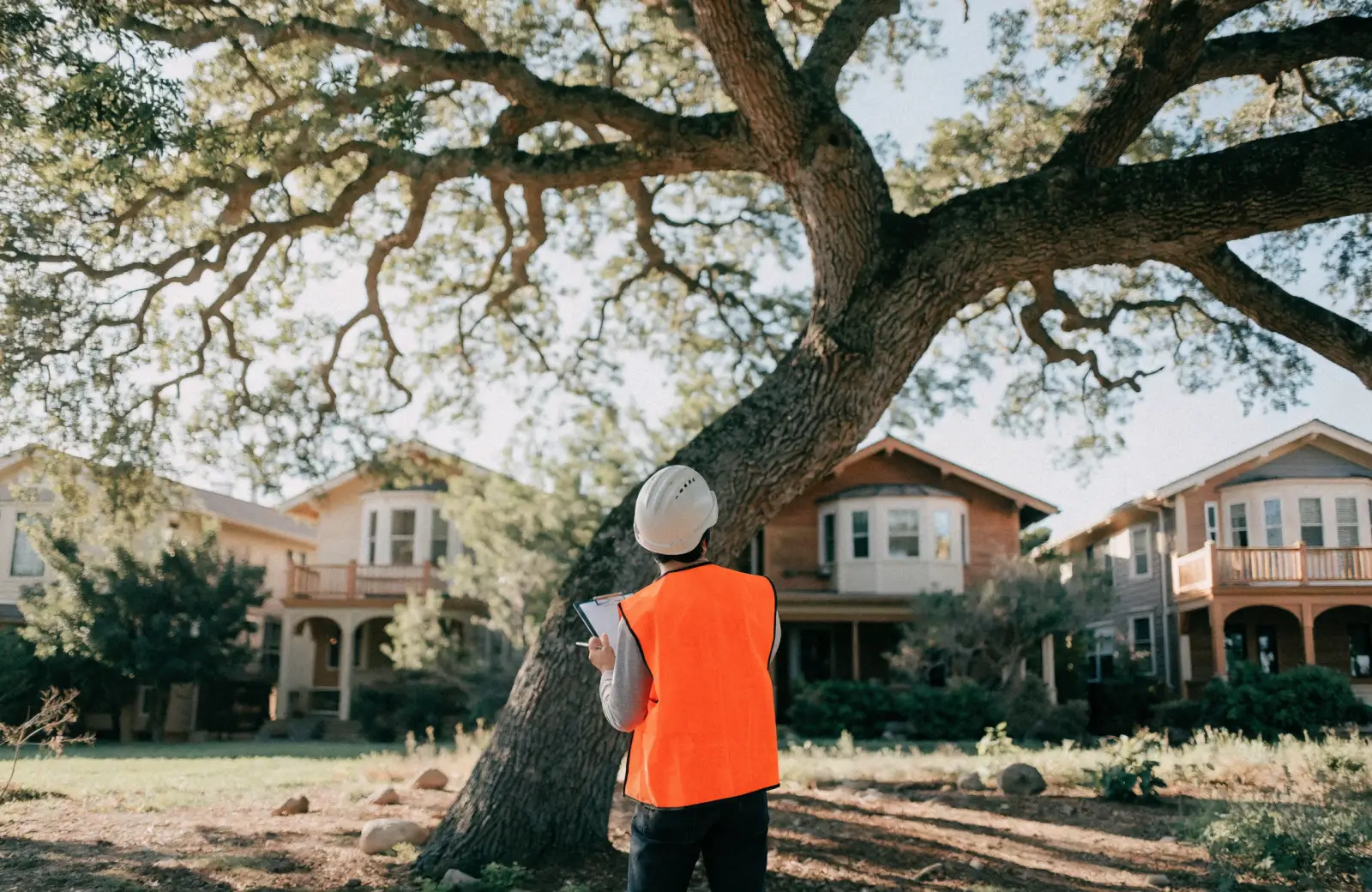
That distinction matters because it changes what you should do about it. If you just bought a home and the inspector flagged a big tree near the foundation, or you have watched the same drain back up every year, the fix is usually not “cut down the tree and the problem is solved.” Getting the cause right the first time saves you from paying for the wrong repair, so the smartest first step is a certified arborist confirming whether the tree is the real culprit or just the convenient thing to blame.
How Roots Get Into Sewer Lines
Tree roots get into sewer lines through cracks and loose joints that were already leaking, not by boring through solid pipe. A small leak releases water and nutrients into the surrounding soil, which acts like a scent trail. A fine root hair follows that trail to the opening, slips inside, and then thickens into a dense mat that clogs the pipe. Cooperative Extension research from North Carolina State University puts it plainly: roots cannot create the crack, they can only exploit one that is already there.
This is why so many Peninsula homes have the problem. Houses built before the 1980s often still run on clay tile or cast iron laterals, and those materials crack and separate at the joints as they age. Modern PVC holds up far better, though it is not immune at the connections.
Here is the part homeowners hate to hear: if the pipe is already cracked, removing the tree does not repair the pipe. As plumbers and arborists say over and over in online forums, the line is compromised whether the tree stays or goes, and new roots from a neighbor’s yard will find the same opening. The tree is one factor. The broken pipe is the actual problem.
How Roots Actually Affect Foundations: The Clay Soil Problem
Roots damage foundations mainly by drying out the soil, not by pushing on the concrete. In the Bay Area, this is the mechanism that matters. Our expansive clay soils swell when they are wet and shrink when they are dry, and a thirsty tree pulls enormous amounts of water from one side of a foundation. A single mature oak or eucalyptus can draw 50 to 100 gallons a day during the growing season. When that water leaves the clay, the soil shrinks and the foundation above it settles unevenly. That uneven, one-sided settling is what cracks walls and floors.
Direct root pressure, where a large structural root grows against a wall and physically cracks it, does happen, but it is uncommon and mostly limited to older foundations with no modern reinforcement. On Peninsula clay, the dry-season moisture swing under your house is a bigger threat than any single root.
That is also why the damage tends to show up on one side of the house, the side nearest the tree. If you are staring at a stair-step crack and a big tree in the same sightline, you are not imagining the connection. But the tree is starving the soil of moisture, not shoving the wall.
When Roots Lift Sidewalks, Driveways, and Patios
Above ground, roots cause damage in a completely different way: they lift hardscape. As a tree matures, its main structural roots near the surface get thicker every year. When one of those roots sits directly under a concrete slab, it works like a slow hydraulic jack, pushing the slab up a fraction at a time until the sidewalk, driveway, or patio cracks and heaves.
This is the one place where roots really do move concrete, because a flat slab sitting on grade has almost nothing holding it down. The fixes are limited. Grinding or shaving the raised edge removes the trip hazard for a season but does nothing about the growing root underneath. Cutting the root can flatten the slab, but sever a major structural root and you risk destabilizing the whole tree, which trades a cracked sidewalk for a fall risk. In many Peninsula cities the homeowner is also responsible for keeping the public sidewalk safe, so a lifted slab is a liability question, not just a cosmetic one.
Warning Signs of Root Damage
The earliest warning signs of root damage show up long before a pipe collapses or a wall cracks through. Catching them early is what separates a few hundred dollars in maintenance from a five-figure repair, so it pays to know what you are looking at.
Signs of Sewer Line Damage
- Slow drains throughout the house. When several fixtures drain slowly at once, the blockage is usually in the main line, not one trap.
- Gurgling sounds from toilets or drains, especially when another fixture is running.
- Sewage backups, the most obvious and unpleasant sign.
- Foul odors near a cleanout or over the sewer line’s path.
- Unusually green or lush patches in the lawn above the line, a sign the pipe is leaking nutrients.
- Sinkholes or soft depressions in the yard along the pipe run.
Signs of Foundation Damage
- Diagonal or stair-step cracks in foundation or block walls.
- Cracks above door frames and window corners inside the house.
- Doors and windows that stick or stop latching, a sign the frame has shifted.
- Sloping floors. Set a marble down; if it rolls the same way every time, the slab may be settling.
- Gaps opening between walls and the ceiling or floor.
- Cracks in exterior stucco or brick, often a later-stage sign.
High-Risk Tree Species Near Bay Area Homes
Some species are far more likely to cause trouble because of aggressive, water-seeking roots, high water demand, or both. If one of these is growing close to your home, it earns closer watching.
| Tree Species | Risk Level | Root Behavior |
|---|---|---|
| Weeping willow | Very High | Aggressive, water-seeking roots that spread 2 to 3 times the canopy width |
| Cottonwood / Poplar | Very High | Fast-growing, shallow, invasive roots |
| Silver maple | High | Shallow spreaders notorious for cracking sidewalks and finding pipes |
| American elm | High | Extensive roots that actively hunt moisture |
| Eucalyptus | High | Deep, aggressive roots and very high water demand, common across the Peninsula |
| Liquidambar (sweetgum) | High | Surface roots that heave sidewalks, planted heavily in older Redwood City tracts |
| Fig | High | Extremely aggressive surface roots |
| Monterey pine | Moderate | Shallow root plate that can lift slabs |
| Coast live oak | Low to Moderate | Deep roots, generally well behaved near structures when given room |
| Redwood | Moderate | Shallow but very extensive root systems |
If any of these sit within about 20 feet of your foundation or sewer line, root monitoring belongs on your regular home-maintenance list. That does not mean the tree has to go. It means you watch it.
Your Options: Root Barriers, Pipe Repair, and Foundation Fixes
Your options range from cheap and preventive to expensive and permanent, and the right one depends on how far the damage has already gone. The honest math is worth running early: when the yearly cost of managing roots starts to rival what it would cost to remove the tree, the decision shifts. You can compare that against the cost to remove a tree in the Bay Area with our interactive estimator before you commit to anything.
Root Barriers
Root barriers redirect root growth downward and away from a pipe or foundation. Physical barriers are usually high-density polyethylene panels set vertically in a trench. They work best installed proactively, before roots reach the structure, because a barrier cannot pull back roots that have already passed it.
| Root Barrier Detail | Information |
|---|---|
| Material | HDPE panels, 30 to 60 mil thickness |
| Depth | 18 to 36 inches, depending on species |
| Cost | $15 to $30 per linear foot installed |
| Best timing | At planting, or before roots reach the structure |
| Limitation | Cannot stop roots that already crossed the barrier line |
Sewer Line Repair
- Mechanical root cutting (augering). A rotating blade clears the root mass. Effective but temporary; roots return in 1 to 3 years. Cost: $200 to $600.
- Chemical root treatment. A foaming root killer applied after cutting slows regrowth. Cost: $50 to $150 per application.
- Pipe lining (CIPP). A resin liner is cured inside the old pipe, sealing every crack and joint from the inside. This is the fix that actually stops re-entry. Cost: $1,200 to $4,000.
- Pipe replacement. Full excavation and new PVC. Most expensive, most permanent. Cost: $2,000 to $4,700 and up.
Foundation Repair
- Crack injection. Epoxy or polyurethane seals a crack but does not fix the soil movement causing it. Cost: $300 to $800 per crack.
- Underpinning. Steel or helical piers reach stable soil to stabilize and sometimes lift the settled area. Cost: $1,000 to $3,000 per pier, with most homes needing 6 to 12.
- Root pruning. Cutting offending roots between tree and foundation can slow further settlement, but it has to be done carefully so the tree stays standing.
- Soil moisture management. Soaker hoses or drip lines near the foundation during dry months keep the clay from shrinking as hard.
If removal turns out to be the answer, budget for the stump too. Professional stump removal near a foundation needs a careful hand, because aggressive grinding can disturb the very soil you are trying to keep stable.
Will Removing the Tree Actually Fix the Problem?
Not always, and on Bay Area clay it can occasionally make foundation settlement worse. This is the part most tree-service articles skip, so here is the straight version. Removal helps in some cases and backfires in others, and knowing which is which is the whole job.
Cutting the tree does not repair anything that is already broken. A cracked sewer lateral stays cracked after the tree is gone, and roots from other plants will keep finding the leak until the pipe itself is lined or replaced. Removal only stops that one tree’s roots from adding to a problem the pipe already has.
For foundations, there is a real and counterintuitive risk. When you remove a mature tree that has been drying out clay soil for years, the soil starts holding water again and can swell back up. That rebound can heave the foundation in a new direction, so you trade settlement for uplift. The International Society of Arboriculture recommends having a qualified arborist assess a tree before any major root cutting, precisely because these decisions carry structural consequences.
So when is tree removal genuinely the right call? Consider it when:
- The tree is a high-risk species planted too close to the home, under about 15 feet for aggressive species.
- Damage keeps recurring despite pipe clearing or a root barrier.
- Foundation movement is progressing and the tree is the confirmed cause, not the assumed one.
- The tree is already in poor health or structurally unsound, which adds a failure risk on top of the root problem. If you see those signs a tree needs removal, the decision gets easier.
One more Bay Area detail: removing a protected tree in many Peninsula cities requires a permit first. Check the Redwood City tree permit rules before you schedule anything, or you risk a fine on top of the removal cost.
This is a call we make honestly. More than once we have told a homeowner that pulling a mature tree off Bay Area clay was likely to cause more movement than it would solve, and that a root barrier or careful root pruning was the smarter fix. When keeping the tree protects the house better than removing it does, that is the advice we give, even though it is the smaller job for us.
Does Homeowners Insurance Cover Root Damage?
In most cases, no. Standard homeowner policies treat root intrusion into sewer lines and gradual foundation settlement as maintenance, not a covered peril, and maintenance is on you. Homeowners confirm this the hard way in online forums all the time after a backup: the plumbing bill is theirs to eat.
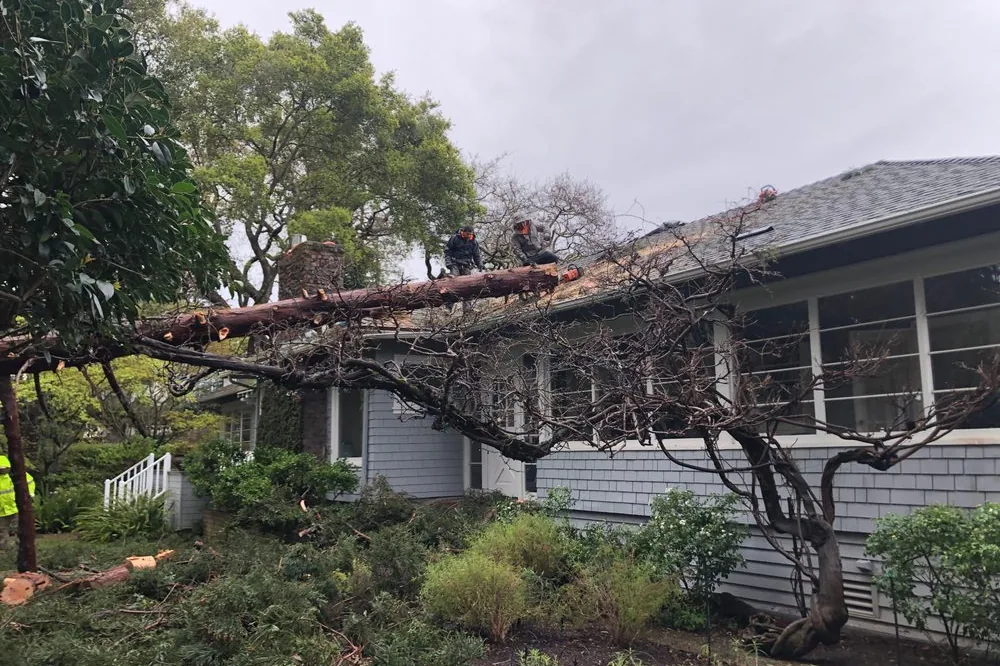
Insurance generally covers sudden, accidental events, like a storm dropping a tree on your roof, not slow damage that builds over years. There are narrow exceptions. If a root-caused sewer collapse suddenly floods your home, the interior water damage may be covered even when the pipe repair is not. Read your policy and ask your agent directly, because this is exactly the kind of surprise that early detection helps you avoid.
How to Prevent Root Damage When Planting
The cheapest root problem is the one you design out before you dig the hole. A few habits at planting time prevent most future conflicts:
- Research the species first. Pick trees with non-aggressive roots for anywhere near the house, and save the willows and silver maples for the back of a large lot.
- Keep your distance. Plant large trees at least 20 feet from foundations and sewer lines, and 10 feet from sidewalks and driveways.
- Call 811 before you dig to mark underground utilities and know exactly where your lateral runs.
- Install a root barrier at planting if the tree will sit within 25 feet of a structure.
- Water deep and slow during dry months. UC Master Gardeners recommend soaking established trees to a depth of at least 12 inches on an infrequent schedule rather than shallow daily watering. Keeping soil moisture steady is what stops clay from shrinking hard against your foundation in the first place.
Do these five things and you get the shade and the property value of a mature tree without the plumbing bills and the wall cracks. That is the whole point: keep the tree, keep the house, and never make them fight.
Get a Root Damage Assessment from Firefighter Tree Service
If roots near your home have you worried, the fastest way to stop guessing is to have someone read the tree and the soil together. Firefighter Tree Service is a firefighter-owned, ISA-certified crew that has served more than 500 Peninsula properties, and we would rather tell you your tree is fine than sell you a removal you do not need. We coordinate with your plumber or foundation contractor so the tree decision fits the whole repair, not just our piece of it.
Book a tree health inspection and we will tell you honestly whether the tree is the cause, what your real options are, and what each one costs before you spend a dollar on the wrong fix. Call (650) 454-0373 to schedule your assessment and stop root damage before it gets worse.