Most Bay Area tree diseases fall into a short list: anthracnose, powdery mildew, fire blight, cankers (including pitch canker), Armillaria root rot, and sudden oak death. A few are cosmetic and clear up on their own. A few will quietly kill a mature tree and can spread to the ones next to it. For most homeowners the hard part is not noticing that something is wrong, it is knowing which kind of problem they are looking at.
We approach a sick tree the way we approach a fire call: contain the threat first, diagnose fast, and be honest about which trees can be saved and which have to come out. This guide covers the diseases Bay Area trees actually get, how to recognize each one, and how to decide whether you have a nuisance, a treatable infection, or a removal on your hands.
Why Bay Area Trees Get Sick
Bay Area trees get sick mostly because of our weather pattern: wet, mild winters and springs let fungi and bacteria spread, and long dry summers then stress trees and lower their defenses. Coastal fog and humidity keep leaves damp, dense urban planting puts trees close enough to infect each other, and drought years leave even established trees weakened and easier to attack.
A tree under stress is a tree with the door open. If you have watched a favorite oak or maple thin out over a couple of seasons, that slow decline is usually the setup, and the disease is what walks in.
The Tree Diseases Bay Area Trees Actually Get
Six diseases account for most of what we treat on the Peninsula and in the South Bay. Here is what each one looks like and how worried you should be.
Anthracnose: Dark Spots and Curled Leaves
Anthracnose is the most common leaf disease we see, and in most years it is more ugly than dangerous. It is not a single disease but a group of related fungal infections that spread during wet spring weather, showing up as dark blotches along the leaf veins, curled or scorched-looking leaves, and early leaf drop. Sycamore, London plane, Modesto ash, oak, and maple are the usual hosts.
Anthracnose rarely kills an established tree. You manage it by raking and disposing of fallen leaves, opening up the canopy for better airflow, and keeping sprinklers off the foliage. A preventive fungicide only makes sense on a high-value ash before the spring rains, not as a rescue after leaves are already spotted.
Powdery Mildew: White Dust on the Leaves
Powdery mildew looks alarming and is almost always harmless. It is a fungus that coats leaves and new shoots in a white or gray powder, most often on trees growing in shade or planted too close together. Unlike most tree fungi, it does not need wet leaves to spread, so it can show up even in dry weather.
If you have just moved into a home with mature, crowded trees, this is the symptom most likely to scare you for no reason. Powdery mildew is cosmetic and rarely threatens the life of the tree. More sunlight and better air circulation, usually from a light thinning prune, take care of most cases.
Fire Blight: Scorched, Shepherd’s-Crook Shoots
Fire blight is a bacterial disease worth taking seriously. It is caused by the bacterium Erwinia amylovora and hits pear, apple, crabapple, quince, and ornamental firethorn (pyracantha). The telltale sign is a shoot that wilts and bends into a hook, called a shepherd’s crook, with blackened tips that look burned. In warm weather you may see a watery tan ooze on infected branches.
Fire blight spreads through rain and through bees at bloom, so it moves fast in a wet spring. It is treatable if you catch it early: prune 8 to 12 inches below the visible canker, in dry weather, and disinfect your tools between every cut so you do not carry the bacteria to healthy wood. Avoid heavy nitrogen fertilizer, because the soft new growth it pushes is exactly what the disease attacks.
Cankers, Including Pitch Canker: Sunken, Bleeding Bark
A canker is a dead, sunken patch of bark, usually where a fungus has entered through a wound. On the Peninsula the ones we see most are Raywood ash canker, cypress canker, and along the coast pitch canker, caused by the fungus Fusarium circinatum, which hit Monterey pines hard and bleeds sticky resin from infected branches. The common signs are a sunken lesion, oozing sap or resin, and dieback in the branch above the canker.
An isolated canker on a small branch can be pruned out well below the dead tissue. Extensive cankers on the main trunk are a different story: once the bark is girdled, the wood above it is failing, and that part of the tree, or the whole tree, is usually on its way out.
Armillaria Root Rot: Mushrooms at the Base
Armillaria root rot, also called oak root fungus, is one of the quiet killers, because you often cannot see it until the tree is already declining. The fungus attacks the roots and root collar, and the first thing many owners notice is a thinning canopy and branch dieback with no obvious cause. After rain you may find clusters of honey-colored mushrooms at the base of the trunk, and under the bark at ground level there are flat, white, fan-shaped sheets of fungus.
Here is the part homeowners rarely hear: there are no fungicides registered to cure Armillaria in California. You cannot spray your way out of root rot. Management is about keeping the root collar dry, improving drainage, and not overwatering, because the fungus needs moisture to advance. A tree with extensive root rot is also a structural hazard, since the roots holding it up are the part being eaten, and that usually points to removal.
Sudden Oak Death: Bleeding Cankers on Oaks
Sudden oak death is the most serious tree disease in our region, and it gets its own full guide because there is a lot to it. It is caused by the pathogen Phytophthora ramorum, and the USDA Forest Service notes it threatens millions of acres of California oak woodland where coast live oak, black oak, and tanoak grow. The classic symptom is a dark, bleeding canker on the trunk that looks almost like the tree is oozing blood, and a canopy that can look fine right up until it browns all at once.
There is no cure once an oak is infected, and nearby California bay laurel can carry the pathogen without dying itself, which is how it keeps spreading. Sudden oak death is a containment problem more than a treatment one: infected wood should not be moved off site. For the full symptom list, the trees at risk, and what to do if you suspect it, read our full guide to sudden oak death in the Bay Area.
Cosmetic or Serious? How to Read What You’re Seeing
The fastest way to triage a sick tree is by what you can see. Match the symptom to the list below and you will know whether you are looking at something cosmetic, something treatable, or a remove-it problem.
| What you see | Likely cause | How worried to be |
|---|---|---|
| White or gray powder on the leaves | Powdery mildew | Cosmetic, watch it |
| Dark spots along leaf veins, curled leaves in spring | Anthracnose | Usually cosmetic, treatable |
| Blackened shoots bent like a hook, scorched tips | Fire blight | Serious, treat early |
| Sunken bark oozing sap or resin, branch dieback above it | Canker or pitch canker | Serious |
| Honey-colored mushrooms at the base, thinning canopy | Armillaria root rot | Serious, often removal |
| Dark bleeding cankers on an oak trunk, sudden browning | Sudden oak death | Serious, containment and removal |
| Odd bumps, fuzzy tufts, or growths on the leaves | Leaf galls or witches broom | Harmless, ignore |
Most homeowners over-worry the cosmetic problems and under-react to the quiet ones. The bumps and fuzzy tufts that send a lot of people into a panic, leaf galls and live oak witches broom, are cosmetic and need no treatment at all. The rule of thumb: if the symptom is on the leaves, you usually have time. If it is in the trunk or the roots, move faster. When you genuinely cannot tell what you are looking at, a professional tree health inspection settles it before you spend money treating the wrong thing.
Treat It or Remove It: Making the Call
Whether a diseased tree can be treated or has to come out depends on three things: where the infection sits, how far it has spread, and what the tree would damage if it failed. Leaf and shoot diseases are usually treatable. Root and trunk diseases usually are not, because the part keeping the tree alive and standing is the part being destroyed.
The most expensive mistakes go both ways. People pay for treatment on a tree that was never coming back, and people remove a tree that a well-timed prune would have saved. Here is how we work through it:
- Identify what it is, or have it identified, before you spend a dollar on treatment.
- Check where it lives. Leaves and small branches lean treatable; roots, root collar, and main trunk lean removal.
- Weigh the target. A structurally failing tree over a house, driveway, or power line is a safety decision, not just a plant-health one.
- Get a certified arborist’s read before removing a heritage or protected tree, since many Bay Area cities require a permit first.
If the answer is removal, it should be done cleanly and safely, and the signs a tree needs removal go beyond disease alone. When a diseased tree is a hazard, safe tree removal protects the trees and structures around it from both the failure and the spread.
This treat-or-remove call is one we make on real trees almost every week, and it usually comes down to the disease and how far it has gone. Some infections truly are prunable: a fire blight caught early can be cut well below the canker and the tree kept. Others are not: an oak already killed by sudden oak death is past saving and has to come out. The honest answer depends on the tree standing in front of us, which is why we look before we quote.
How to Prevent Tree Disease in the Bay Area
The best defense against tree disease is not a fungicide, it is sanitation and timing. Most of the infections we treat could have been slowed or stopped by keeping trees clean, pruning at the right time of year, and not overwatering.
- Rake up and dispose of fallen diseased leaves. Do not compost them, because the spores overwinter and reinfect in spring.
- Prune in dry weather and disinfect your tools between trees, so you are not carrying a pathogen from a sick tree to a healthy one.
- Time it right. Prune oaks and most trees in the dry, dormant season rather than during the wet spring when spores are active. The best time of year to prune matters as much for disease as it does for the tree’s shape.
- Water at the root zone, not the canopy, and fix drainage so the root collar stays dry. Root rot needs moisture to spread.
- Plant disease-resistant species and give them enough room to breathe.
Remember that fungicides prevent, they rarely cure. There is no spray that reverses root rot or an established trunk canker, which is exactly why the boring habits, cleanup, timing, and good watering, do more for your trees than anything in a bottle.
When to Call a Certified Arborist
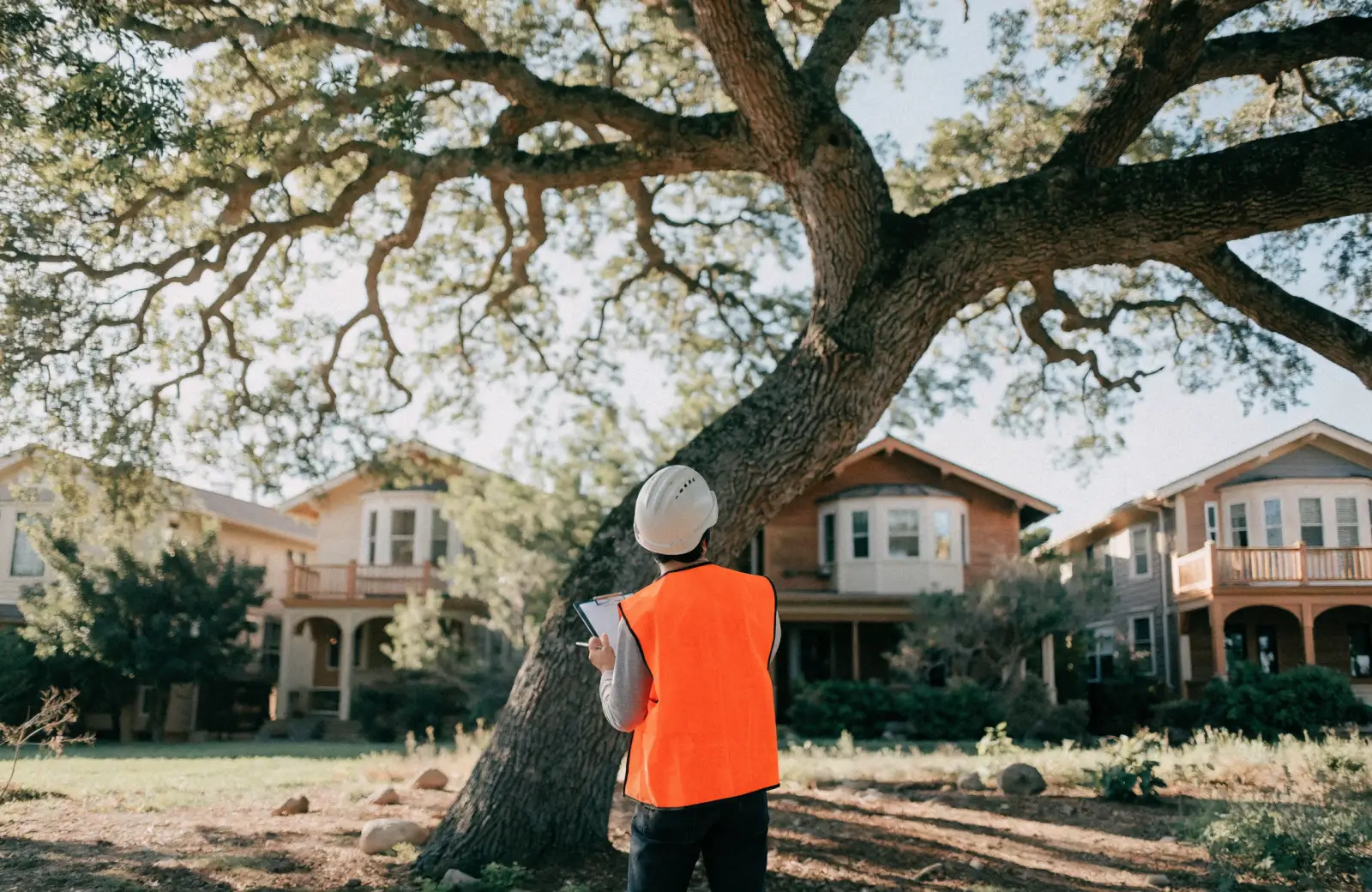
Call a certified arborist when you cannot identify the problem, when the symptoms are on the trunk or roots, or when a diseased tree is large enough to damage something if it fails. An ISA-certified arborist can diagnose the pathogen, tell you honestly whether the tree is worth treating, and handle the removal safely if it is not.
Firefighter Tree Service is a firefighter-owned crew of ISA-certified arborists who have cared for more than 500 residential properties across the Peninsula and South Bay. We are insured, we back our work with a 3-day service guarantee, and we run 24-hour emergency response when a diseased tree becomes a hazard overnight. If you want a straight answer on a tree you are worried about, a certified arborist in Redwood City can walk your property and give it to you.
Catch the killers early and you keep a healthy, sound canopy that protects your property instead of threatening it. That is the whole point of learning to read these symptoms: you get years of good shade and curb appeal, and you avoid the emergency call at 2 a.m. when a rotted tree finally lets go.
Tree Disease Treatment with Firefighter Tree Service
Tree disease is a lot like a fire: the earlier you catch it, the more you can save, and the difference between a quick fix and a total loss is usually a matter of weeks. Our ISA-certified, firefighter-owned crew diagnoses what is actually wrong, treats what can be treated, and removes what cannot, with the discipline you would expect from people trained to size up a threat fast. When something on your property does not look right, get tree disease treatment across the Bay Area from a team that will tell you the truth about your tree. Call Firefighter Tree Service at 650-454-0373.